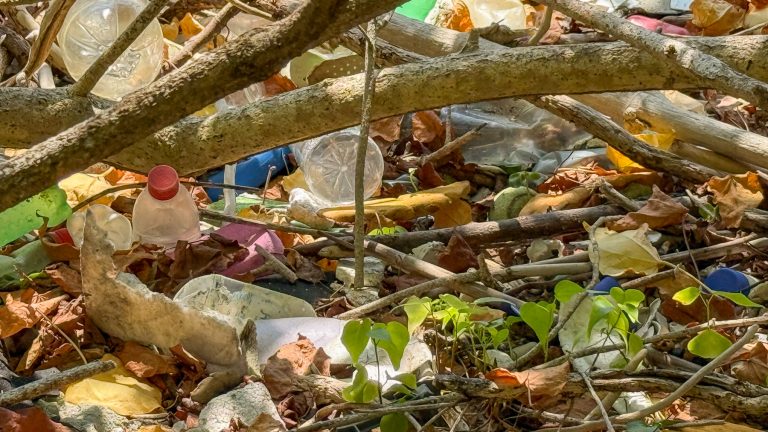
Sailors and Garifuna Collect Plastic
In the Cayos Cochinos Marine Protected Area, plastic bottles and other trash pile up in some places. Canadians Melanie and Eric rally 12 sailors and 23 locals to clean up the beach.

In the Cayos Cochinos Marine Protected Area, plastic bottles and other trash pile up in some places. Canadians Melanie and Eric rally 12 sailors and 23 locals to clean up the beach.
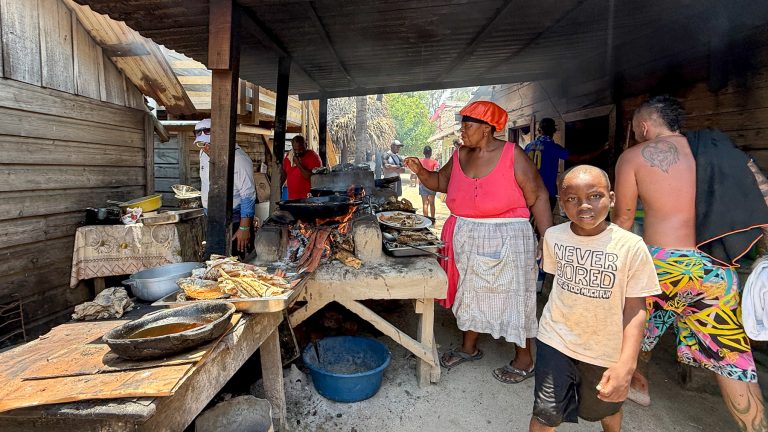
The Garifuna in the fishing village of Chachahuate on the Cayos Cochinos don’t just live from fishing. They’ve built a “restaurant row” on their small island. Behind the huts, entire families cook huge amounts of fish, plantains, and coconut rice with beans.
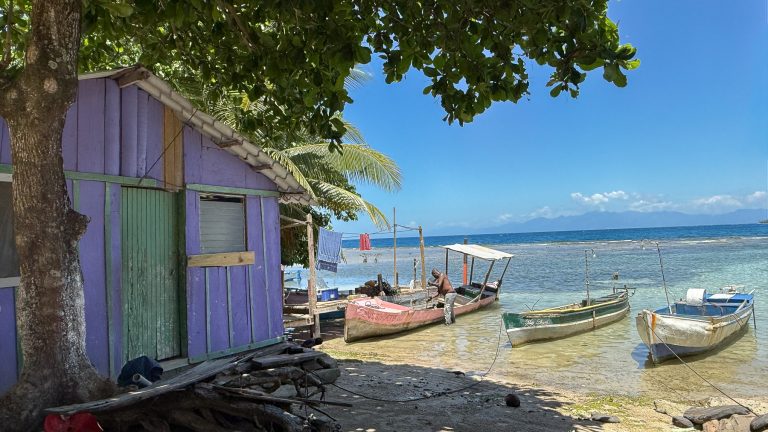
On Cayo Mayor, an American guides us across rough terrain to the village of East End. Garifuna live there – a people of Afro-Caribbean origin.
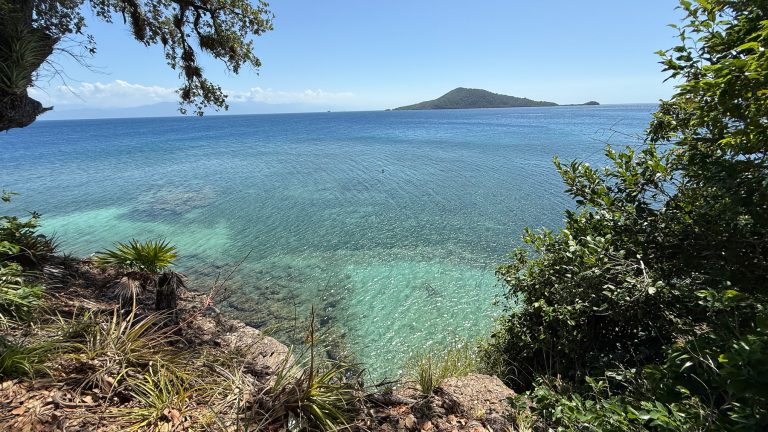
Instead of the Bay of Pigs in Cuba, where we originally wanted to go, we land on the Pig Islands (Cayos Cochinos) of Honduras. We don’t see pigs here, but a Boa rosada – a Pink Boa that only exists here.

Mexico – We want to have Japanese food at a Japanese restaurant and end up in a large treehouse jungle complex: the Azulik Project by architect Roth. To eat sushi, we have to first take an adventurous hike, through the jungle. a18> first take an adventurous hike through the night – over stone and wooden paths, stairs and a suspension bridge.
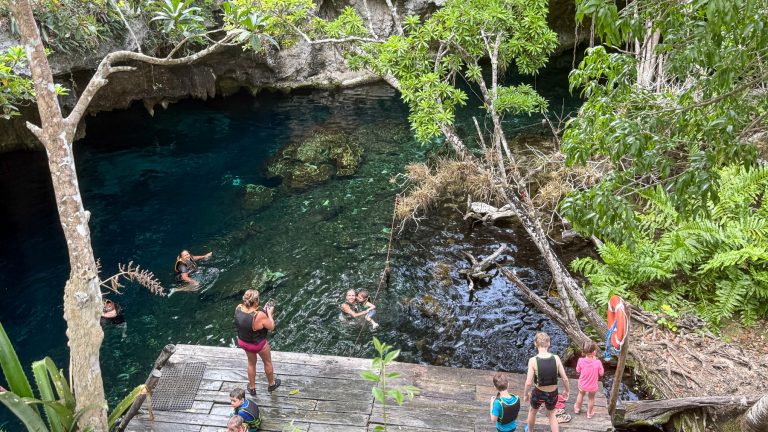
Mexico – Near Tulum there are thousands of cenotes – collapsed limestone caves that are connected to underground rivers . We are swimming in the Gran Cenote near our lodging.
In the Cayos Cochinos Marine Protected Area, plastic bottles and other trash pile up in some places. Canadians Melanie and Eric rally 12 sailors and 23 locals to clean up the beach.
The Garifuna in the fishing village of Chachahuate on the Cayos Cochinos don’t just live from fishing. They’ve built a “restaurant row” on their small island. Behind the huts, entire families cook huge amounts of fish, plantains, and coconut rice with beans.
On Cayo Mayor, an American guides us across rough terrain to the village of East End. Garifuna live there – a people of Afro-Caribbean origin.
Instead of the Bay of Pigs in Cuba, where we originally wanted to go, we land on the Pig Islands (Cayos Cochinos) of Honduras. We don’t see pigs here, but a Boa rosada – a Pink Boa that only exists here.
Mexico – We want to have Japanese food at a Japanese restaurant and end up in a large treehouse jungle complex: the Azulik Project by architect Roth. To eat sushi, we have to first take an adventurous hike, through the jungle. a18> first take an adventurous hike through the night – over stone and wooden paths, stairs and a suspension bridge.
Mexico – Near Tulum there are thousands of cenotes – collapsed limestone caves that are connected to underground rivers . We are swimming in the Gran Cenote near our lodging.


