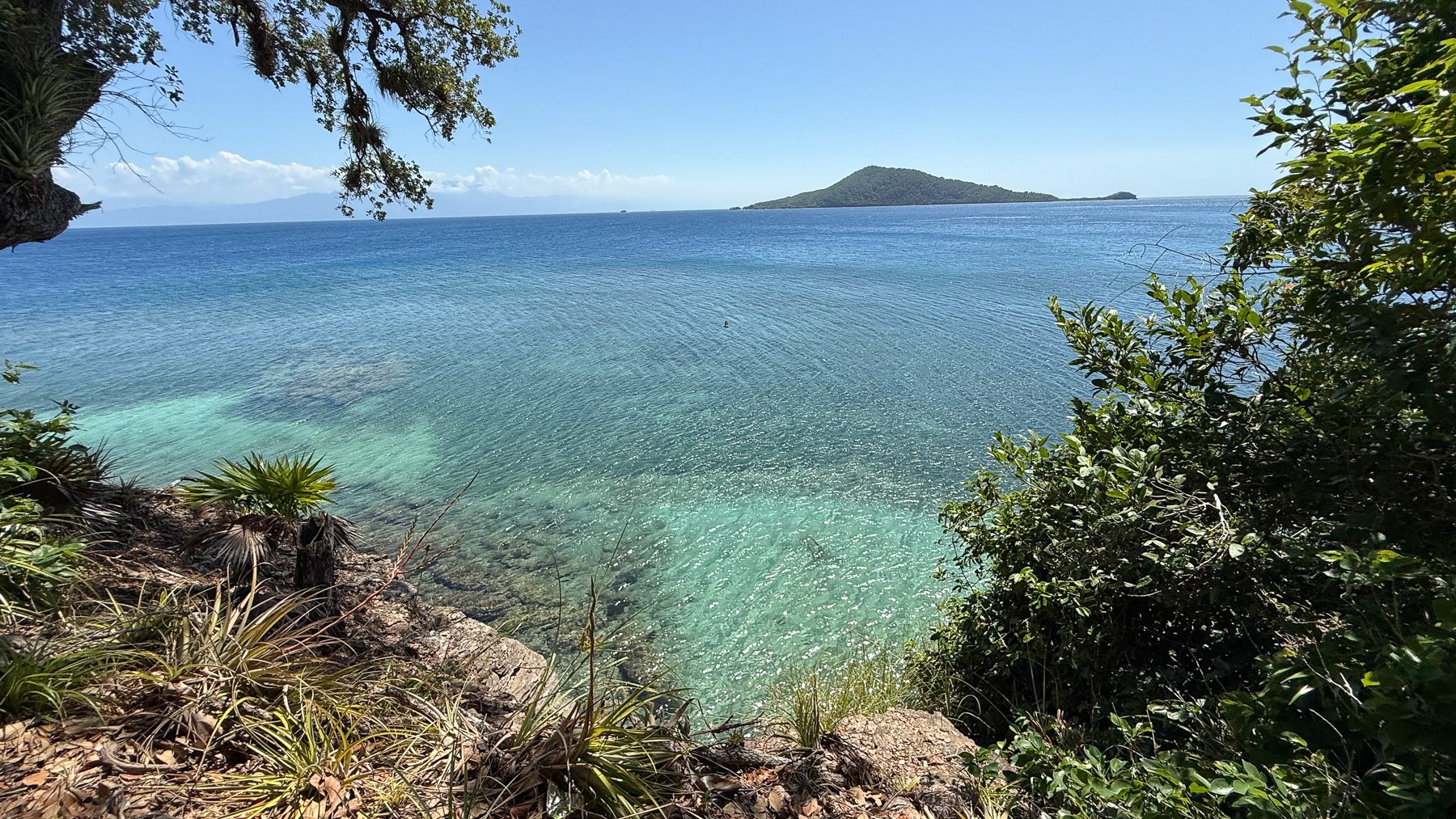
Pig Islands instead of Bay of Pigs
In the protected Cayos Cochinos Marine National Park of Honduras
By Renate Rüger, April 30, 2026
We only stay briefly on Utila and continue to Cayos Cochinos, the Pig Islands. No, this has nothing to do with Cuba’s Bay of Pigs (Bahía de Cochinos). We would have loved to visit that bay – because of its supposedly dreamlike sandy beach and even more because of its political significance. In April 1961, about 1300 Cuban exiles, supported by the US intelligence agency CIA, landed here to overthrow Fidel Castro’s revolutionary government. The US-organized attack failed and led to the Cuban Missile Crisis in October 1962. Now, 65 years later, US President Donald Trump wants to bring the Cuban government to its knees. The supply situation on the island is becoming increasingly dramatic, threatening to become a humanitarian catastrophe, and the US is announcing further sanctions. When we later snorkel and dive in Cayos Cochinos on May 1, Labor Day, hundreds of thousands of people in Cuba demonstrate against the US embargo and Trump’s repeated threats. Trump, in turn, declares that the US would “take over Cuba almost immediately” and suggests that an aircraft carrier could be sent to the Cuban coast after the end of the Iran war.
Where do the pigs in the name come from?
So instead of Cuba’s Bay of Pigs, we are now on Honduras’ Pig Islands. Why is “pig” in both names? In Cuba, the name might come from the Atlantic triggerfish, popularly called “Cochino” and found in the bay. Another theory – and this also exists in Honduras – actually refers to the mammal: Spanish settlers, seafarers, or pirates reportedly released pigs to have a reliable source of meat for later stops. The pigs ran wild and multiplied, which is why the places were named after them.
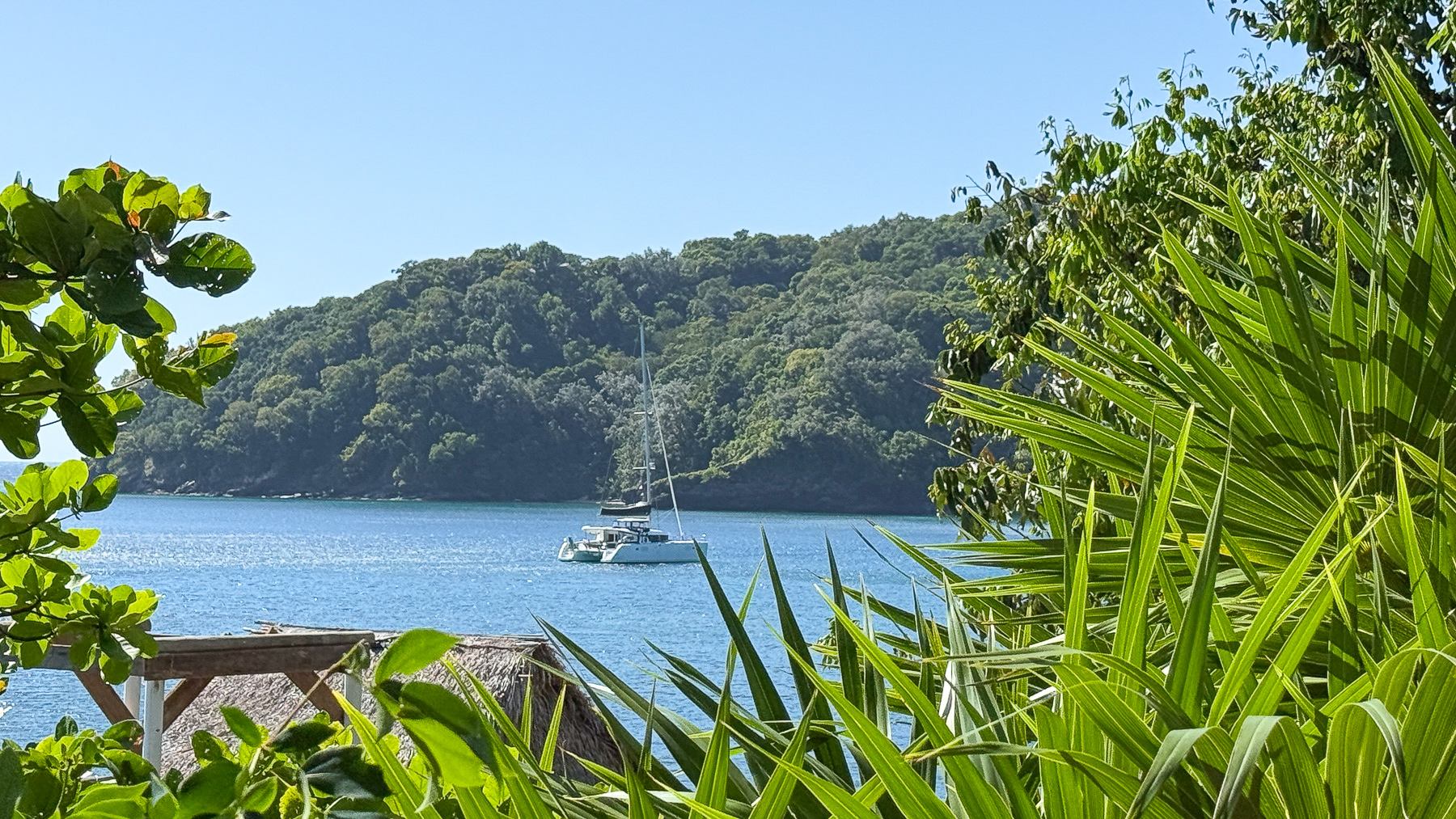
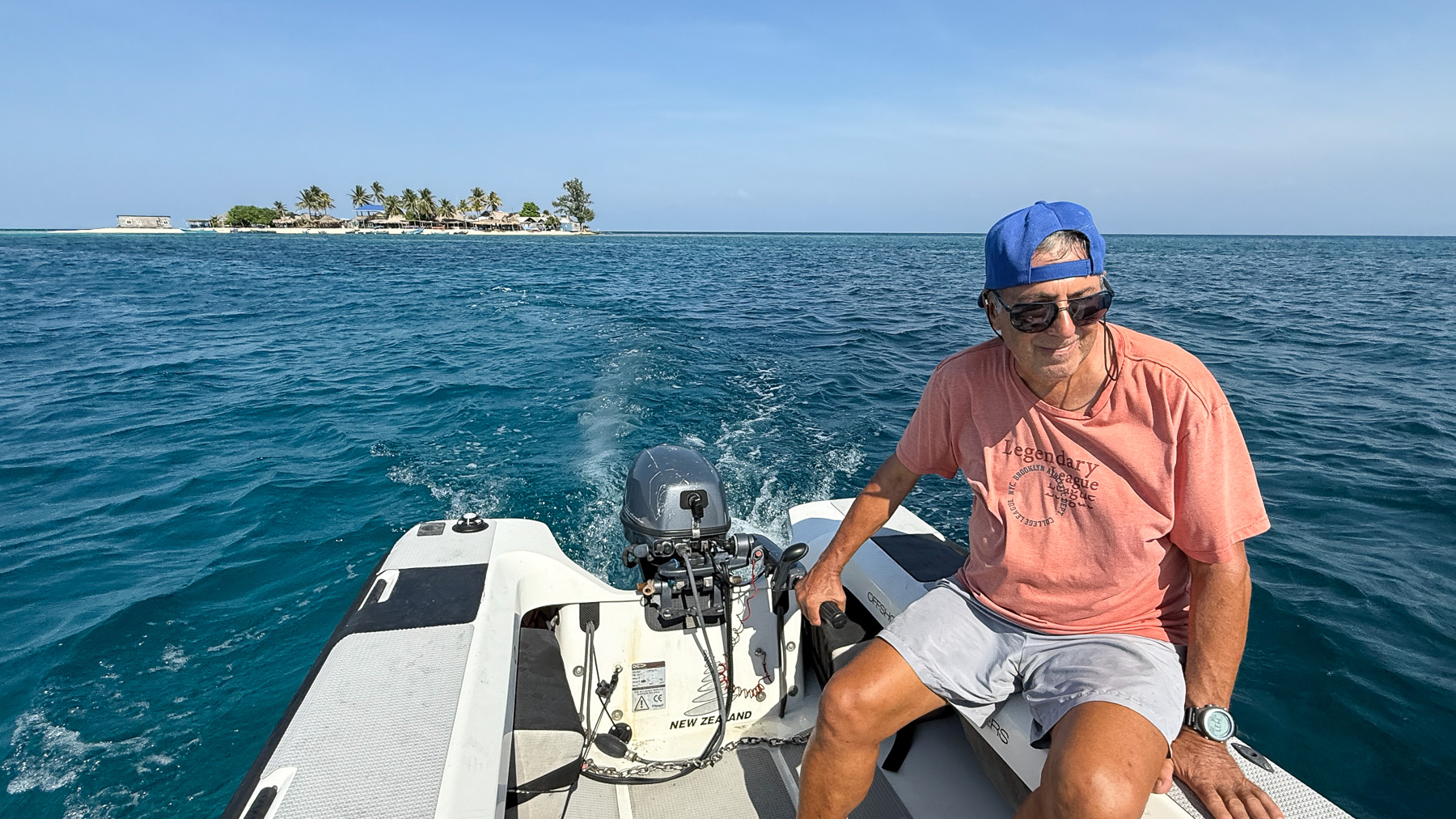
Against wind and waves, the Amira once again fought to reach the Cayos Cochinos. The archipelago, located about 30 kilometers off the north coast of Honduras, consists of the two green main islands Cayo Mayor and Cayo Menor, as well as 13 smaller sand and coral islands. We are heading for Cayo Mayor. We can only dream of sailing; the engines are running at full throttle. The Fox, which we see about half an hour before entering the anchorage, had it better. It came from Guanaja and could sail comfortably and quickly with the wind. And: it now has no salt crust like our Amira, which we would love to rinse off immediately but cannot due to lack of water. How nice to see the Fox crew Cathy and Carlo again! Both also spent the last hurricane season in the RAM Marina in Guatemala, and together we will “summer over” the next hurricane season, which begins in June, there.
Pink Boa instead of pink pigs
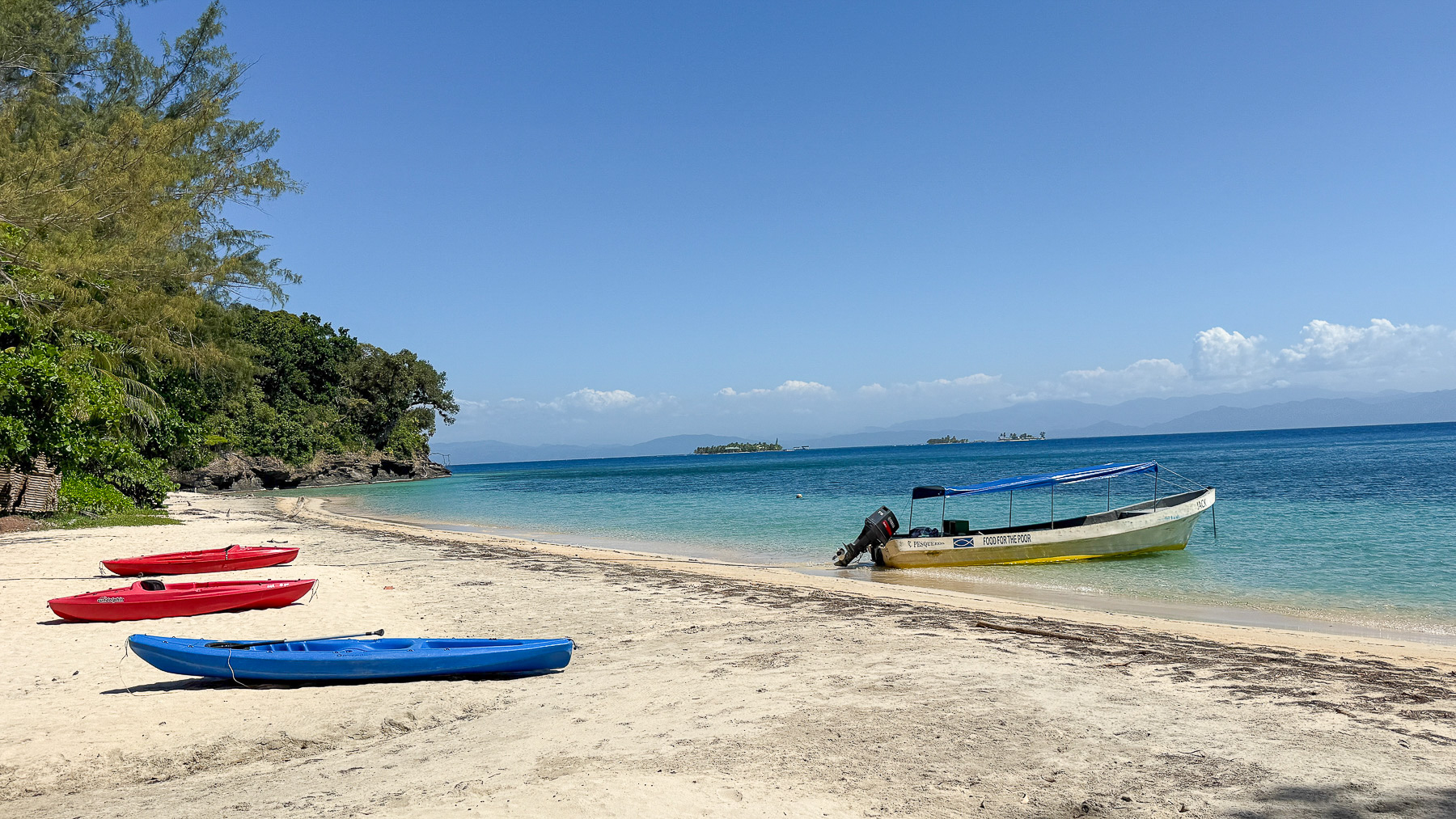
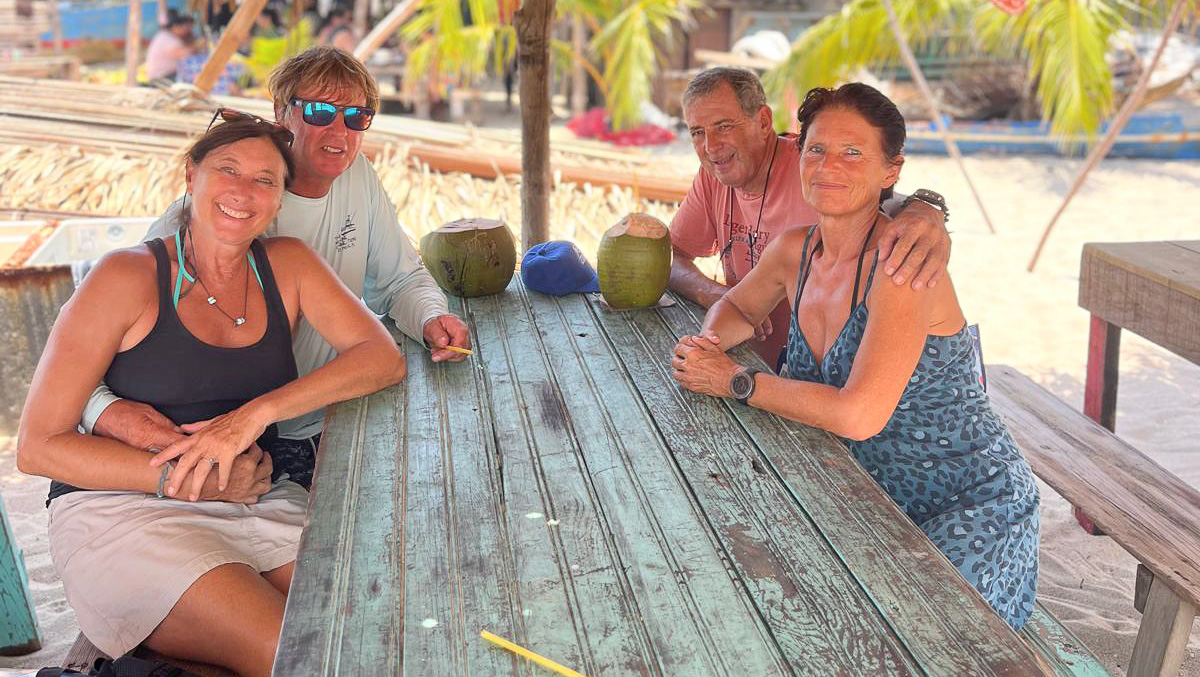
Together we are now in the strictly protected Marine National Park, and the rangers don’t take long to collect the fee. “46 dollars for one day or 92 US dollars for one month?” a ranger asks kindly, while three of his four colleagues stand with assault rifles next to him in the motorboat. Of course, we choose the monthly fee. The next day they bring us the receipt and kindly thank us for our patience. Shortly after, we meet Cathy and Carlo at the dive station’s jetty and make an appointment there.
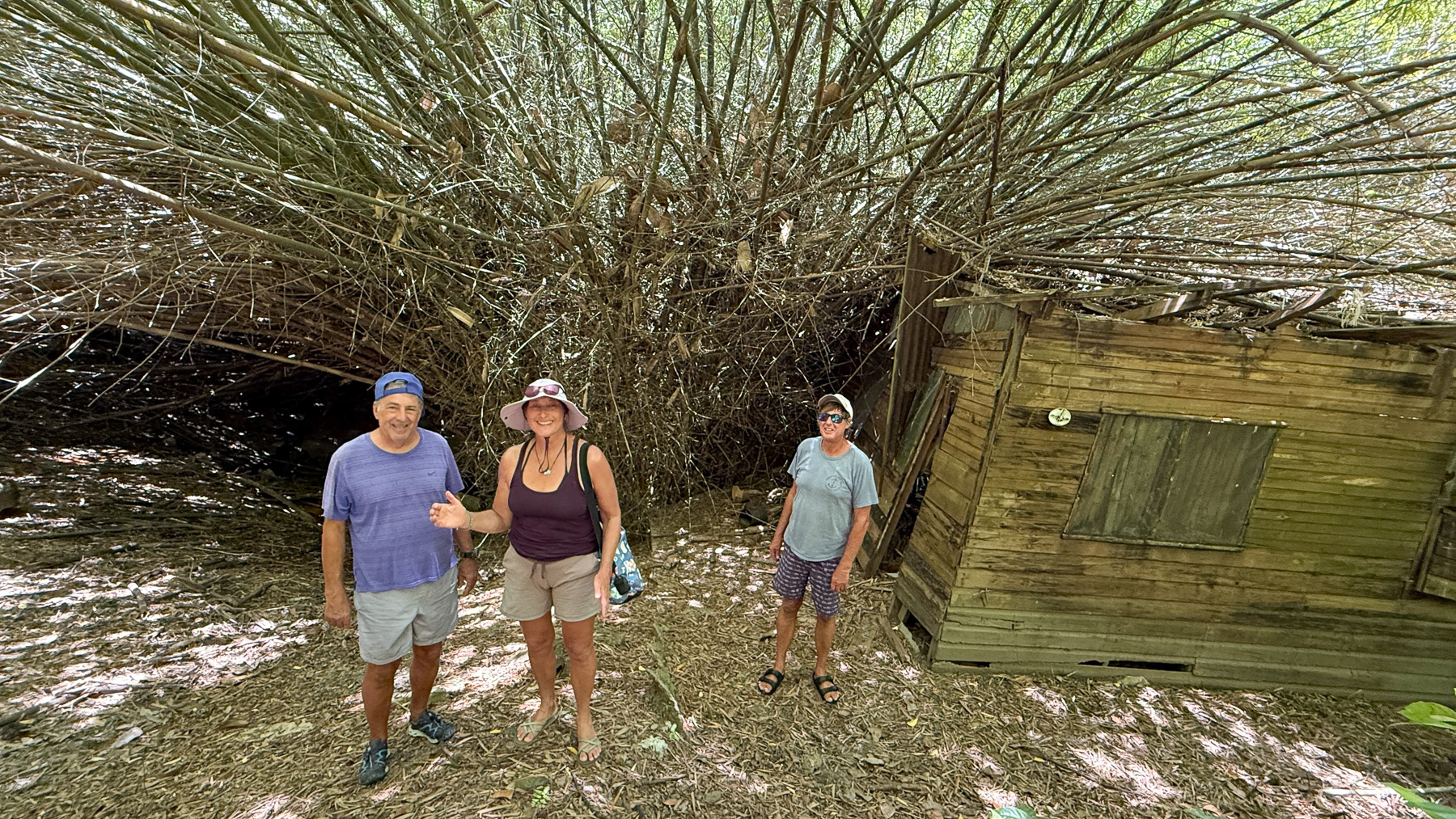
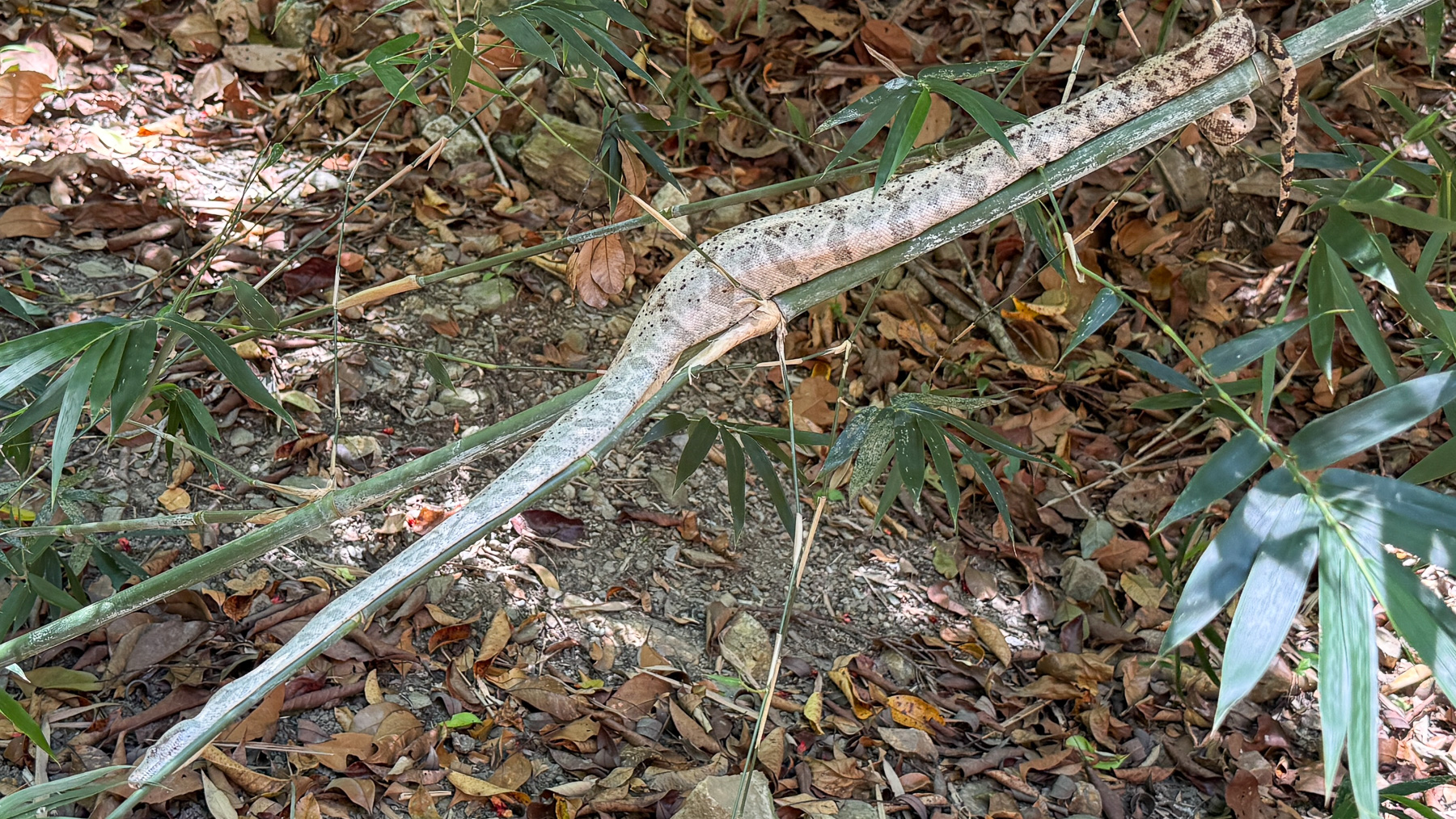
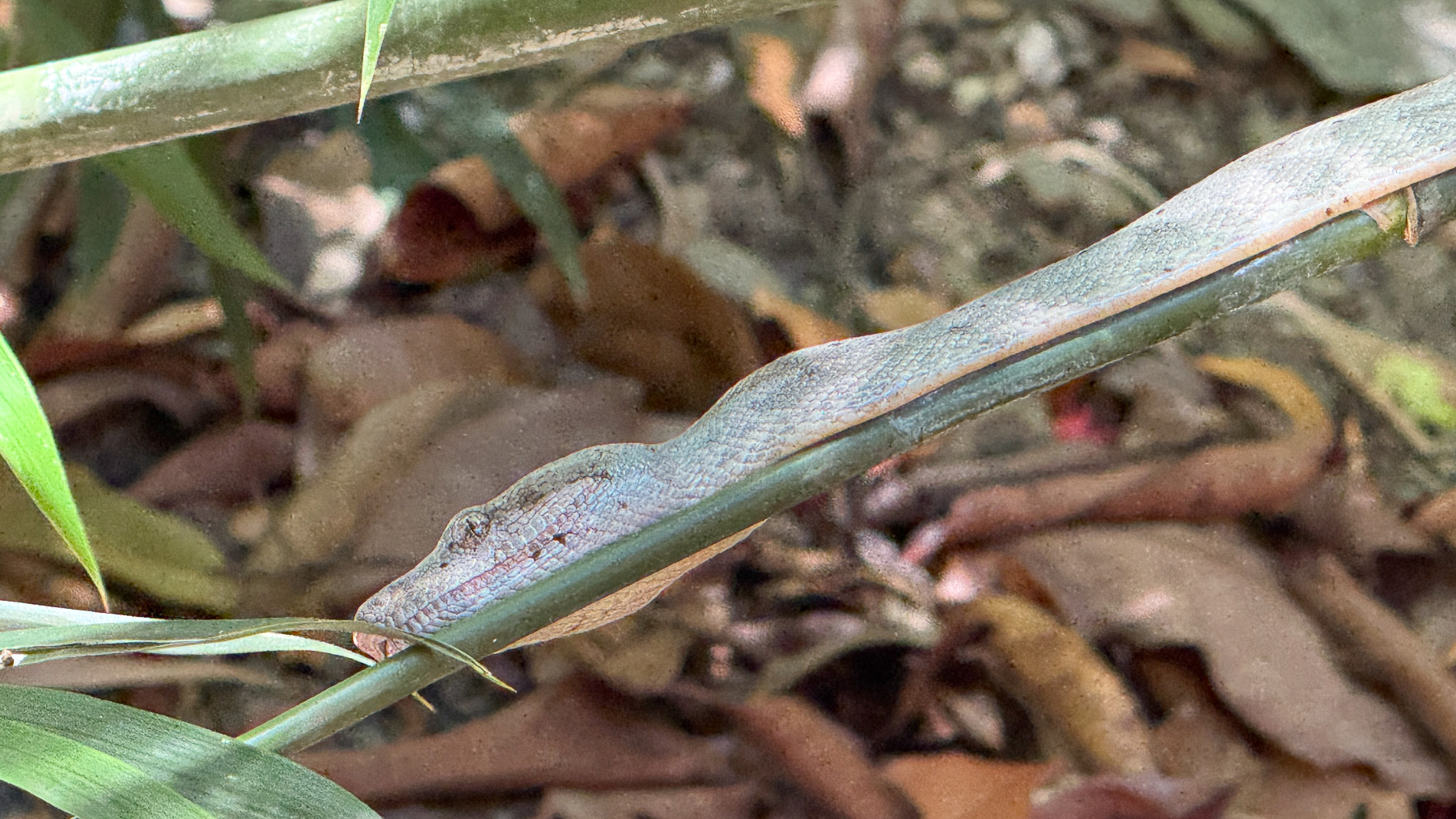
Where is the path to the lighthouse and the village at East End?, we ask. The dive guide looks surprised and points east with his hand. A sign indicates the way, and we should then follow the markings on the trees. However, we walk past the sign, as nothing can be read on the wood anymore. We pass two huts, follow red ribbons on the trees, no, this is not the way, so back. No, the other dirt path leads back to the hut. Where to? While Cathy and I continue to explore the surroundings, Peter and Carlo meet an American who knows his way around. Look, here’s the Boa rosada, there’s another one and another one, he explains, pointing to the small pinkish-gray snakes (scientifically also called Boa imperator) resting on small branches. “The pink boas only exist here on the Cayos Cochinos.” The ones we see are still very small. But this constrictor can get really big and fat, though not quite as big as the boas on the mainland, says the American. “They are completely harmless to humans.”