Tulum IV: Sushi in a Treehouse
Nature, Art, and Spirituality – We end up by chance in architect Roth’s Azulik project
By Renate Rüger, April 13, 2026
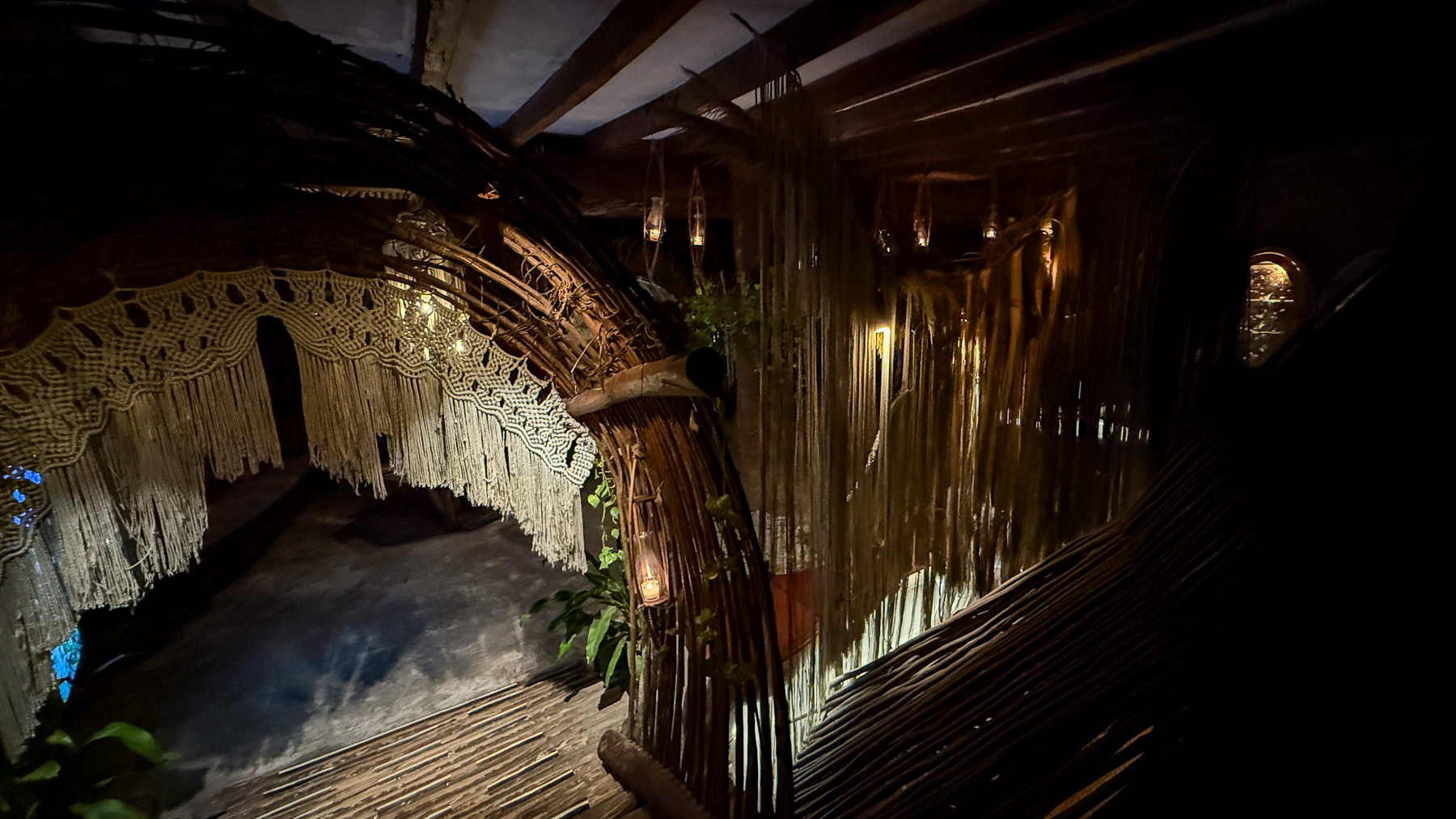
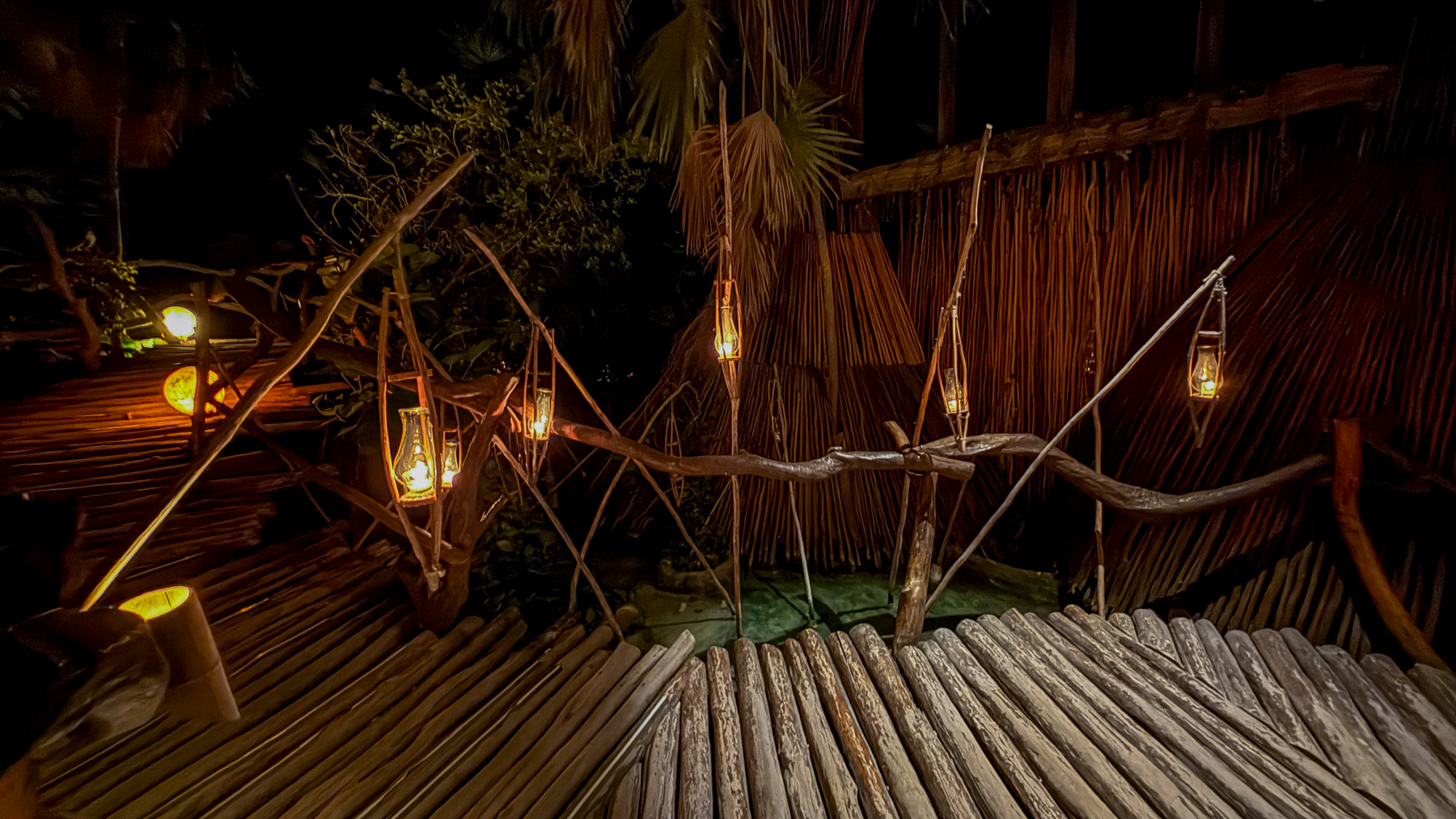
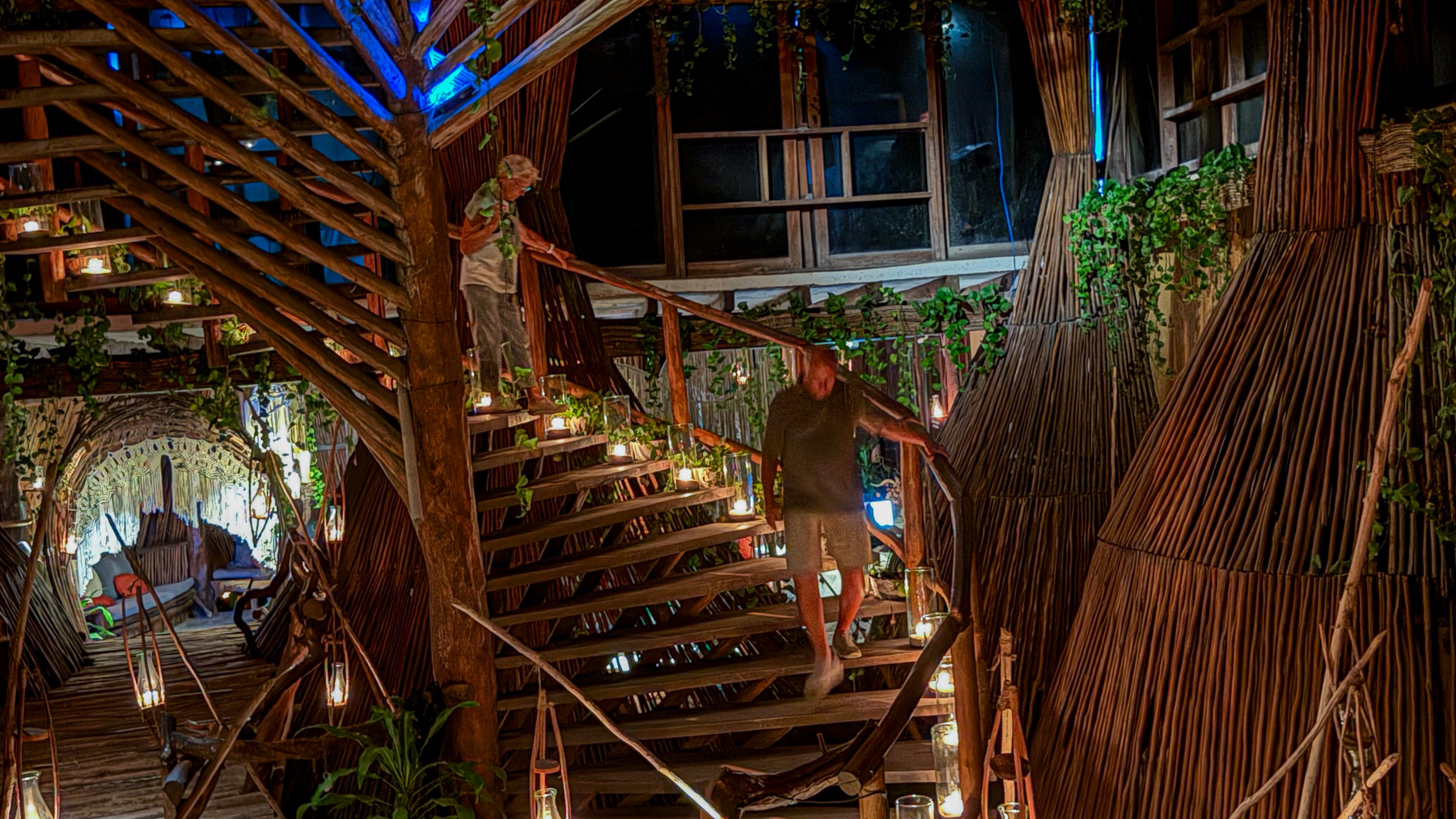
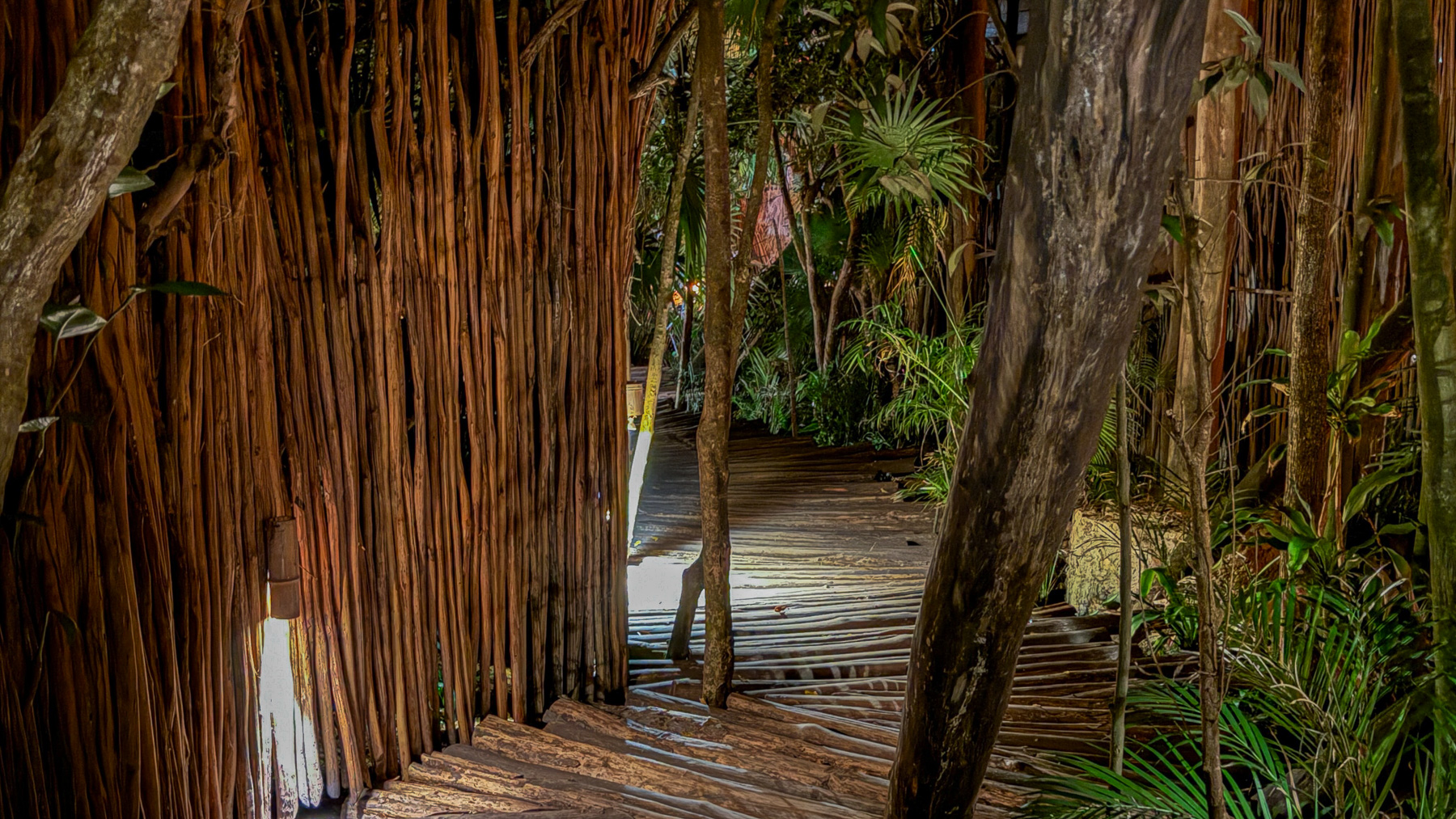
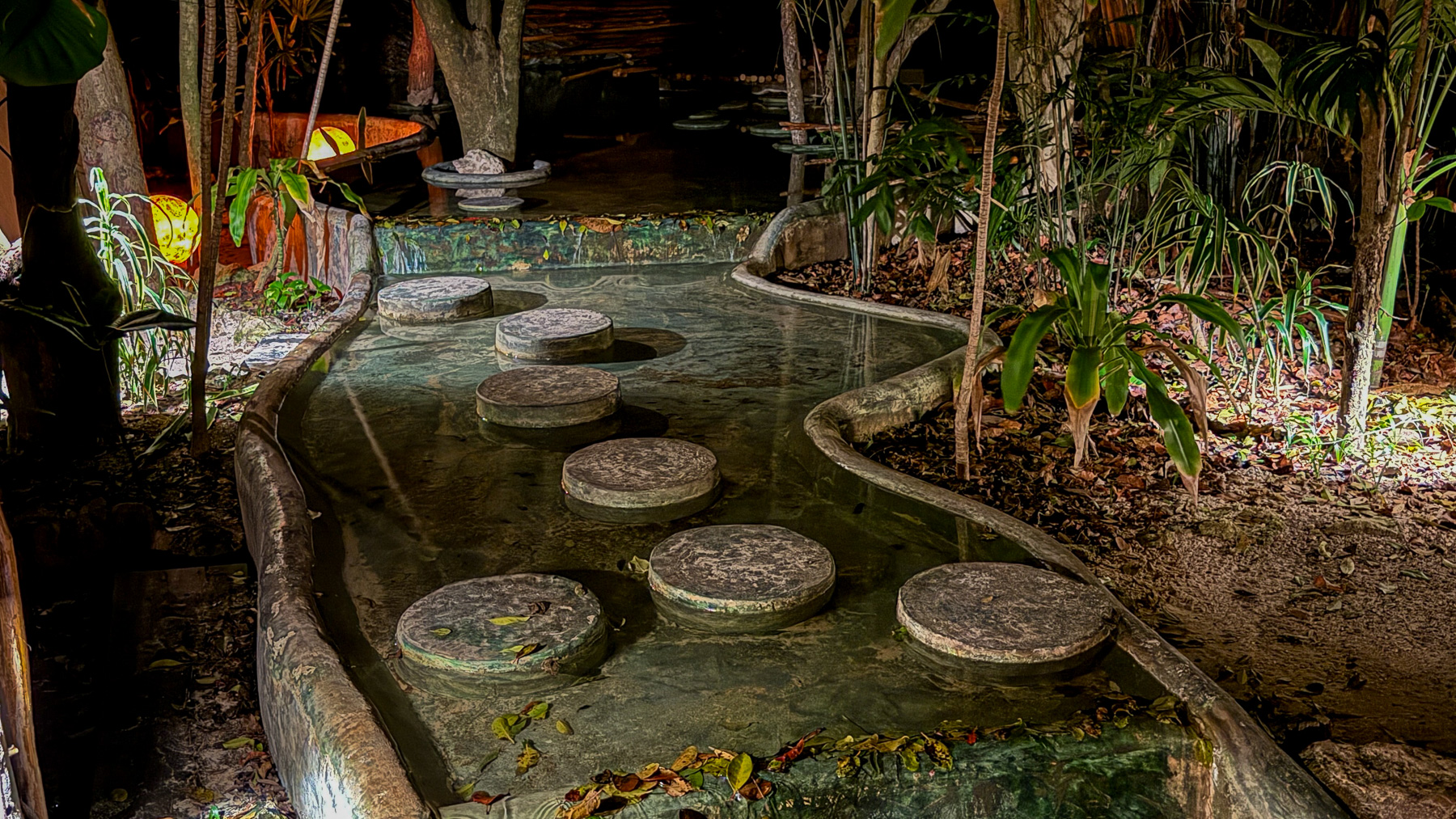
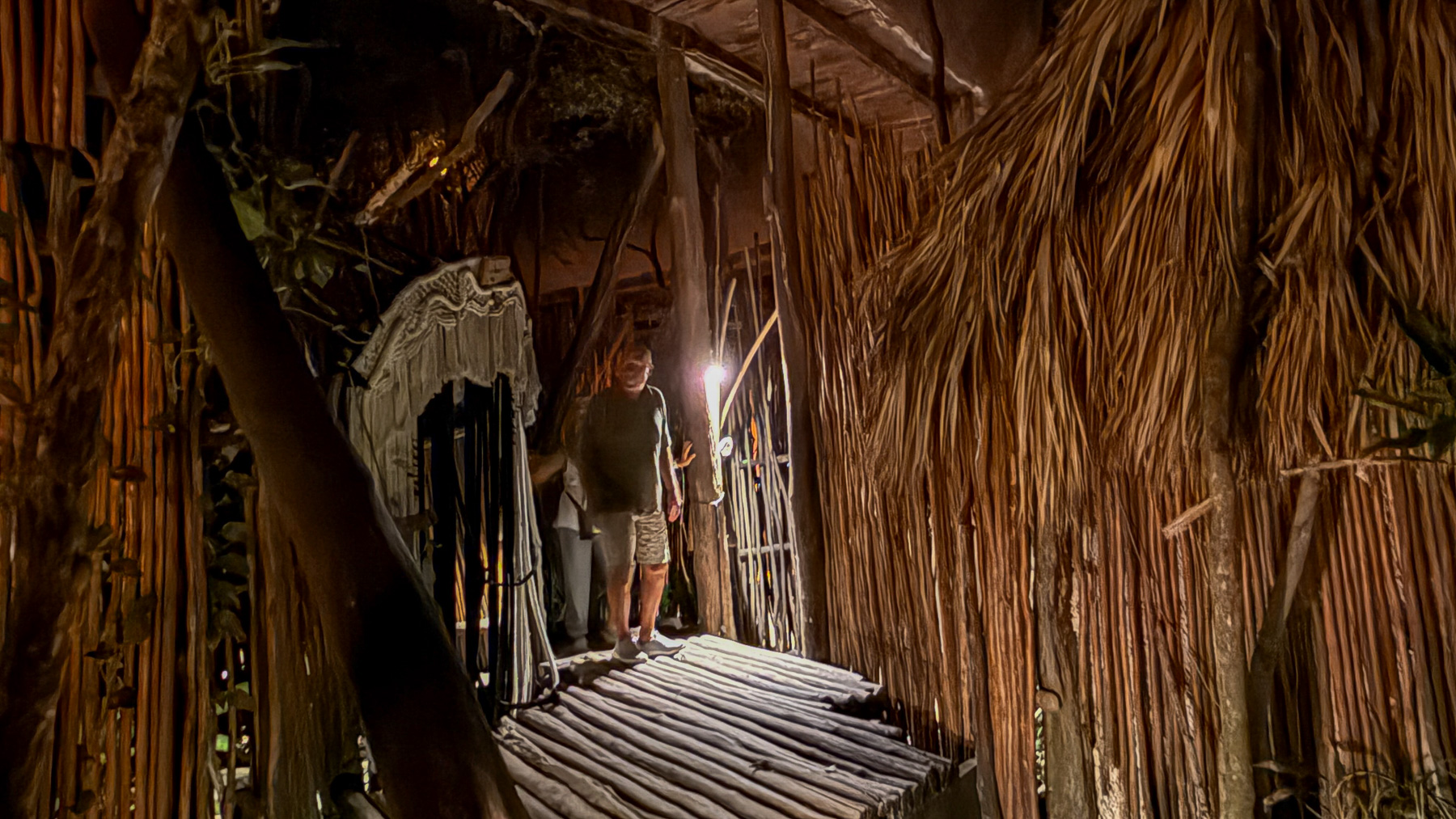
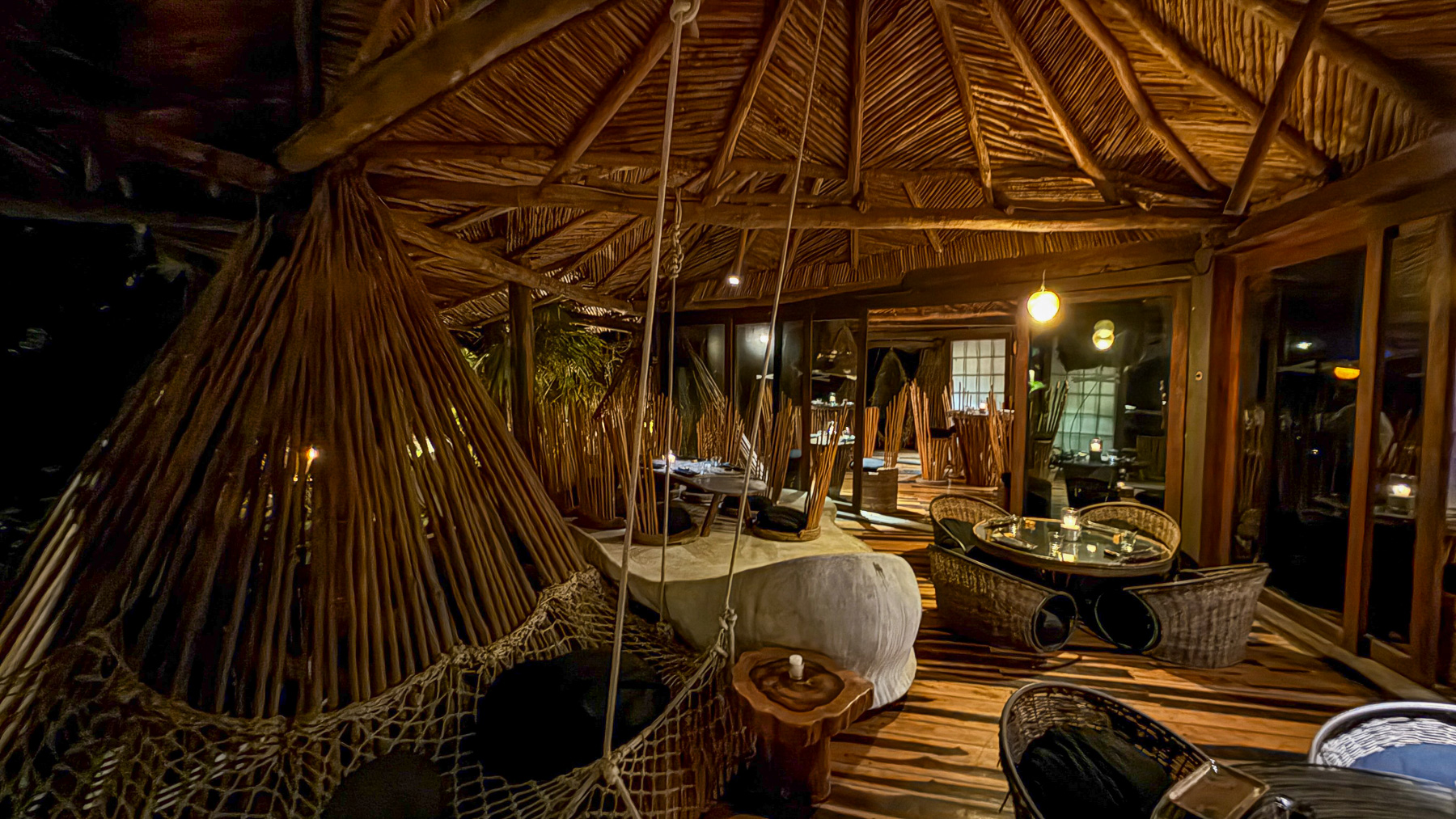
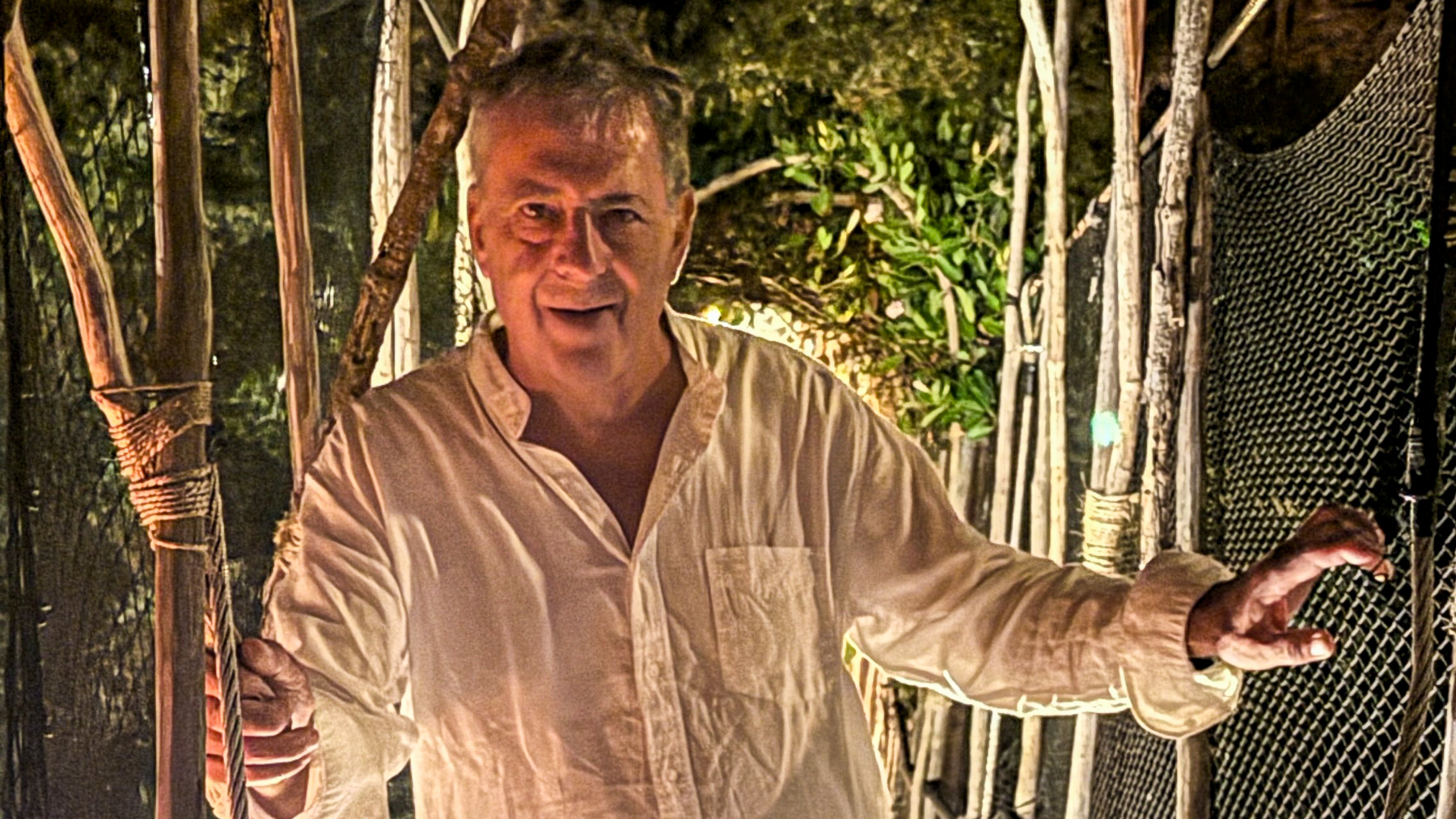
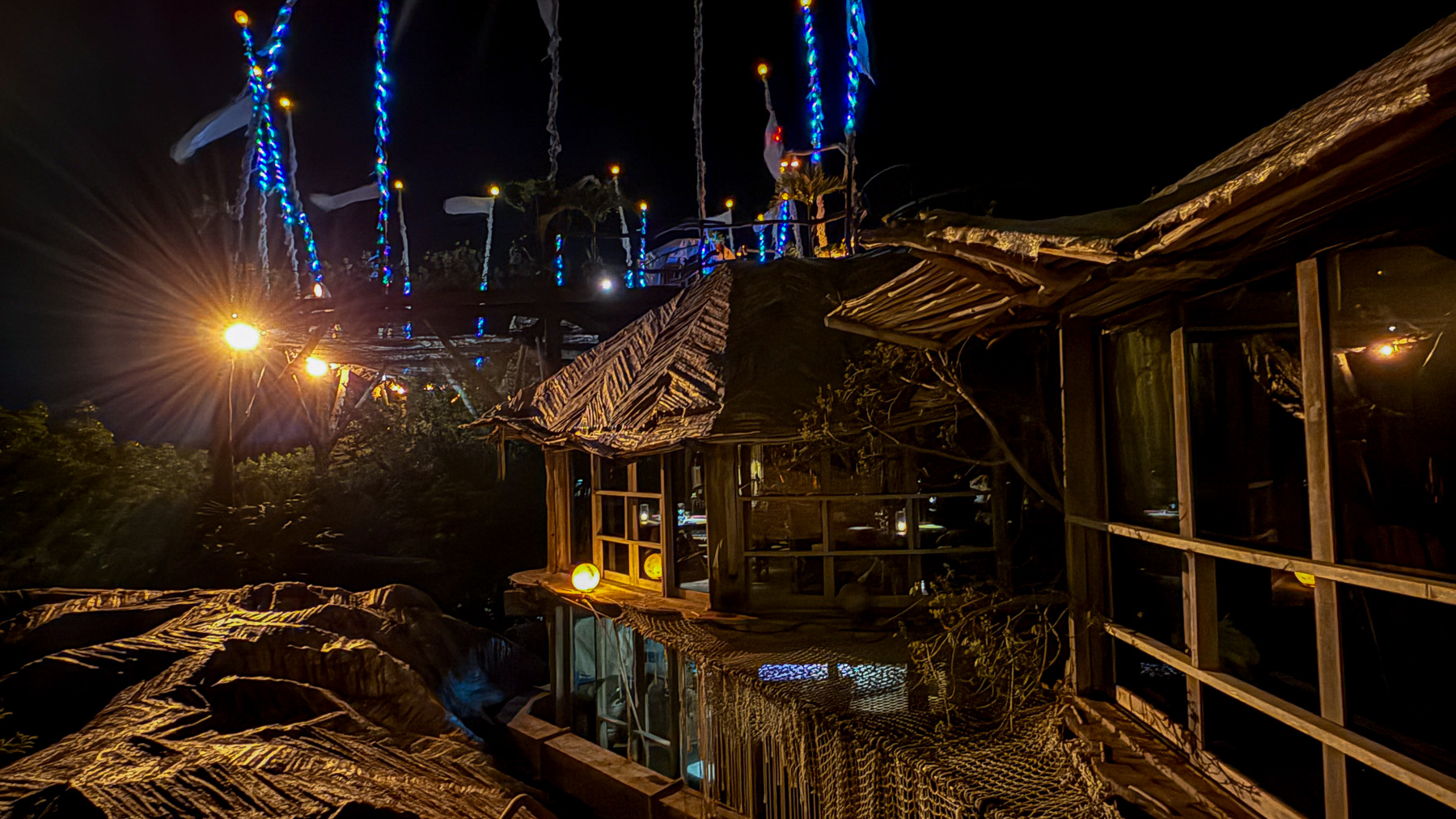
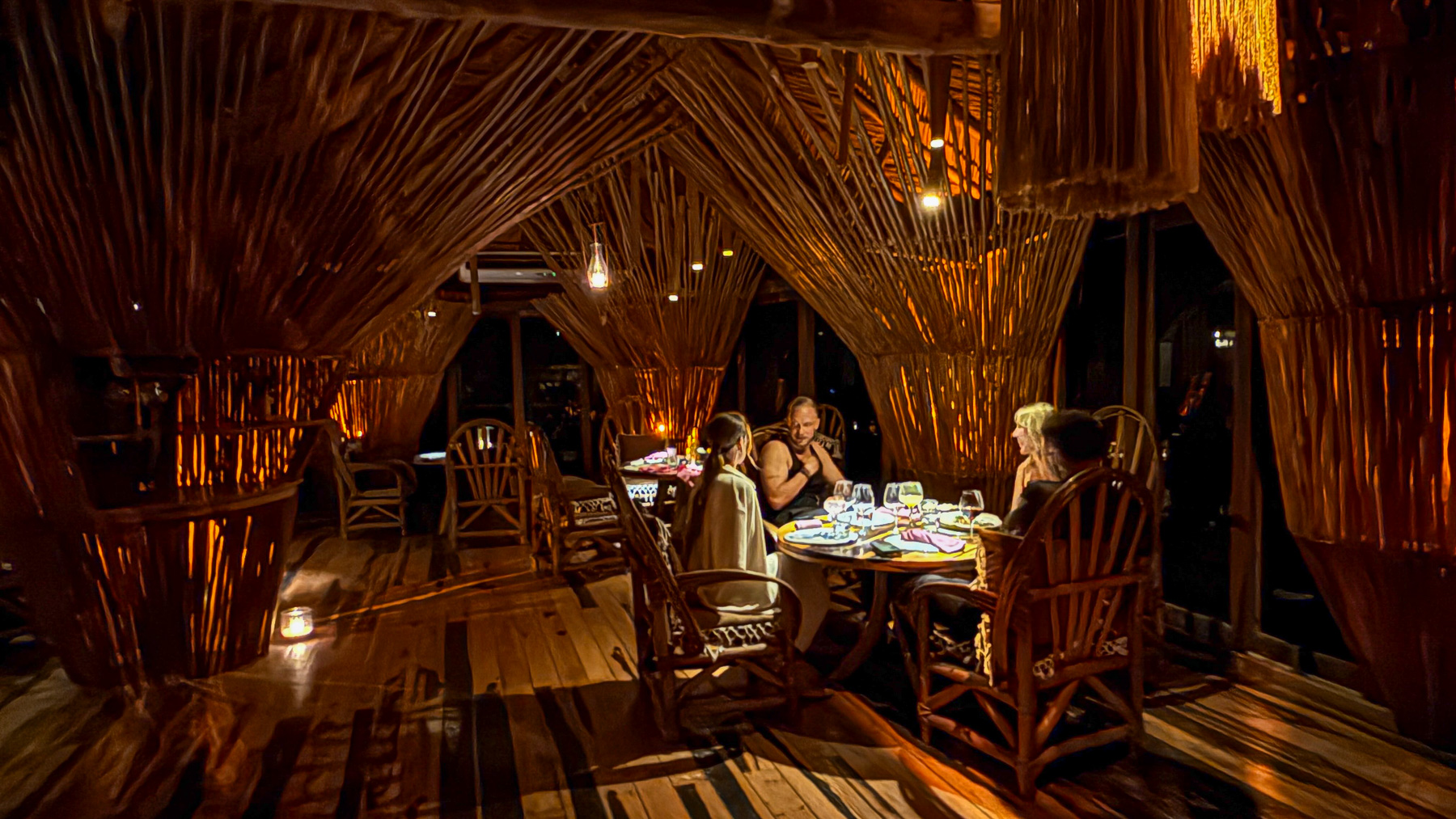
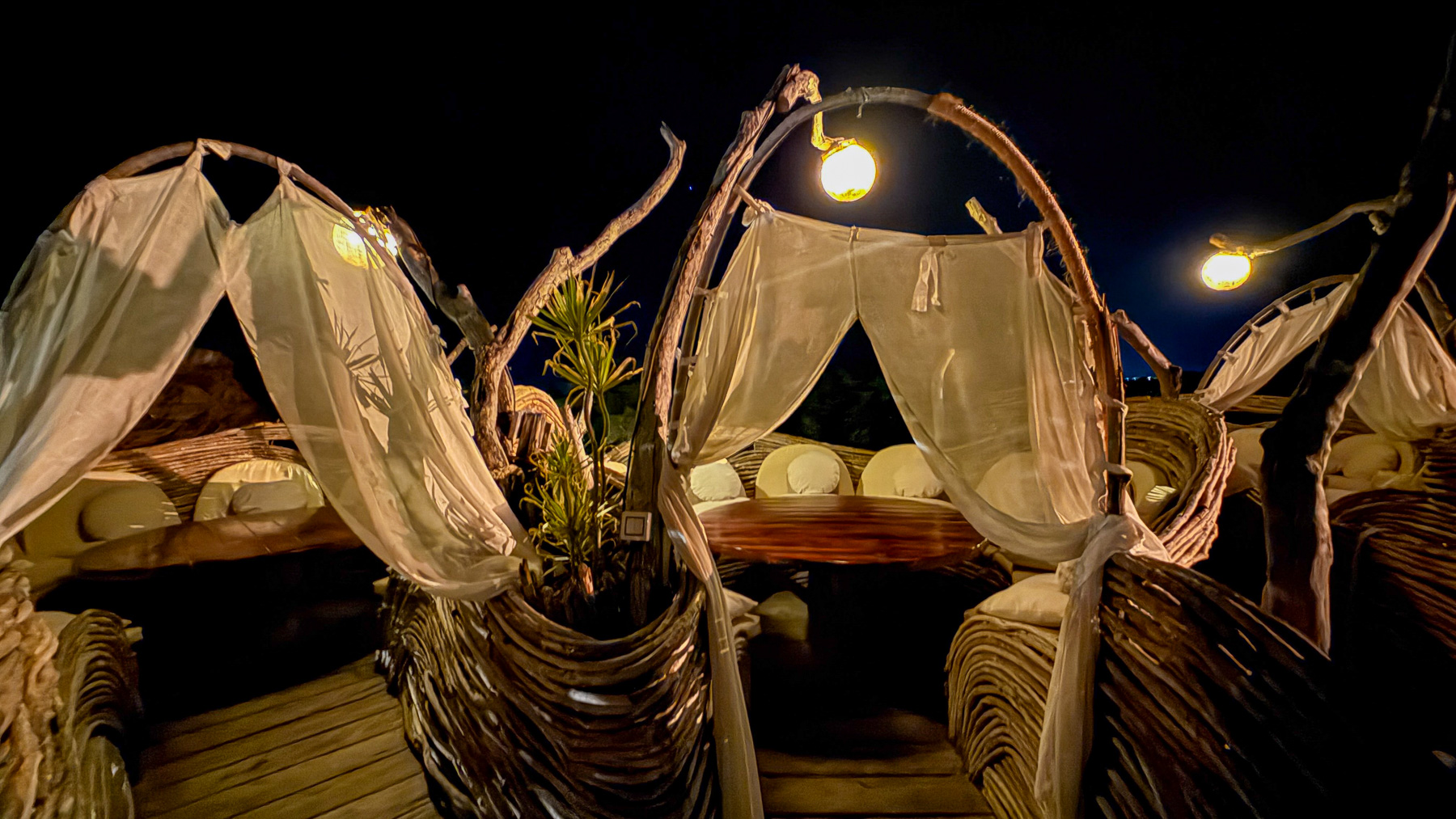
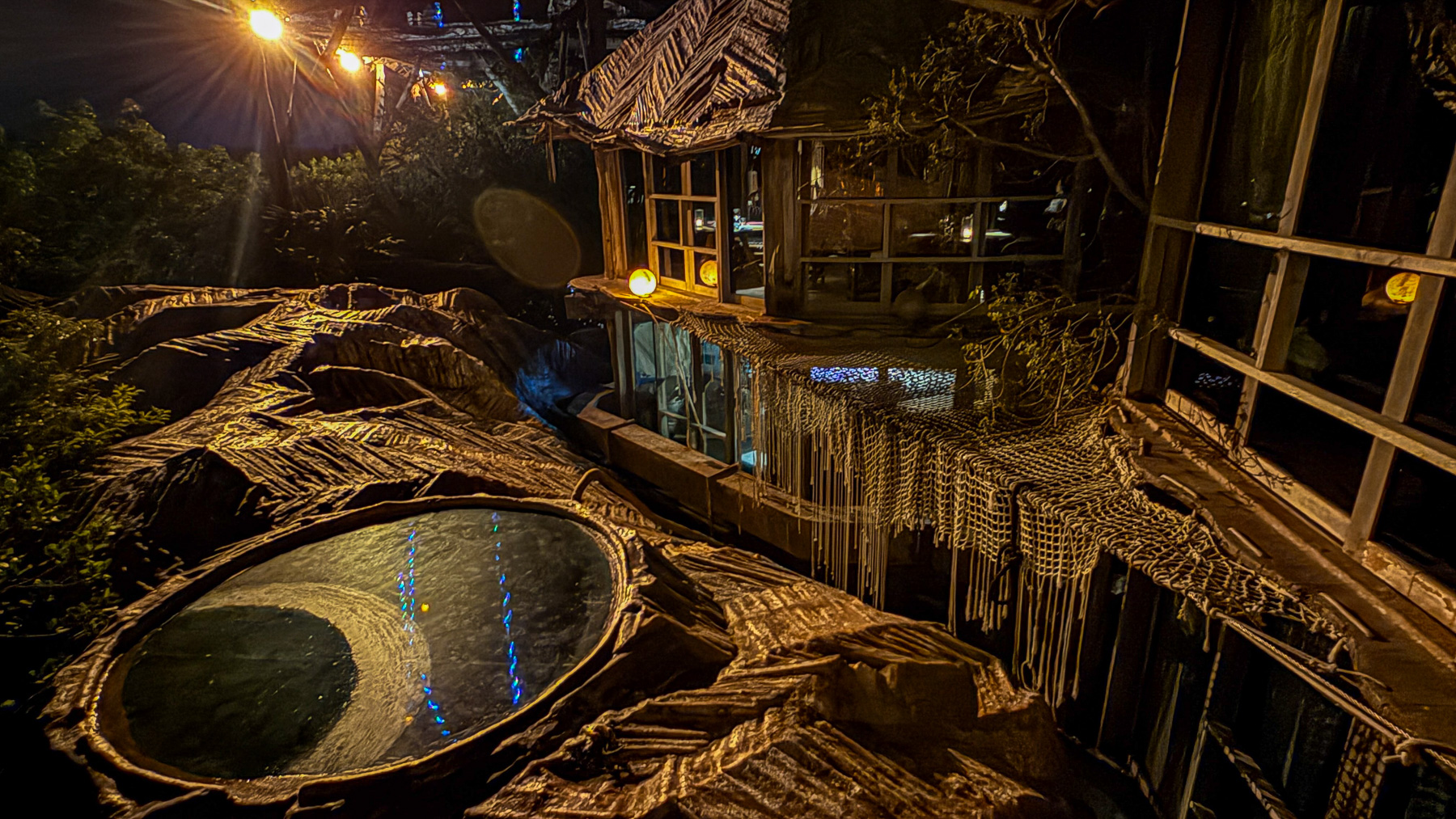
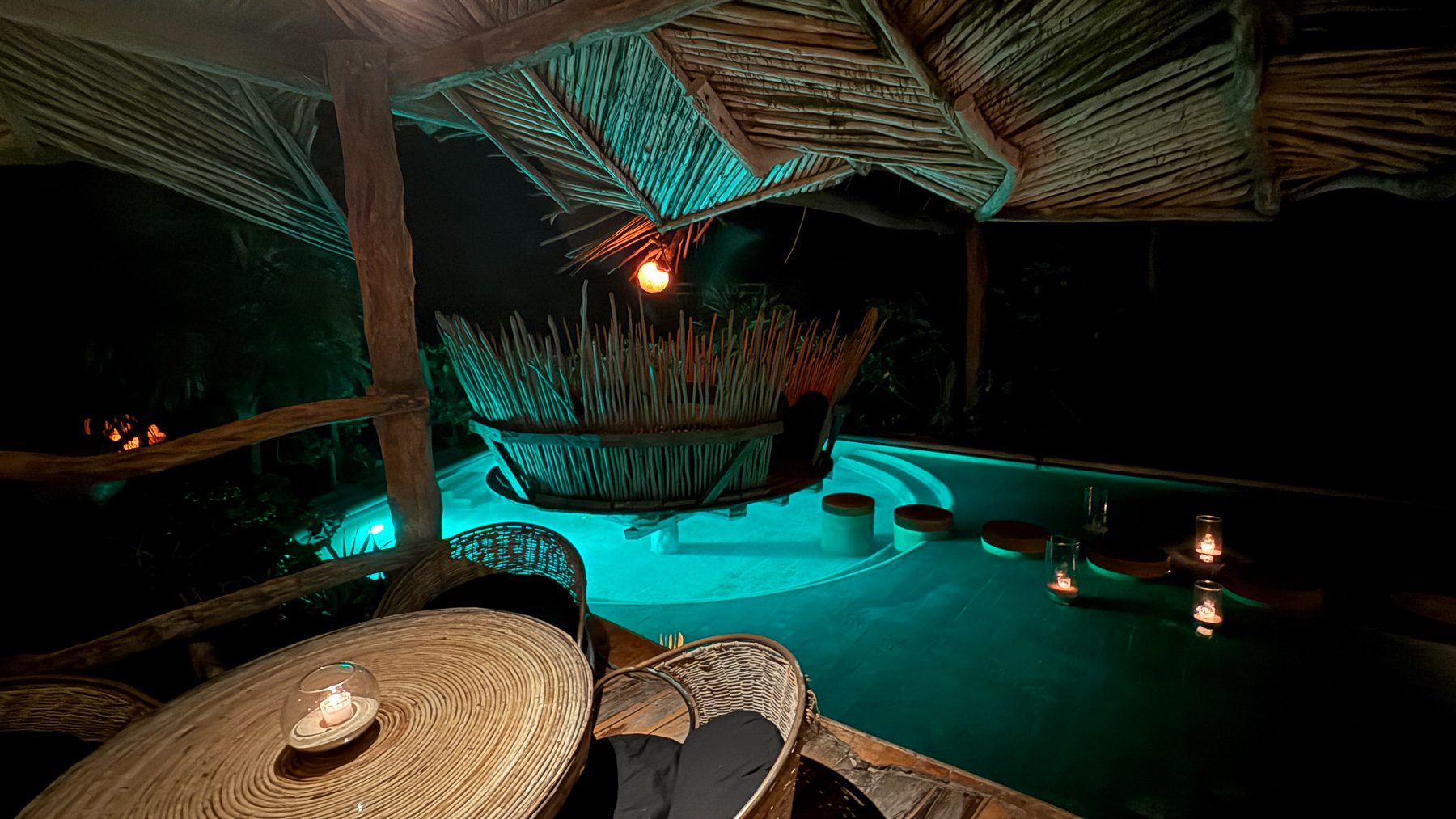
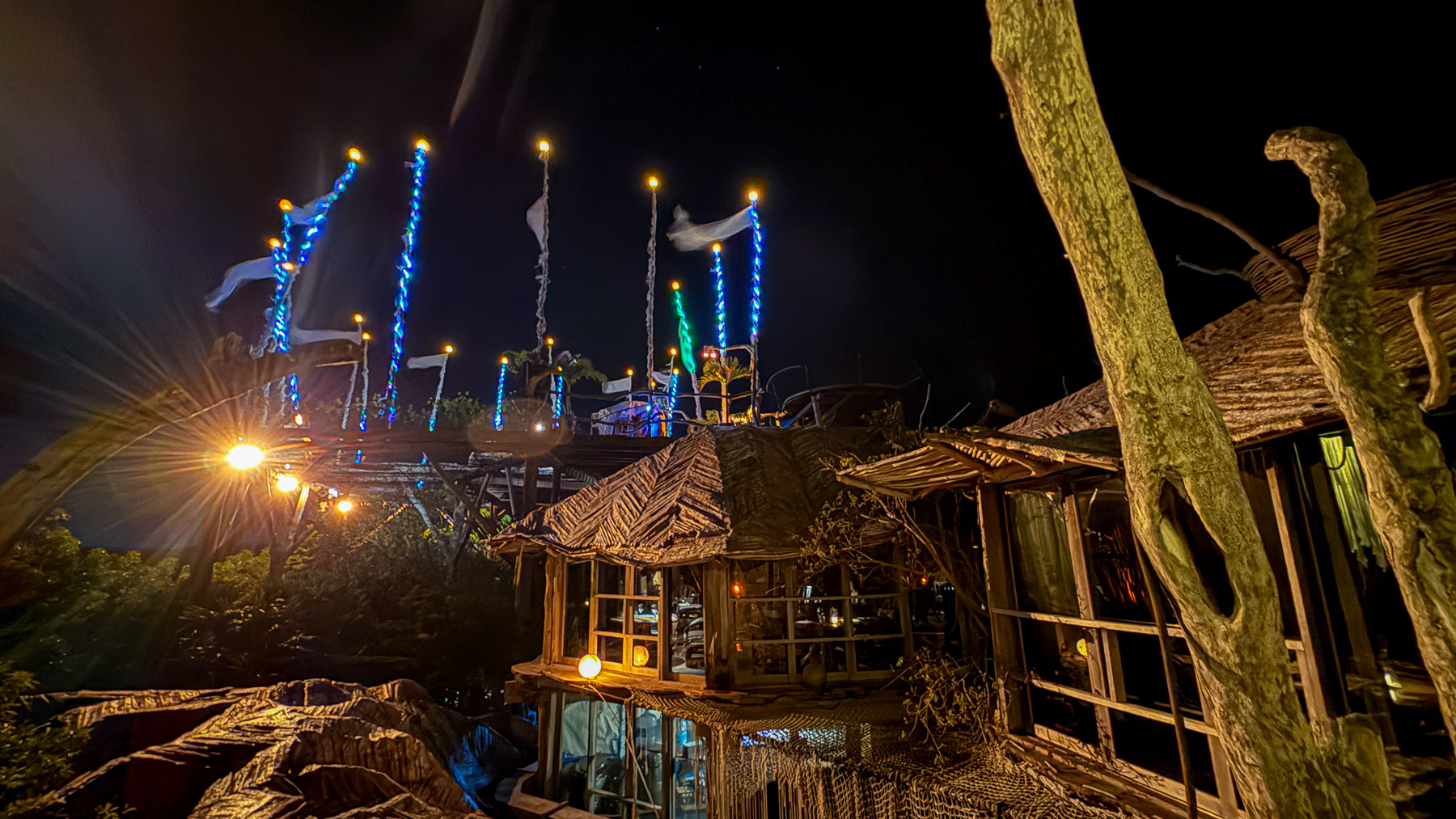
Mexico – In the evening, after the visit to the ruins and the Gran Cenote, we treat ourselves to a meal at the Japanese restaurant, which is located in a very special treehouse-jungle complex is located —which we however only notice once we’re there on the spot. Azulik is the name of this organically built structure, a resort featuring art, a spa, accommodations and even several restaurants. The receptionist shows us the way, we follow the winding path across bridges, footbridges and raised paths all the way to next lady, who shows us where to go next. Up a wooden staircase, then through a restaurant spanning several levels, which features round tables in nooks that are connected by walkways and suspension bridges are connected to one another are – with a view of the sea and over the jungle, secured with nets, in case someone should ever fall out of the nest. Are we still on the right path here? Before a long suspension bridge another lady suggests, that the Japanese man is waiting at the other end. And indeed: Now we are there, deeply impressed by the entire architecture. Since it’s not any worse, if the sushi is, admittedly, okay, but isn’t as excellent as the high prices would suggest.
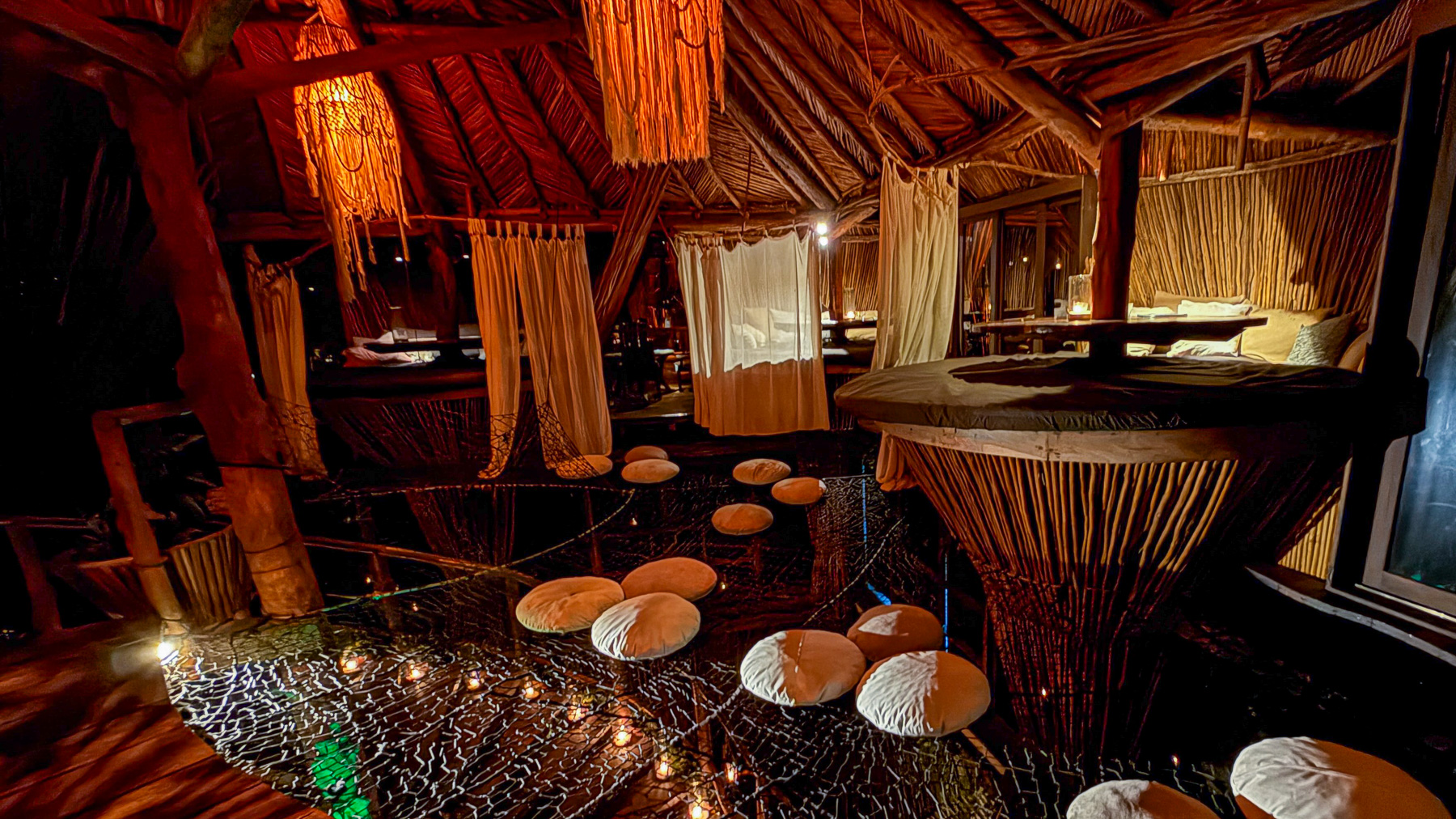
Humans sit “as if in a nest” in nature: this is part of the concept by architect Eduardo Neira, known by the artist name Roth. He works intuitively rather than through planning, views architecture as “letting things grow as in nature,” and consciously rejects right angles. Roth says that straight lines do not exist in nature and restrict human well-being. As a rule, no trees are felled for his buildings; instead, the walls are built around the trees. Forms develop during construction; there are no finished blueprints. Fittingly, Roth prefers to use regional materials such as bejuco vines, wood, and natural stone, but also organically shaped concrete. The Azulik project in Tulum, started in 2010, is considered a holistic architectural concept that combines nature, art, and spirituality. Work is still ongoing today—building, changing, and expanding.