
A bolt from the blue
A Parkinson’s diagnosis changes our lives
Peter’s hands had often trembled so much that he could no longer hold a glass. But in February 2020, in the middle of a PowerPoint presentation to clients, his hand failed completely. He could no longer move it, and therefore couldn’t move the computer mouse either. A colleague had to help him advance to the next PowerPoint slide. This experience was so profound that Peter immediately consulted his family doctor, who referred him to a neurologist. The neurologist gave Peter tablets on a trial basis to compensate for a Parkinson’s-typical dopamine deficiency. Peter responded to the tablets right away—the tremor decreased. The probability that he had Parkinson’s was correspondingly high, but the diagnosis was uncertain. “Do you really want to know?” the neurologist asked. “Yes, of course,” that was no question for Peter. And so he had a so-called DaTscan done, in which dopamine metabolism in the brain is visualized using a weakly radioactive substance. The result we received in early June was clear: Peter has Parkinson’s, the incurable disease that used to be called “shaking palsy” because the muscles—especially in the arms and legs—often tremble (tremor) or become stiff (rigidity) and those affected can only move slowly (bradykinesia).
When more and more nerve cells die in the brain
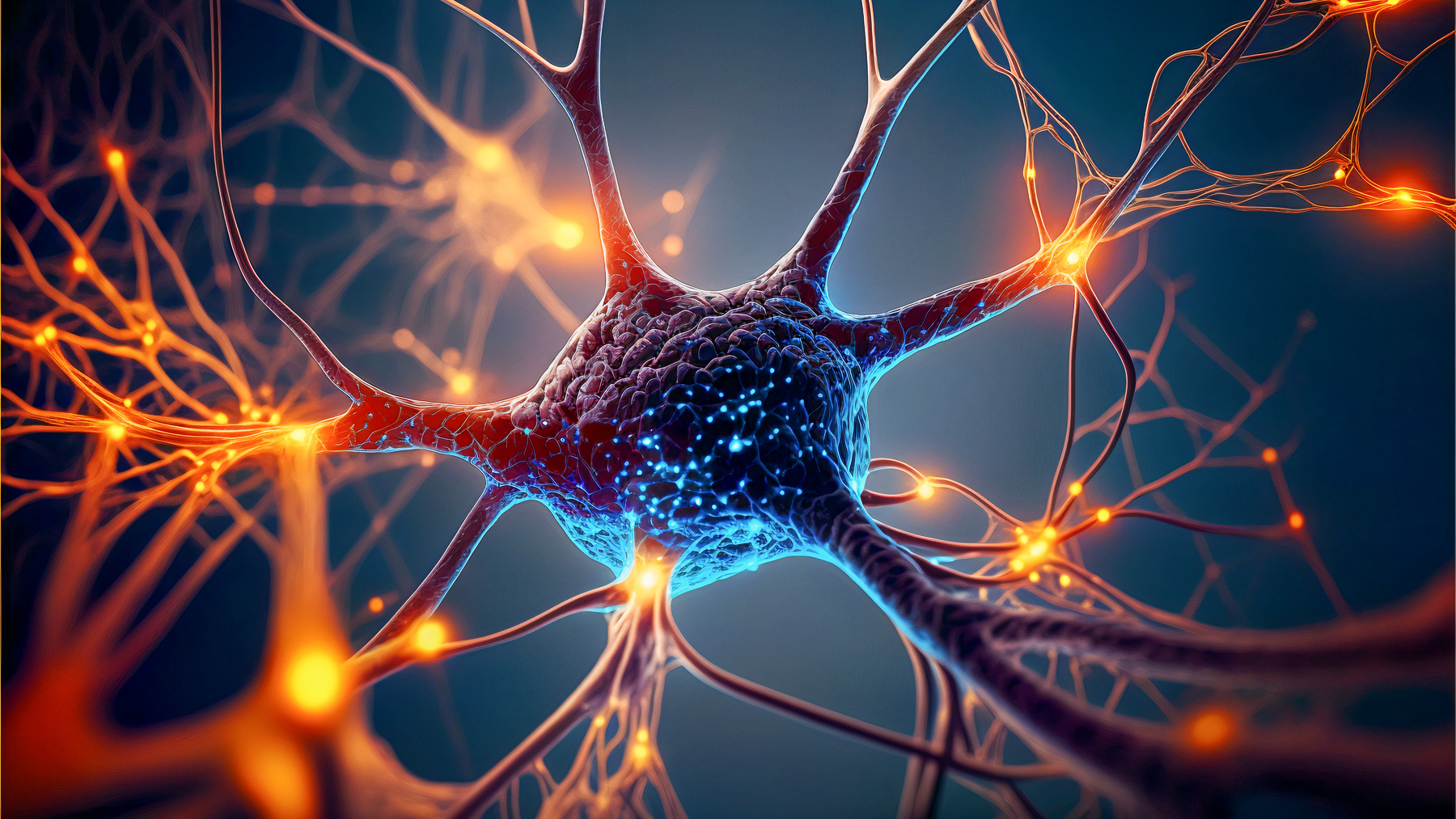
The cause is the death of nerve cells in the so-called substantia nigra of the brain. These cells produce the neurotransmitter dopamine, which controls movement in the brain. When typical Parkinson’s symptoms appear, about half of these nerve cells are already dead. The disease usually begins ten years earlier or longer. There are initial signs that something is wrong. Peter had them too. But we didn’t recognize them. Why? When muscles and joints hurt, it can simply be from yesterday’s run. When hands tremble, it can be stress. When someone walks slowly, they may be tired or it’s the partner who is “simply walking too fast.” When someone falls clumsily, perhaps the slippery floor is to blame. Morning cramps in the legs can be triggered by fluid or magnesium deficiency. What’s so bad about someone letting an arm hang down instead of swinging it with their stride? And who thinks of Parkinson’s when someone speaks more and more quietly?
Now we knew the actual cause: Parkinson’s. The diagnosis came out of the blue. We had just thought that things were looking up in our lives. At the end of 2018, I, Renate, had been operated on for breast cancer, until March I had regular radiation treatments, in spring 2019 rehabilitation followed. And now, barely a year later, this. Before our eyes we see former boxing world champion Muhammad Ali, how he lit the Olympic flame in Atlanta in 1996, trembling and with slow movements, and how he later sat in a wheelchair and had difficulty speaking. In the early 1980s, he was diagnosed with Parkinson’s. Most patients are bedridden and in need of care in the final stage, we read in books about Parkinson’s. The disease has been known for over 200 years, more precisely: since the English doctor James Parkinson described the symptoms in 1817 in an “Essay on the Shaking Palsy.” And there is still no cure. We are shocked: What awaits Peter? From when on can he no longer lead a reasonably symptom-free life?
Of course, research has advanced. In the 20th century, scientists discovered the biochemical cause of the disease. In the late 1960s, levodopa (L-dopa) came on the market. It is still the most effective medication today, which Peter also takes to compensate for his dopamine deficiency in the brain and thus alleviate the typical Parkinson’s symptoms, above all tremor, slowing of movement, and muscle stiffness. Taking dopamine directly is not possible because dopamine cannot cross the blood-brain barrier and would also have significant side effects. Levodopa, a precursor of the body’s own neurotransmitter dopamine, can however reach the brain directly and is converted there by an enzyme into dopamine.
But: Levodopa does not cure, it only alleviates the symptoms. The death of nerve cells in the substantia nigra of the brain continues. Eventually there are no longer enough nerve cells and therefore no storage sites for dopamine. The brain can no longer process the medication properly. The effect no longer lasts long despite increased dosage or sets in and drops off unexpectedly (“on-off phenomenon”), movement suddenly freezes—gait blocks are typical of this. But there can also be involuntary, uncontrollable excessive movements.
Deep brain stimulation—the last resort?
Peter holds his breath. Unexpectedly and suddenly, the right arm of the young man in front of him shoots upward, he seems to pull it back, but the arm shoots upward again. The man sits in a wheelchair and is a patient at the Johanniter Clinic Godeshöhe in Bonn, where Peter is doing a four-week rehabilitation about 10 months after his diagnosis. The man will be barely 45 years old, Peter estimates. The arm shoots up again, flings down and up again, uncontrollably. He wants to hit the keys of the laptop on his lap with his fingers. “The movement went from the buttocks to the head, breathtaking,” Peter says. “And that didn’t stop him from trying again. He was highly motivated.” Eventually the man succeeded and retrieved information on his computer. Perhaps he was a candidate for deep brain stimulation.
Deep brain stimulation (DBS) was considered the “last resort” until recently when medications no longer work properly for Parkinson’s: In a complex operation, electrodes are placed in certain, deeper brain regions and connected via thin cables to a small battery-operated signal generator, which is usually implanted in the chest. This “brain pacemaker” then regularly sends electrical impulses to the electrodes and thus precisely to the areas in the brain that are pathologically altered. Typical Parkinson’s symptoms such as tremor, stiffness, and slowed movement can be significantly alleviated. The effect can last up to ten years before symptoms worsen again.
Traditionally, deep brain stimulation is only used at the end of Parkinson’s therapy. This is now changing, as some studies show that patients with earlier surgery achieve better results. Deep brain stimulation itself has also developed enormously. While conventional brain pacemakers, for example, continuously send electrical impulses of the same strength into the brain tissue, new ones like closed-loop implants adapt to brain activity. That is, they deliver the current impulses more precisely and only when they are needed, thereby reducing side effects.
For Peter it is clear: When he can no longer manage, he wants deep brain stimulation. No matter how terrible the over seven-hour operation is, during which he would participate fully conscious. Because to optimally place the electrodes in the brain, the patient is given tasks during the operation. They should say whether their arm starts to tingle, they should repeat sentences—little tongue twisters—or count backwards from 100 in steps of seven. All to see how mentally alert they are with different electrode placements. Christian Jung described all this wonderfully in his book “Starting Over Again, My Second Life with the Brain Pacemaker.” The book was published in 2020, exactly when Peter received his diagnosis. And for me at the time it was the best book I could find on the market about Parkinson’s. The author, a biologist and science journalist, describes in detail how he experienced the operation and the time afterwards in June 2018—ten years after he learned of his illness. He tells his story, from the first noticeable tremor of his left arm to sleeping on the yoga mat, from which he crawls on all fours or slides on his forearms to the bathroom toilet. It’s easier from the floor, he explains. Because he could no longer leave his bed in the year before the operation, because his legs usually wouldn’t move and his upper body felt as if it were stuck in a suit of armor. Deep brain stimulation gave Jung a second life. Why shouldn’t it help Peter one day?
At the Bonn clinic, Peter meets two women who have already had the operation. One is enthusiastic about deep brain stimulation (DBS), her tremor suddenly disappeared and she could also move much better again, throw balls and do gymnastics. The other woman was frustrated. The operation had done nothing for her, she only had headaches. This is not an isolated case. According to a report in the renowned journal “The Lancet Neurology” from 2019 and other studies, the success rate of DBS surgery is around 70%. But only very few—10 to 15% of all Parkinson’s patients—are even candidates for this operation, meaning: Deep brain stimulation only helps about 7 to 10% of those affected, as stated in the journal Nature Reviews Neurology (2020). Exclusion criteria include cognitive or psychological limitations such as Parkinson’s dementia or severe depression, lack of levodopa response, or wrong timing (too early/too late).
Would deep brain stimulation ever be a “last resort” for Peter? Given these numbers, that doesn’t look very likely, but hope dies last, as they say. And meanwhile, research on Parkinson’s disease is being conducted vigorously at all levels. Jung gives an overview of the latest research approaches and results in his book. He not only describes his own experiences, but adds a chapter on the current state of science for each aspect. That’s what’s great about his book, which is why it becomes a kind of bible on Parkinson’s for me in 2020 and a source of hope. The research includes immunization using antibodies, vaccinations against Parkinson’s, gene therapy approaches, and stem cell therapy. In the last five years there have been further advances. Much research is being done, new active substances are in development, diagnostics have been improved, there are new therapeutic approaches and all kinds of potentially big steps forward, but still no prospect of a cure.
What now, what to do?
Most Parkinson’s patients do nothing, Peter believes, after attending meetings of a Parkinson’s support group. They resign, perhaps work for a while longer and then withdraw from their profession, they give up hobbies, perhaps participate in one or another Parkinson’s therapy and wait while things slowly go downhill for them. He heard a lecture with about 30 other Parkinson’s patients, all sat silently and motionless in their chairs and only one woman asked the speaker a question. Most seemed apathetic and depressed. No, he doesn’t want that. “I want to live, experience something. I want to enjoy life while I still can.” But what?
Until now he had found fulfillment in his profession. As sales manager of a medium-sized machine-building company on the German-Dutch border, he had been very successful. He jetted around the world and especially to China. He enjoyed the work, he saw every problem as a challenge that he almost always mastered. Nothing could ruffle him, he stayed cool no matter how strong the stress was. That was now over. Negotiations with a client where he had to react quickly and find creative solutions became impossible for him. To process information, he suddenly needed forever, any stress brought him to his limits. Then his hands trembled particularly strongly, he could hardly write anything by hand, let alone follow the discussions. The health insurance declared him unable to work based on various medical reports. The pension insurance granted him a reduced earning capacity pension retroactively from October 2020.
What now? Originally Peter had wanted to work until 67 and perhaps—if he still enjoyed it—beyond. He had no plan for life as a retiree. “Parkinson’s has taken away the abilities that distinguished me in my profession,” he says. “Dealing with the ongoing decline is the new challenge of my life.” He often asks himself when he can do something for the last time or perhaps has already done it. “You only notice afterwards that it was the last time in your life.” A neuropsychologist suggests he take a trip around the world. Yes, we had planned something similar later, later. But now? No, I, Renate, still had to work, more than three weeks of vacation at a time was not possible. And Peter didn’t want to travel alone.
The idea: Sailing on the barefoot route
The question mark in the room remained. How should our lives continue? Chance brought the turning point, or indirectly our Plan sponsor child in Egypt. While flipping through “Plan Post,” the magazine of the children’s aid organization Plan International (Issue 2, 2021), my eyes first caught on the term “barefoot route,” and then another word really popped out: Parkinson’s! A Hamburg architect who received this diagnosis in April 2020 had set off on a circumnavigation with his wife—and despite the coronavirus pandemic. Fascinating. Yes, Hans-Jörg (Hannes) Peter, as the Hamburg resident is called, could already sail and a circumnavigation had always been his big dream, which he now brought forward together with his wife Brigitta Wallintin in light of the disease. But it takes something to quickly put everything into action within nine months after such a diagnosis. From our perspective, a perfect decision. Oh, if only we could sail! But yes, we needed something similar too!
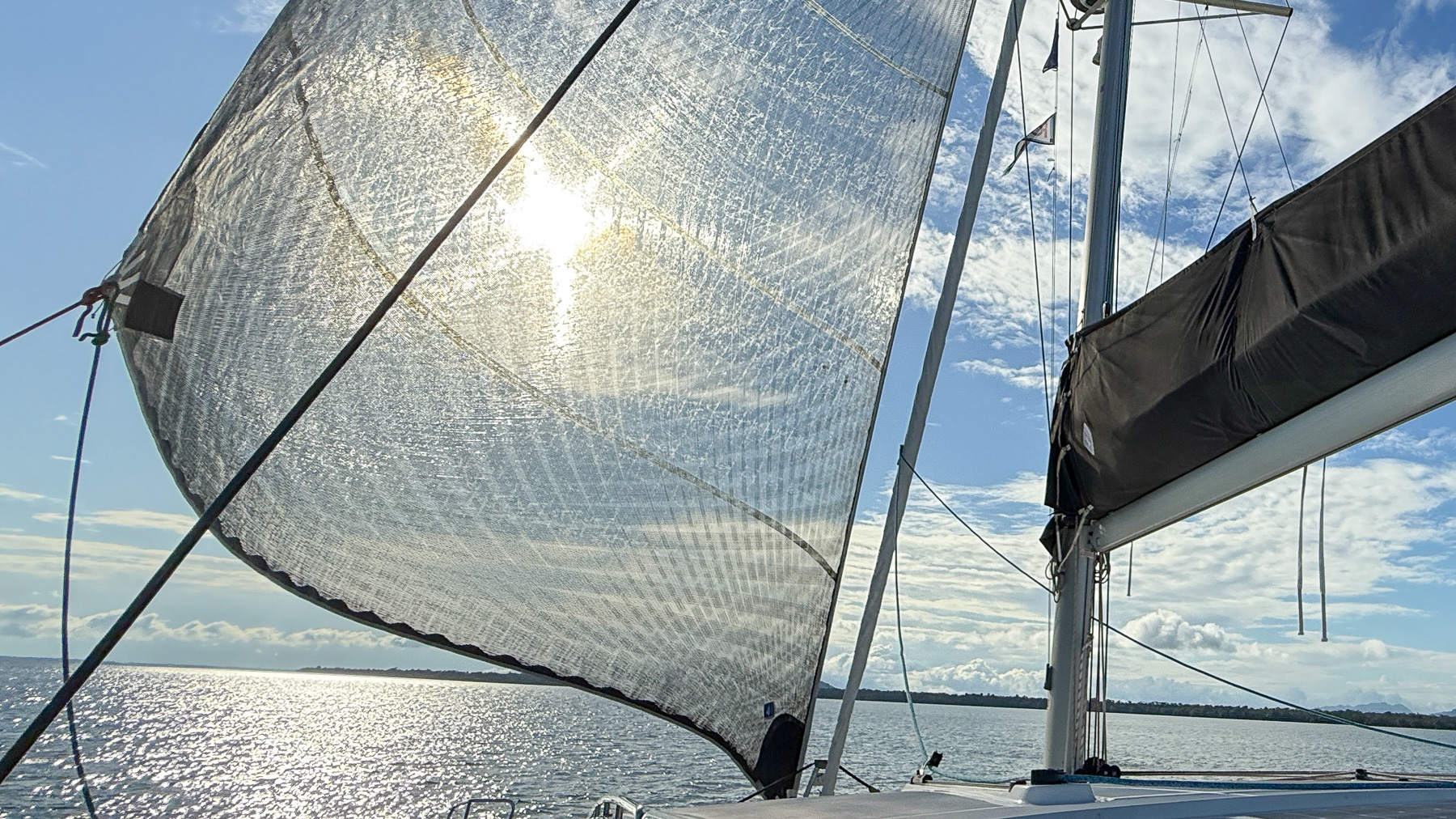
The “barefoot route” is a classic sailing route around the world that runs mainly through tropical and subtropical regions. There it is usually so warm that sailors can walk barefoot on deck. The traditional route leads from Europe via the Canary Islands, which geographically belong to Africa, to the Caribbean and then through the Panama Canal to the South Pacific, to Australia/New Zealand, Indonesia, and through the Suez Canal back to the Mediterranean to Europe. Because of the pirate danger and political-military tensions in Yemen and Eritrea, most sailors have avoided the passage through the Red Sea to Suez for many years. Instead, they sail around the Cape of Good Hope in South Africa and either return to Europe along the west coast of Africa or sail via Brazil once more to the Caribbean to then use the westerlies across the Atlantic back home. The barefoot route is considered the easiest route around the world: because of the pleasant climate, because it uses the steady trade winds (no laborious tacking), and because there are many stops. So it is also suitable for beginners, we read in our internet research.
Why don’t we just do it like Hannes and Brigitta?, Peter asked. If we can’t sail, we’ll just learn to sail. The article about the two Hamburg residents of the same age had electrified him. “We’ll get our boat license, we’ll manage to sail across the Atlantic, we’ll sell our house, we’ll buy a sailboat…” And he was already calculating and calculating. The result: We would somehow manage it financially, even if I gave up my job. But do we dare? A little uncertainty remained, which is why Peter attended a seminar by the famous and now very old German circumnavigator Bobby Schenk. Right afterwards we went looking for a skipper who would teach us to sail and we got the necessary motorboat license in Oberhausen—on a tributary of the Rhine. While I worked, Peter visited a skipper in Bavaria. And through this skipper we learned of a Swiss man who wanted to sell his catamaran, a Lagoon 450S. That same week in November 2021 we viewed the boat in Loano, northern Italy. Three days later we had agreed with the owner on the purchase. In May 2022 we took over the Lagoon, our Amira. Now we had a boat without being able to sail, yes, without ever having sailed before. “We’re crazy,” we said. Would we even like it?
On the high seas
Meanwhile we can say: Yes, we love bluewater sailing, as sailing on the high seas is called. And we love life on board. Even though it demands a lot from us. And we often curse because so much is so difficult, something has broken again and spare parts are not available. Yes, of course: “Circumnavigating is repairing your boat at the most beautiful anchorages in the world.” We had read this saying or similar sayings before our trip. Despite all that, we hadn’t expected so many repair jobs that constantly arise. Whether that’s good or bad for Peter, we don’t know. Physically, working on the mast or lying down with arms around corners under the floor panels is very strenuous for him. When a screw falls down because of hand tremors, it’s very annoying for him. But mentally, the search for solutions keeps him sharp. He’s good at improvising.
Whether we will ever sail around the whole world is uncertain. Everything depends on Peter’s Parkinson’s. We sail as long as we can. The reports and videos of MariaNoa have always accompanied us, they have inspired us and given us courage. After almost five years, Hannes and Brigitta have now landed in Australia, where they want to sell their boat, the MariaNoa (as of May 2026). Hannes’ Parkinson’s is not the reason. Brigitta finds the long passages too much and wants to see her grandchildren grow up in Germany. Yes, we understand that. Nevertheless, it makes us a little sad. “Will miss you,” writes one of the approximately 3,000 YouTube subscribers of MariaNoa. We will too. Hannes and Brigitta have made around 150 films and published about the same number of reports on their homepage—about the stages of their journey with islands like San Blas or Fiji, bright-colored vintage cars in Cuba, pigs swimming in the sea in the Bahamas, or sailing into the past to Vanuatu, they tell of precarious experiences like a propeller loss or a lightning strike, give tips for repairs and maintenance, and disclose their costs on long passages. Here are the links: sailing-marianoa.de and https://www.youtube.com/channel/UCv3YYc-rSIAM_3kfOsmf4Hg
“Go anyway”
The reference to Lyn Foley’s book “Go Anyway, Sailing Around the World Despite Parkinson’s Disease” also comes from MariaNoa. Lyn Foley is an American artist (glass jewelry and watercolor painting) whose husband Jim received a Parkinson’s diagnosis in 1990 at the age of 42—shortly before the two wanted to start their circumnavigation. A neurologist strongly advised Jim against making the trip. But his intern whispered to him: “Go anyway.” Parkinson’s is not a death sentence. Don’t let Parkinson’s stop you from doing what you want to do in life. Over time everything may become more difficult, but he should stay as active as possible. And Jim did exactly that. In the end he sailed around the world with Lyn for ten years—while his Parkinson’s symptoms became increasingly severe and precisely because of this there were also critical, truly life-threatening situations at sea.
“The secret of reaping the greatest fruitfulness and the greatest enjoyment from life is: to live dangerously! Build your cities on the slopes of Vesuvius! Send your ships into uncharted seas!” writes Friedrich Nietzsche in his work “The Gay Science” (1882). Foley takes up this quote in her book. It is somewhat taken out of context, but we still find it apt. We leave our comfortable, because familiar, life, we overcome fears, dare something new. We take a risk, but through this we get to know foreign countries and people, other customs, traditions, and new ideas. We think that’s great. In this sense, we accept the new challenge of our lives, Peter’s Parkinson’s, and embark on the adventure.


