Tulum III: Swimming in the Cave River
Numerous collapsed limestone caves in the region / The Gran Cenote leaves you wanting more
By Renate Rüger, April 13, 2026
Mexico – Time flies by. When we returned from our tour of Mayan ruins around 3 p.m. we want to visit a cenote, we realize that, how tight the schedule is. Cenotes are collapsed limestone caves that are connected underground rivers connected are. For the Maya, they were sacred and vital, because on the Yucátan peninsula there are hardly any surface rivers or lakes. The cenotes were their source of fresh water and at the same time entrance to Xibalbá, the place of fear. Here they believed they could communicate with their ancestors to Xibalbá and at the same time the entrance to Xibalbá, the place of fear. Here they could communicate with their ancestors, they believed. Here they also brought human sacrifices in order to appease the gods. Today the cenotes are primarily used for tourism.
It is estimated that there are between 5,000 and 10,000 cenotes in Yucatán, with thousands of them near Tulum. It’s impossible to give exact numbers because many cenotes are hidden in the jungle, haven’t been documented yet, and new ones are constantly forming. In any case, this is considered the largest cenote system in the world. All around us are dozens of cenotes that are easily accessible and marketed as outdoor swimming pools. And that means they also have set hours of operation. Most of them close at 5:00 p.m. We hadn’t expected that.
The man at the hotel front desk had recommended the Sac Actun cenote to us. That’s the name of a less touristy entrance to the Sac Actun cave system, which stretches for hundreds of kilometers—a vast labyrinth of water-filled passages. In photos, we see a river with stalactites hanging overhead and promising light streaming in through an opening. But it’s too far to just pop over there. So, what about the Dos Ojos Cenote, which is also part of the Sac Actun system and features equally spectacular, mystical-looking photos with beams of light piercing the crystal-blue water? … No, by the time we get there and change into our swimwear, there won’t be enough time either.
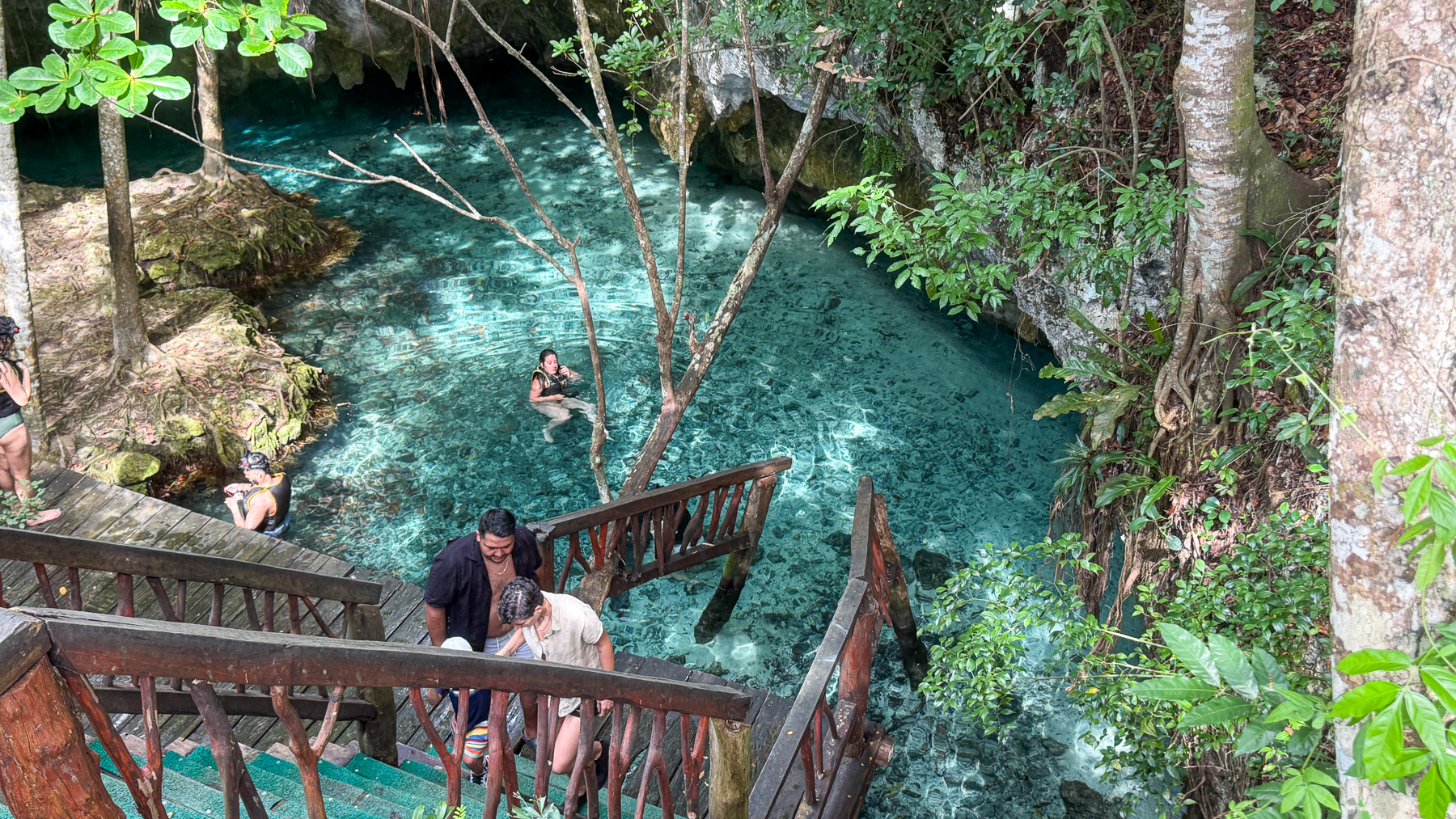
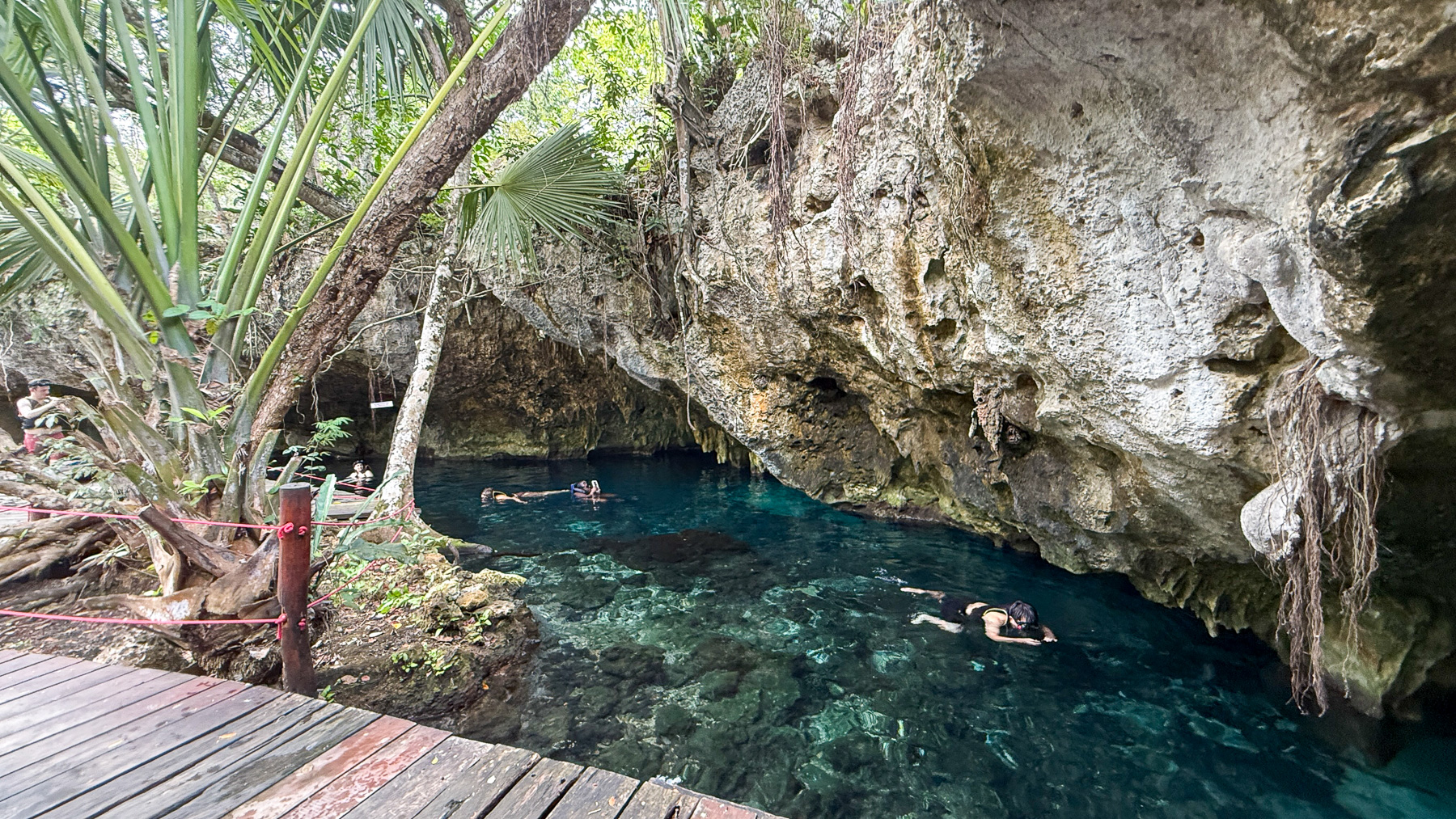
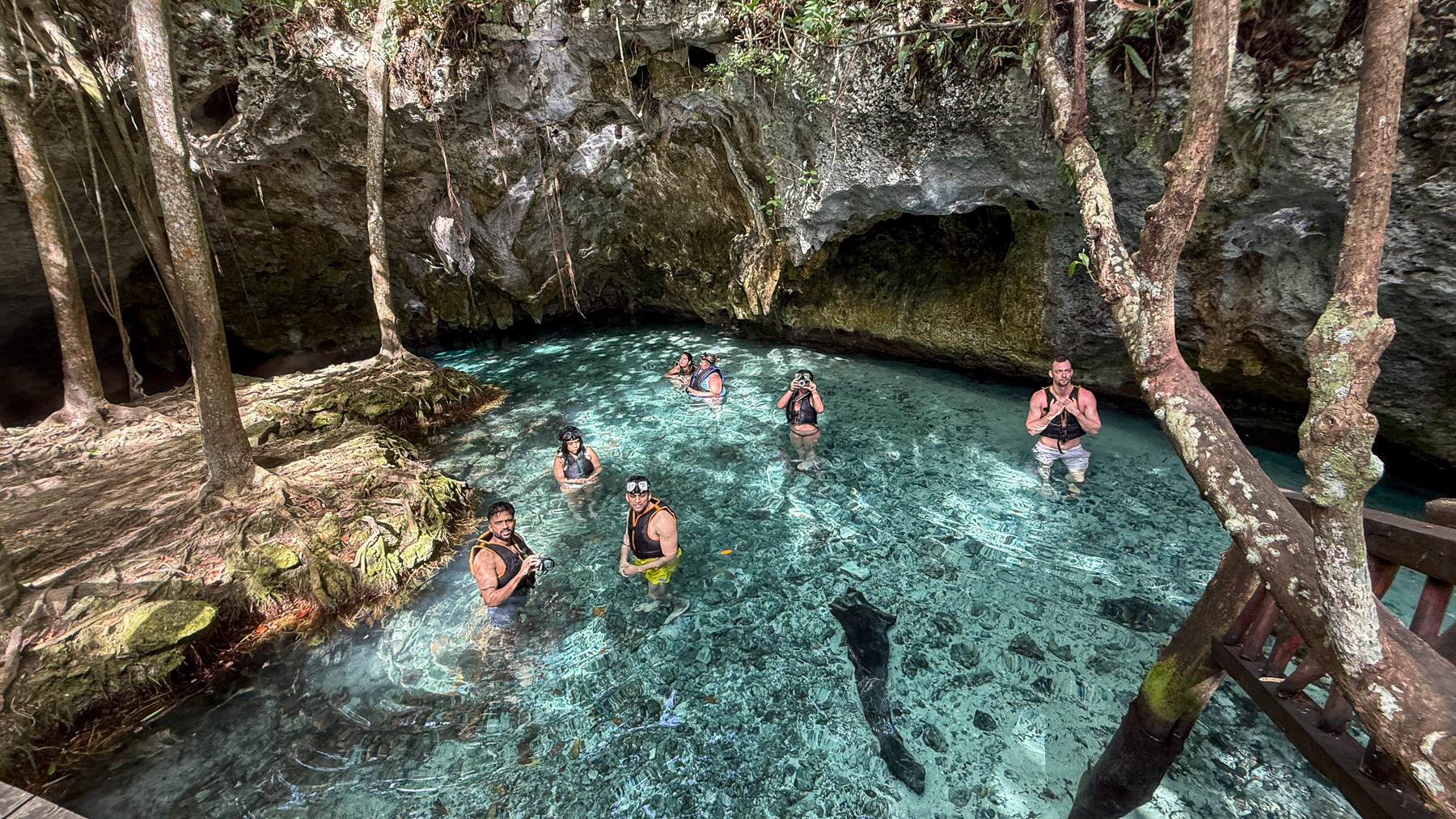
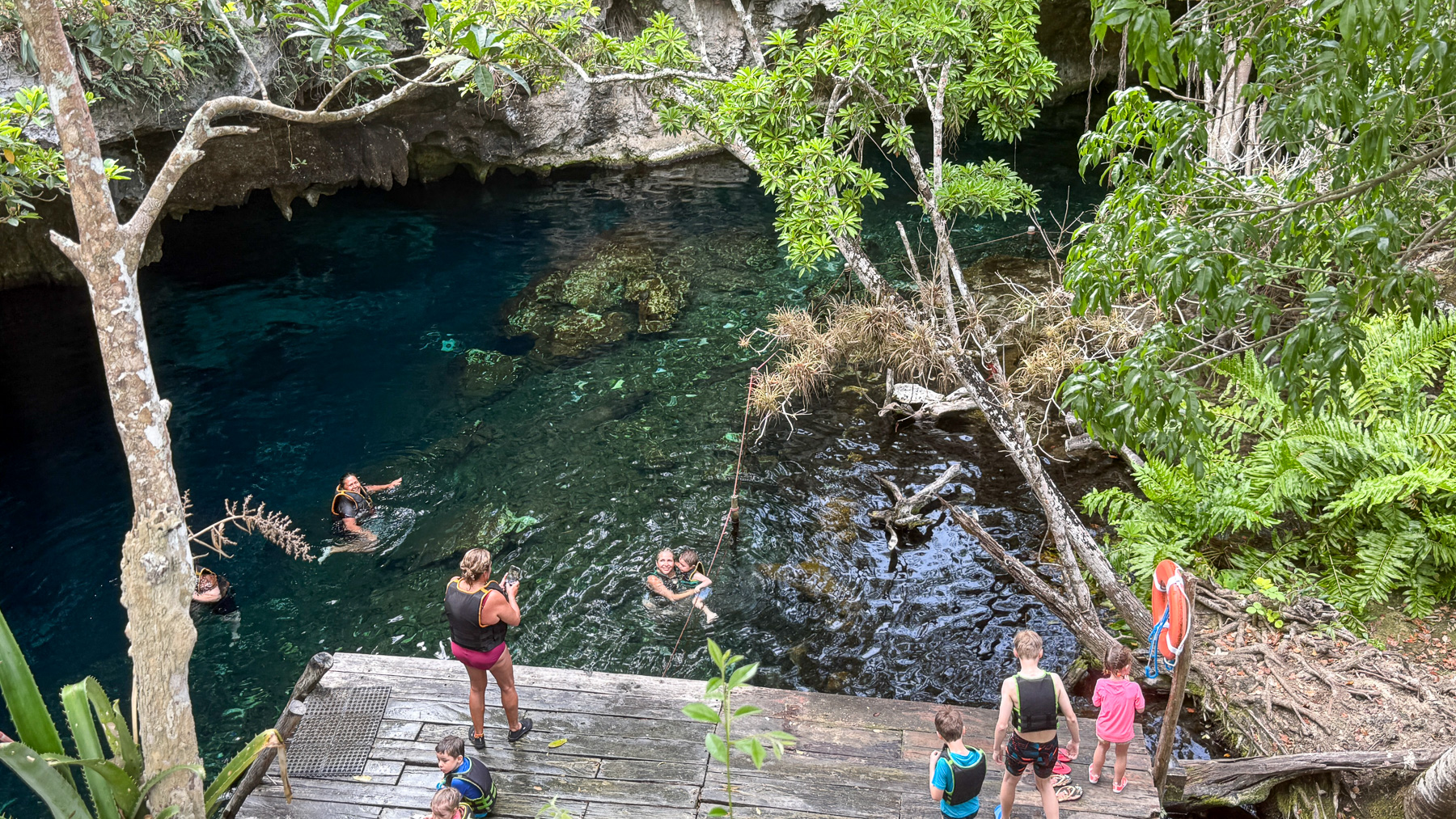
So we decide to go to the Gran Cenote, which is practically right around the corner from the hotel. Four kilometers and we’re there. The Gran Cenote is considered one of the most famous and photogenic cenotes. When we arrive, there aren’t any crowds, as described in some travel guides. The attendant looks at us with a “What are you even doing here?” expression, collects 500 pesos (about 25 euros) per person, and directs us to the restrooms, where we can change. The facility looks like an outdoor pool to us, and we hear German or French being spoken in a striking number of places. Showers and life jackets are mandatory here.
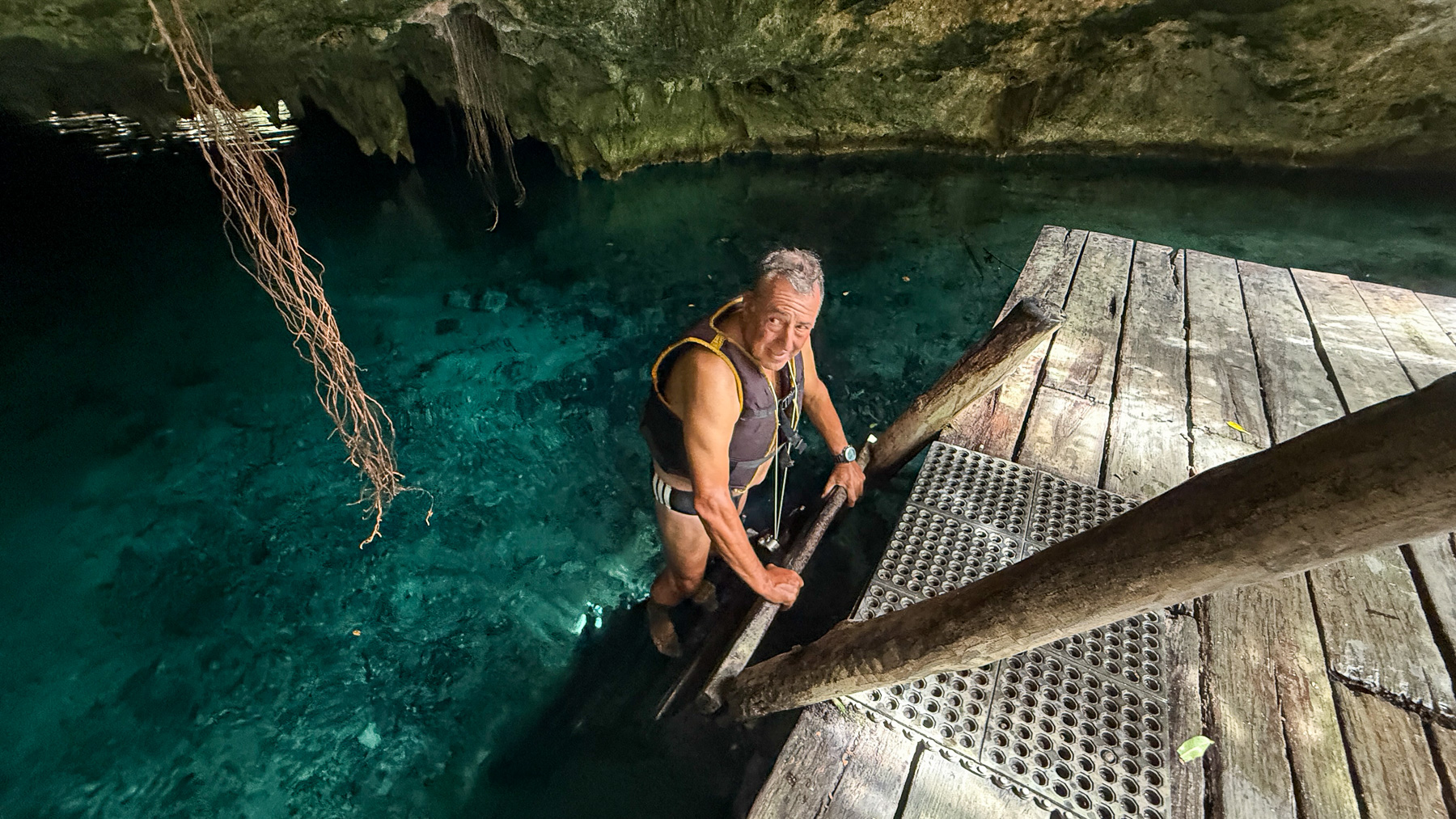
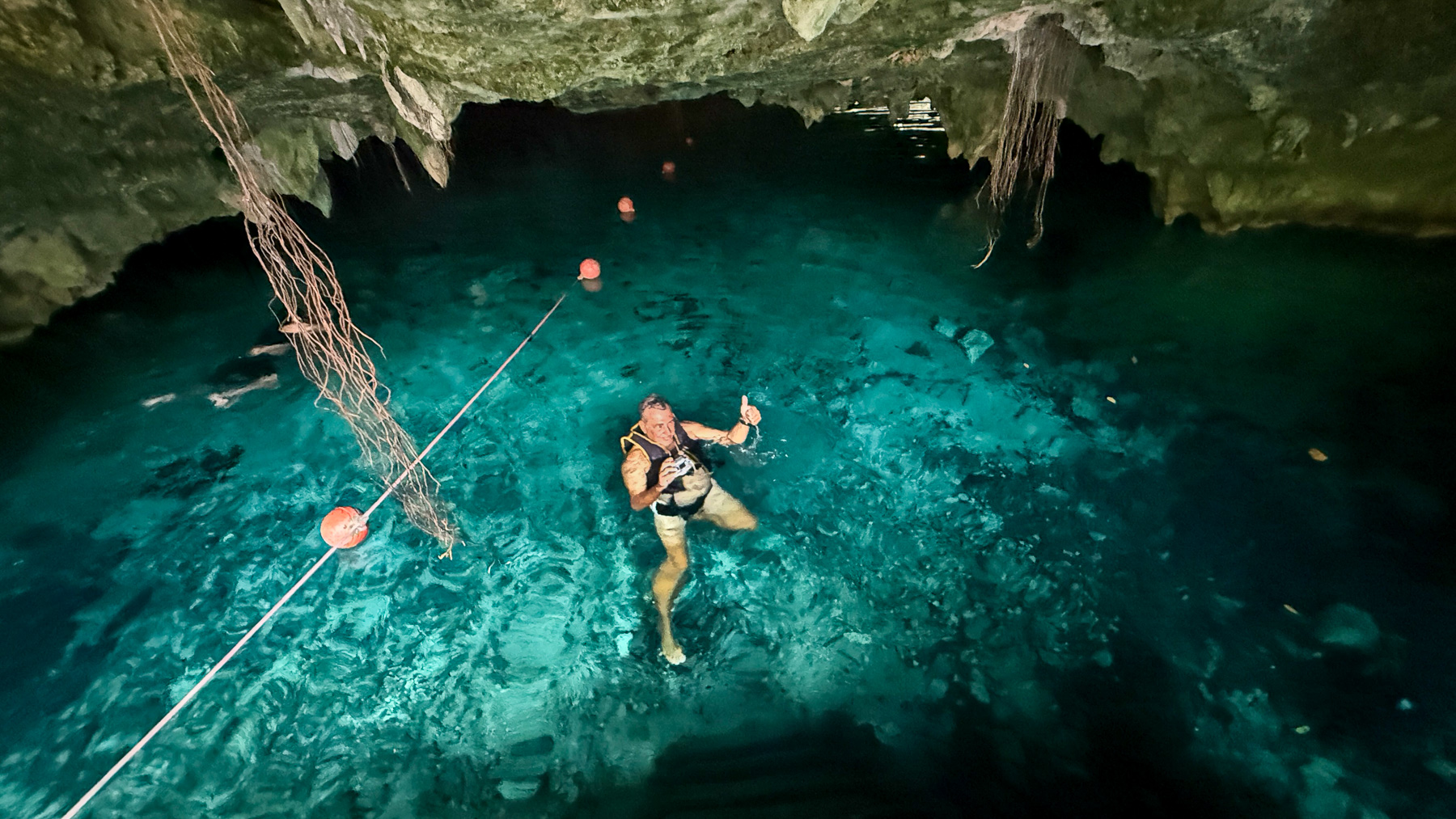
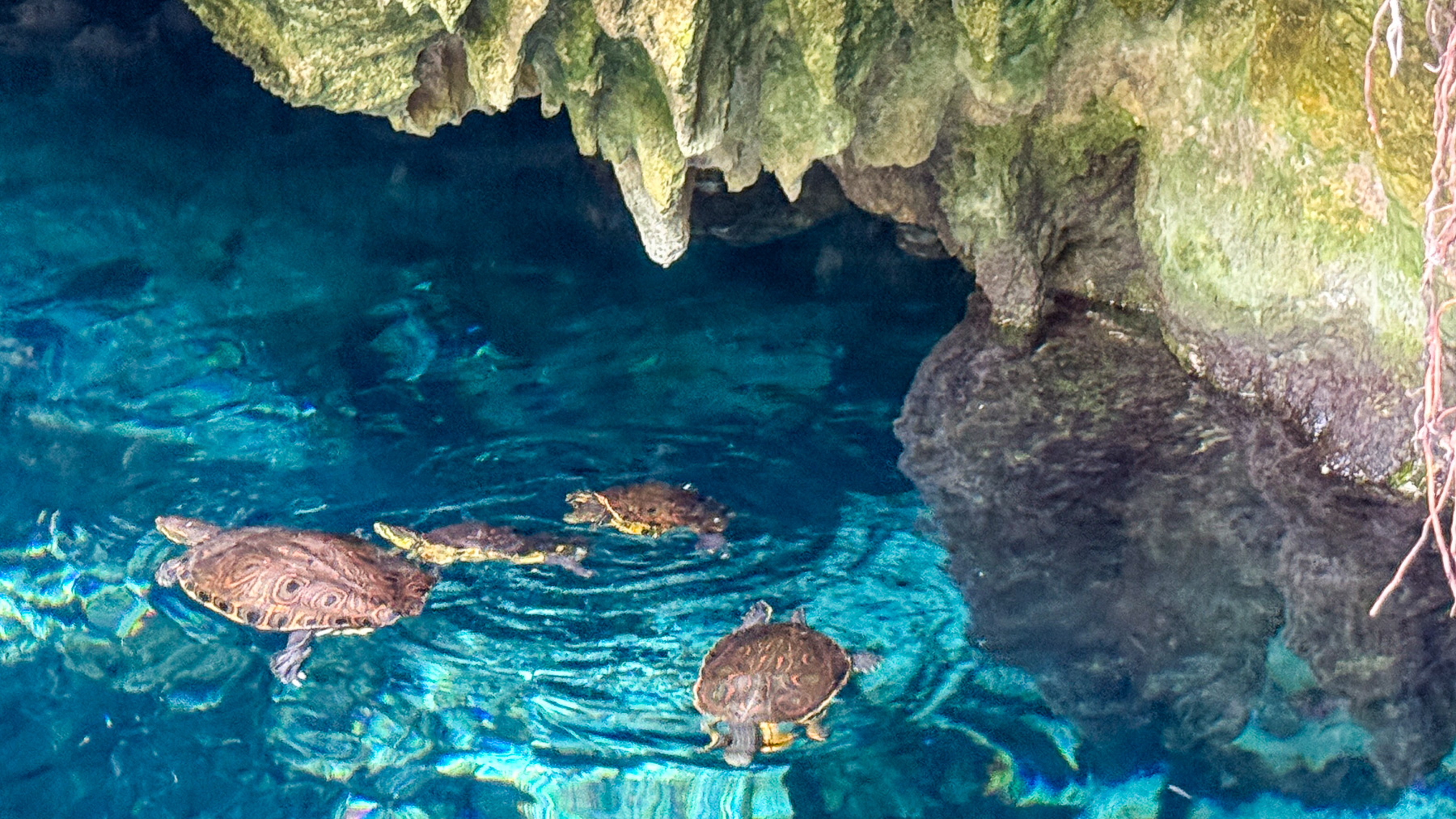
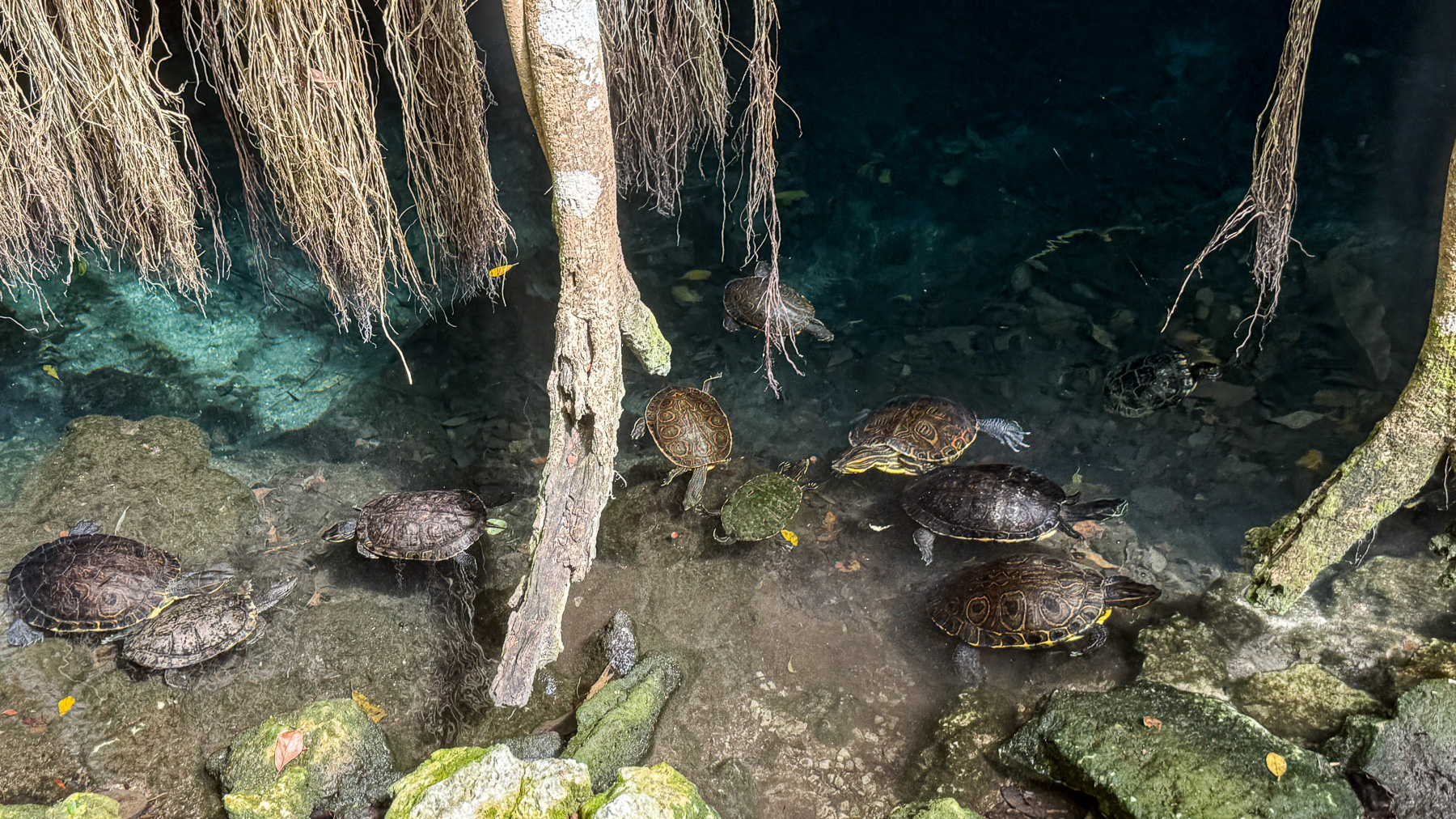
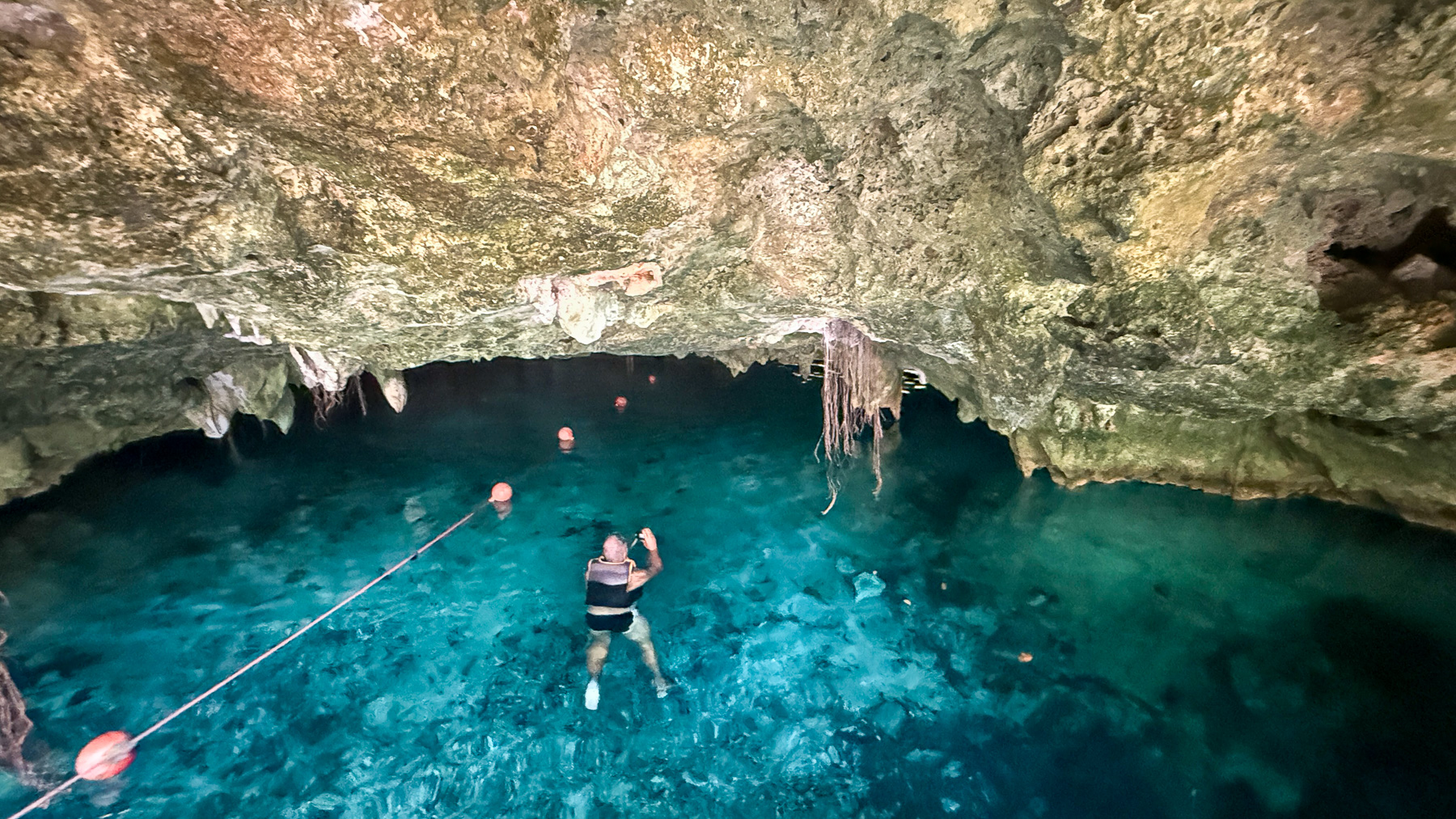
Stairs or ladders lead down into two water holes connected by a cave. Way to the left, under a ceiling of stalactites in the darkness, bats are fluttering about; in the passage leading to the other cave, small turtles swim toward us; and after passing through the cave, plants and sunlight are reflected in the turquoise water. The whole place is much smaller than we’d imagined. It’s beautiful, but not as spectacular as advertised. Peter from the Pia, who’s testing out his new GoPro action camera, is having a blast. The rest of us are a little disappointed. But visiting this cenote swimming area has done one thing: it’s made us eager for more—to visit other cenotes, and maybe even go diving in the Sac-Actun cave system.