
Against the current
On the way to Utila, we can hardly make headway against the current
By Renate Rüger, April 22, 2026
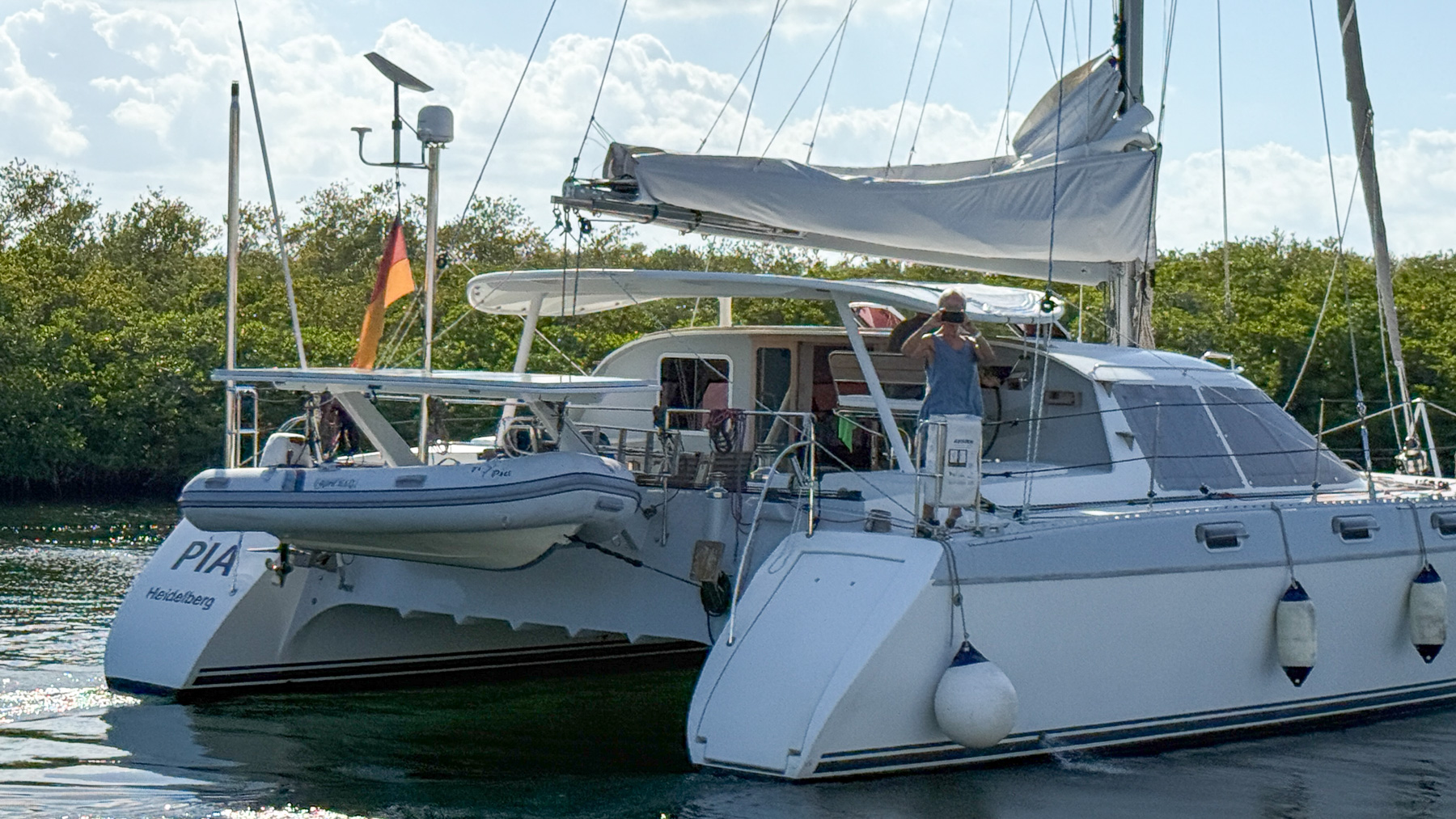
Pia, with our friends Peter and Dorothee, is already on her way to Key West, USA. Saying goodbye was hard for all of us. We would have loved to continue together. But unlike the “Pianists,” we don’t have the B1/B2 visa for the USA, which is mandatory for sailors. Otherwise, we would have gone to the Bahamas together. But without a stopover in Key West or Cuba (which is currently difficult anyway), we would need a good, safe weather window for a week given the strong current. And that just isn’t opening up. Things are getting tight for us: hurricane season starts in June. Even if we managed to get to the Bahamas sometime in late April or early May, we could only stay there briefly and would then likely have trouble making our way back south to hurricane-safe territory. Because whether we go to Panama or back to the Rio Dulce for now: the Windward Passage between Cuba and Haiti, which we would have to take, is no walk in the park. Sailors have been known to wait a month for a weather window there. We give up and head back, first to Utila, Honduras.

We want to leave around 8 AM and quickly fill the tanks at the gas station right next to us beforehand. But nothing comes of it, at least not for now. A motor yacht is hooked up to the only diesel pump here. I jokingly ask if they’ll leave any fuel for us. Around 9 AM, Peter goes over to ask. The motor yacht wants to take on 12,000 liters, and it’s supposed to take until 1 PM! We don’t even want to imagine how many pesos the owner has to pay for that or how long the diesel lasts with those heavy engines…
In the Yucatán Current
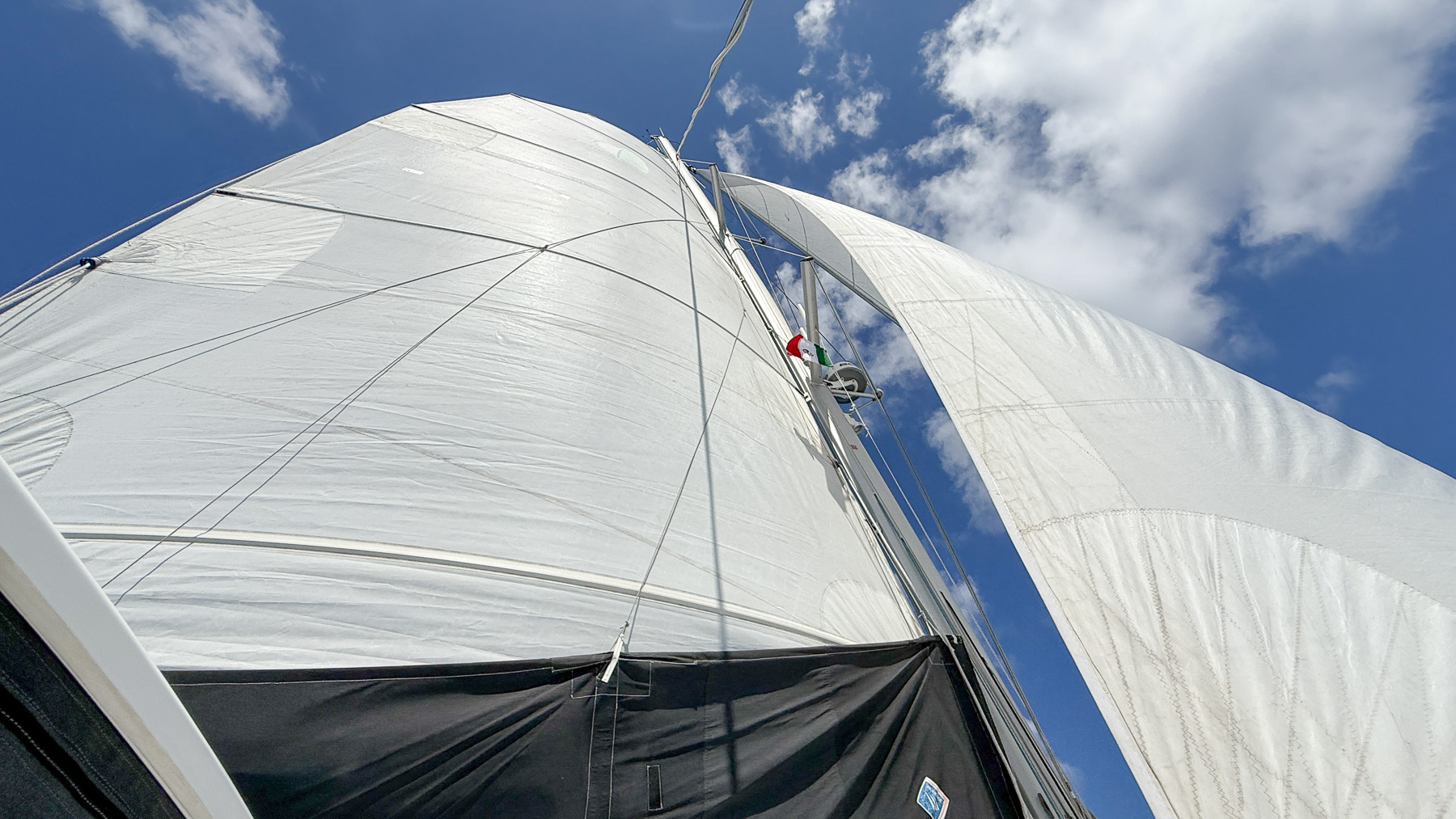
By 3 PM, we’ve left Isla Mujeres behind. We sailed once more through the enchanting, emerald and sapphire-like glowing sea towards Cancún and then south. The mainsail and genoa are hoisted; with only 7.8 knots of wind, we’re making good progress (SOG – Speed over Ground: five knots).
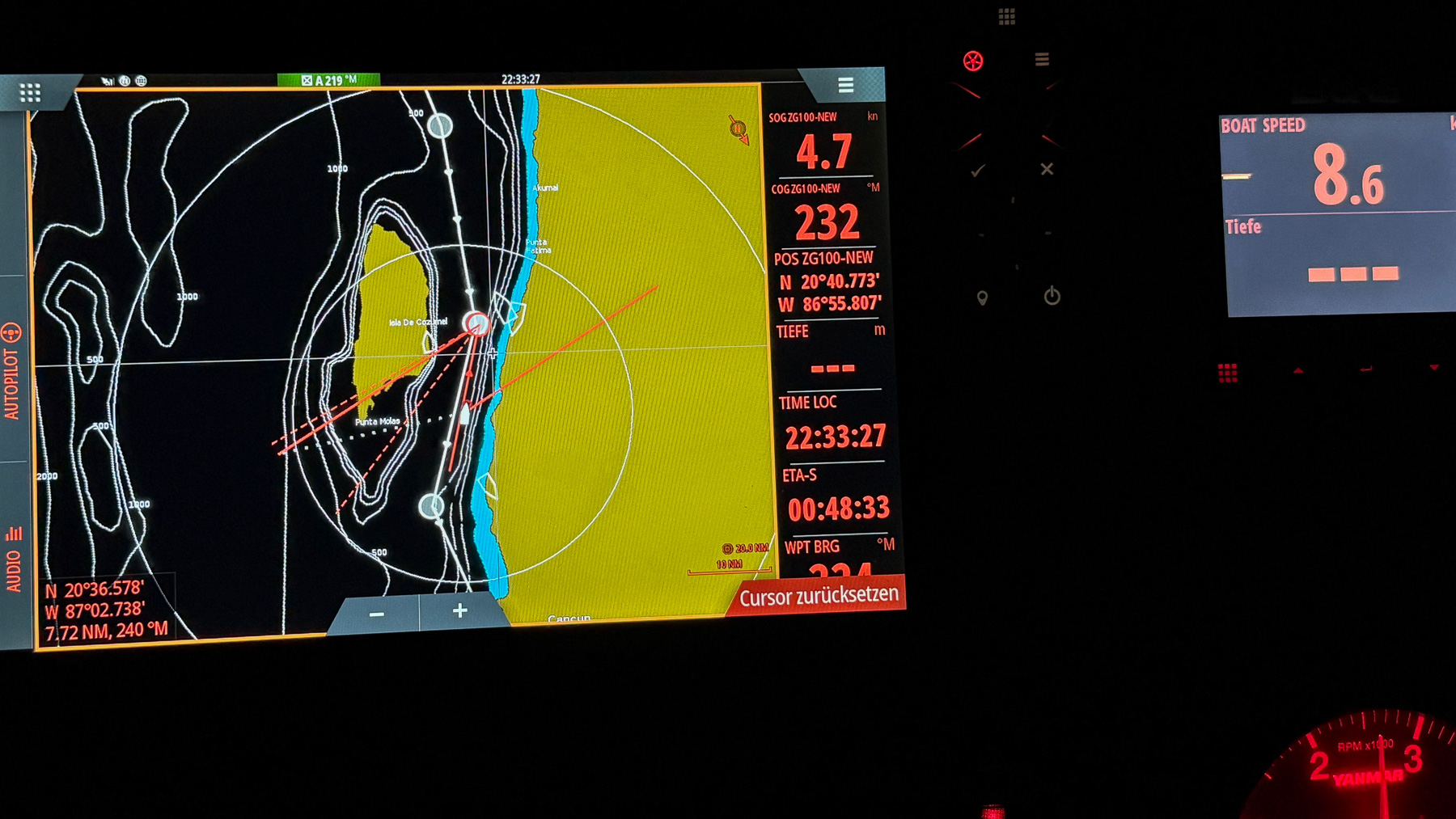
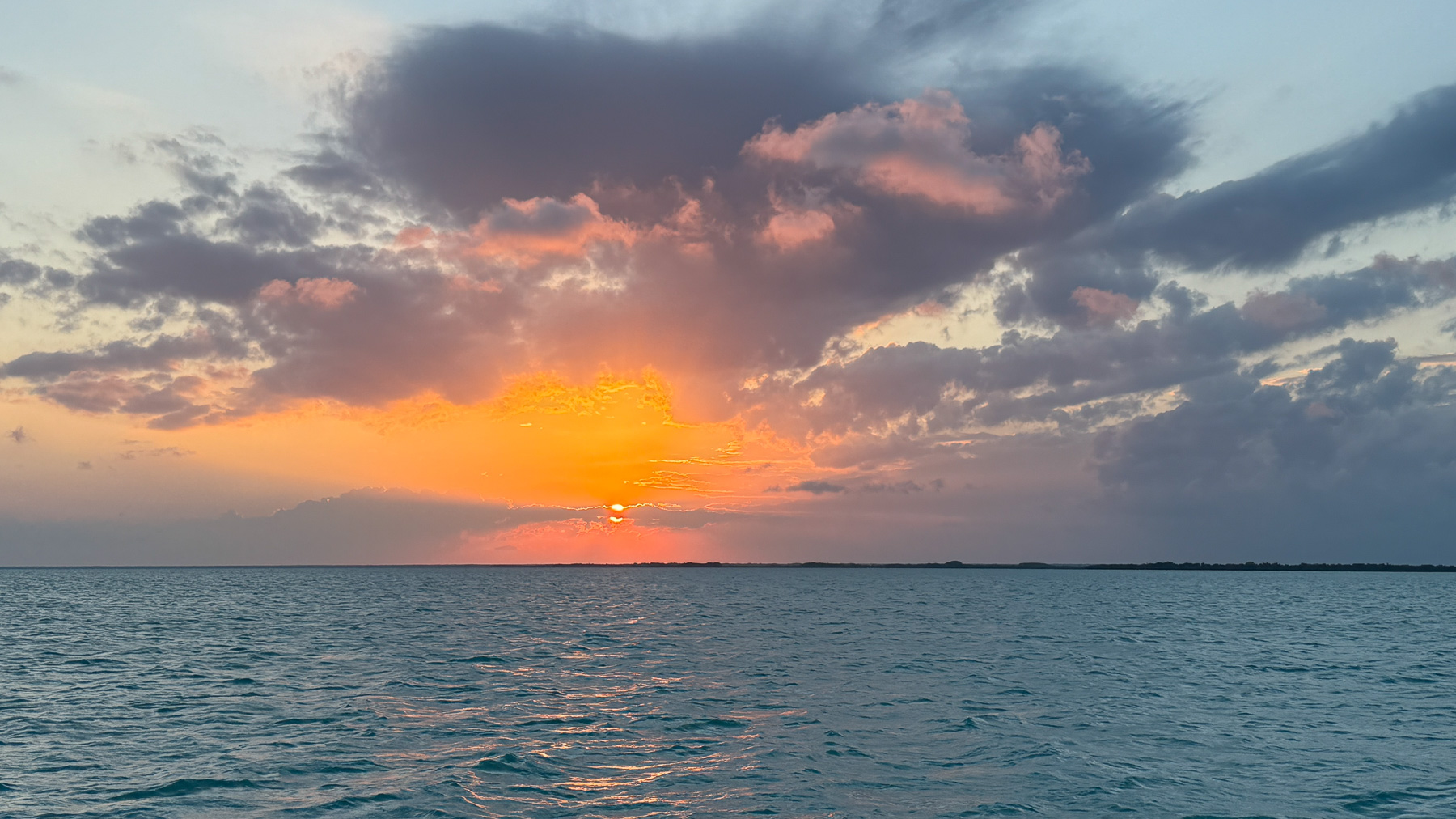
Three hours later, we’re almost stuck in the Yucatán Current. Our Amira is doing six knots with 14 knots of easterly wind, but we’re hardly moving over ground because of the counter-current. We’re only doing two knots, which is 3.7 km/h, and it gets even slower later. So the current slowing us down must be four knots against us, much more than the predicted 1.8 knots. Should we pass Cozumel to the east or west, between the mainland and the island? According to the chart, the current is stronger to the east, but there will be a suction effect between the mainland and the island, again against us. Nevertheless, we decide on this option, which is also shorter.
We’re not getting anywhere
The sun goes down, it gets dark. We start the engine and reach four knots SOG. The wind picks up a bit, now coming from the northeast. By 10 PM, we seem to be just rocking violently in the waves, at 1.8 to 3.5 knots – depending on whether we’re going up or down with the wave. We’re tired of it; the sails aren’t getting us anywhere. We pull them in and crank up the engine, full throttle against the current. At nine knots, we reach 4.6 to 5.6 knots SOG.
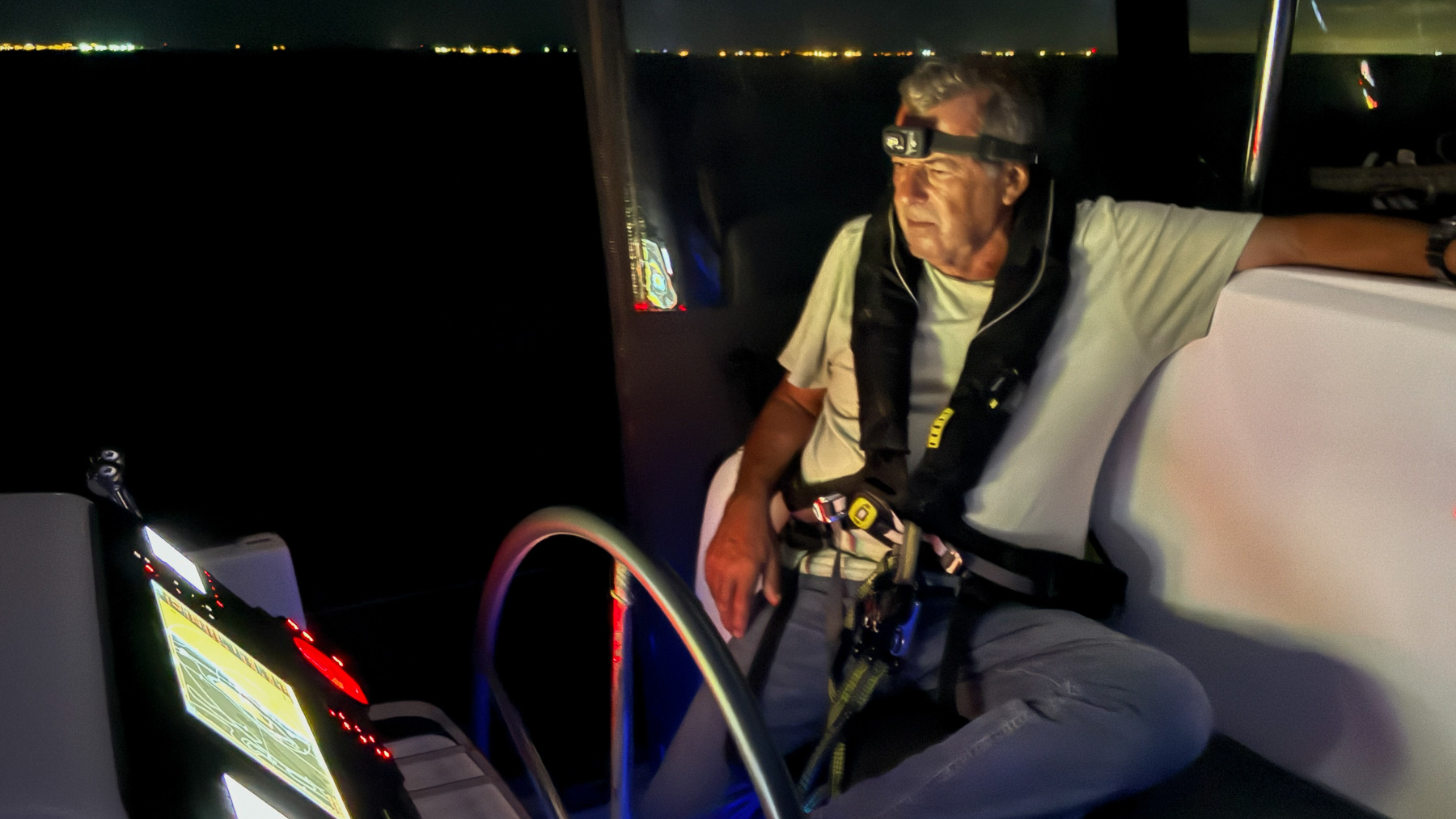
It feels like being on a treadmill. We’re going and going with full power and yet only making 9 to 10 kilometers an hour. The distance drags on. We eat the last pieces of Lindt chocolate that Peter was given by the Pia crew for his birthday. Where might Dorothee and Peter be now? On the shore far away, we see fireworks. We decided long ago to take a break in Mexico. We want to spend the night in Punta Allen, a large bay.
When we reach the middle of Cozumel around 3 AM, the suction effect and thus the current subside. We only have 1.5 knots against us. We pull the sails back up and continue in hybrid mode – with 5 knots SOG per hour. Two hours later, we’re bobbing along again: SOG 2.2 – 2.5 – 1.6 knots… depending on whether we’re going up or down the wave.
In the surreal world of Punta Allen
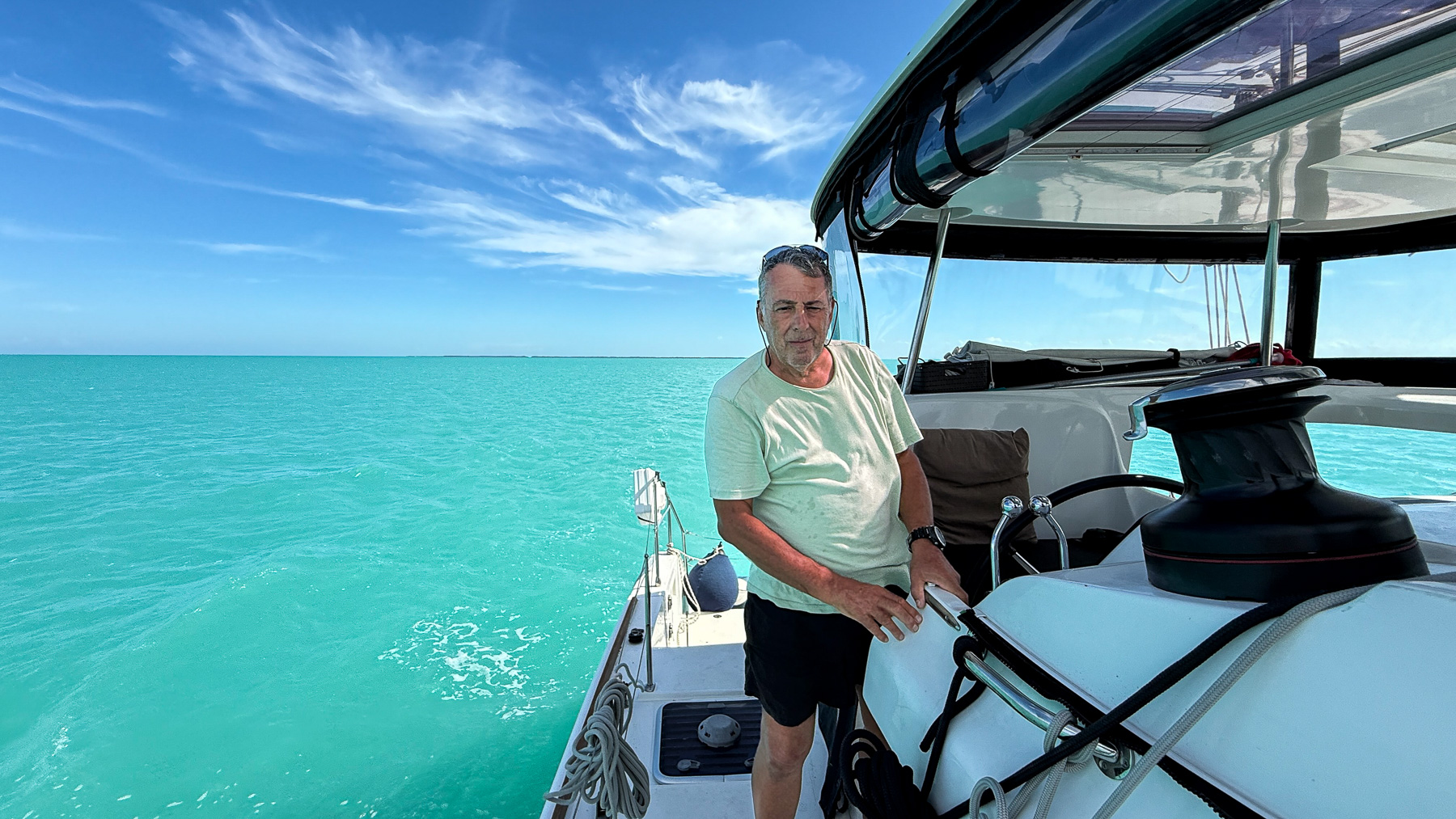
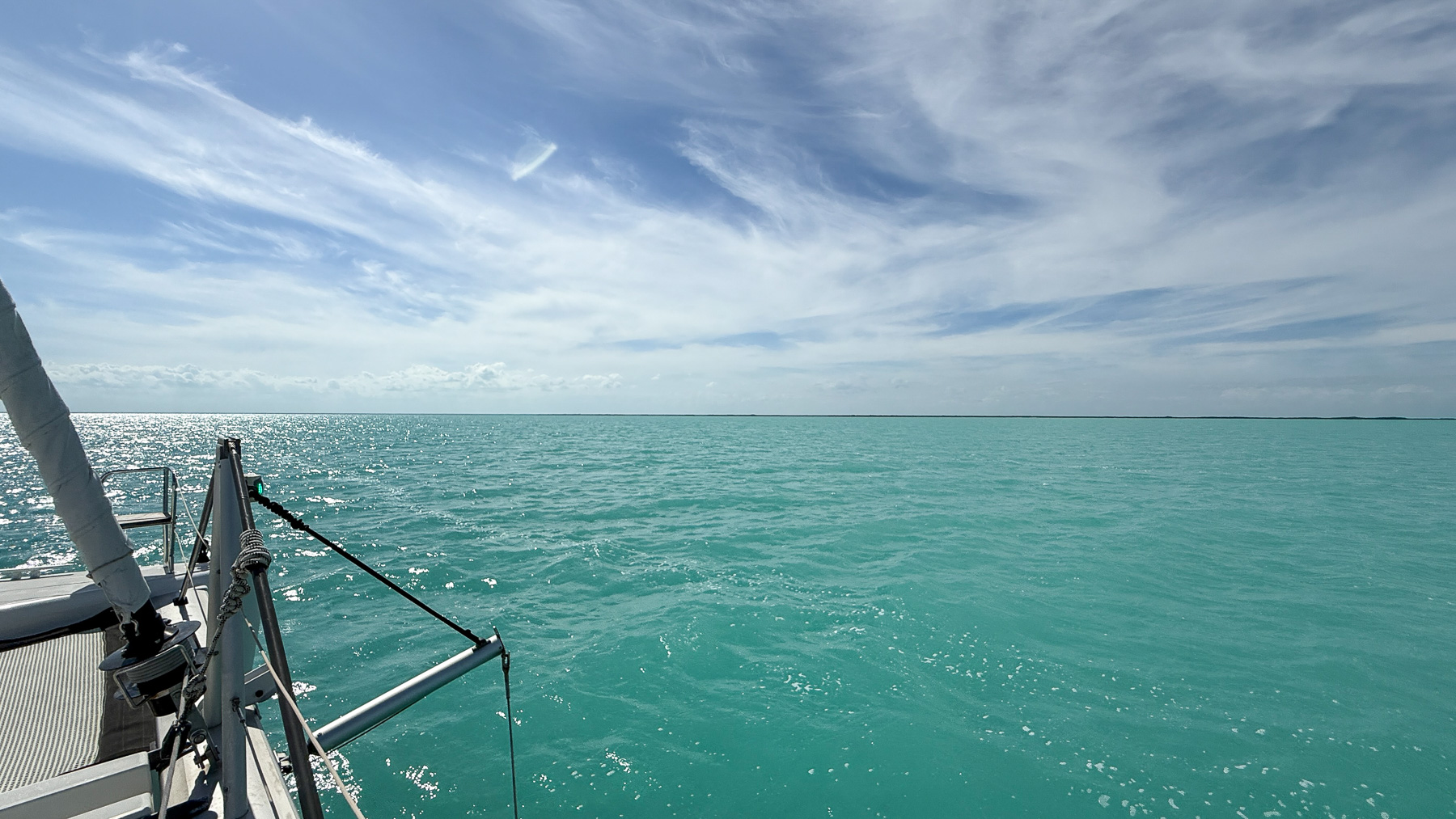
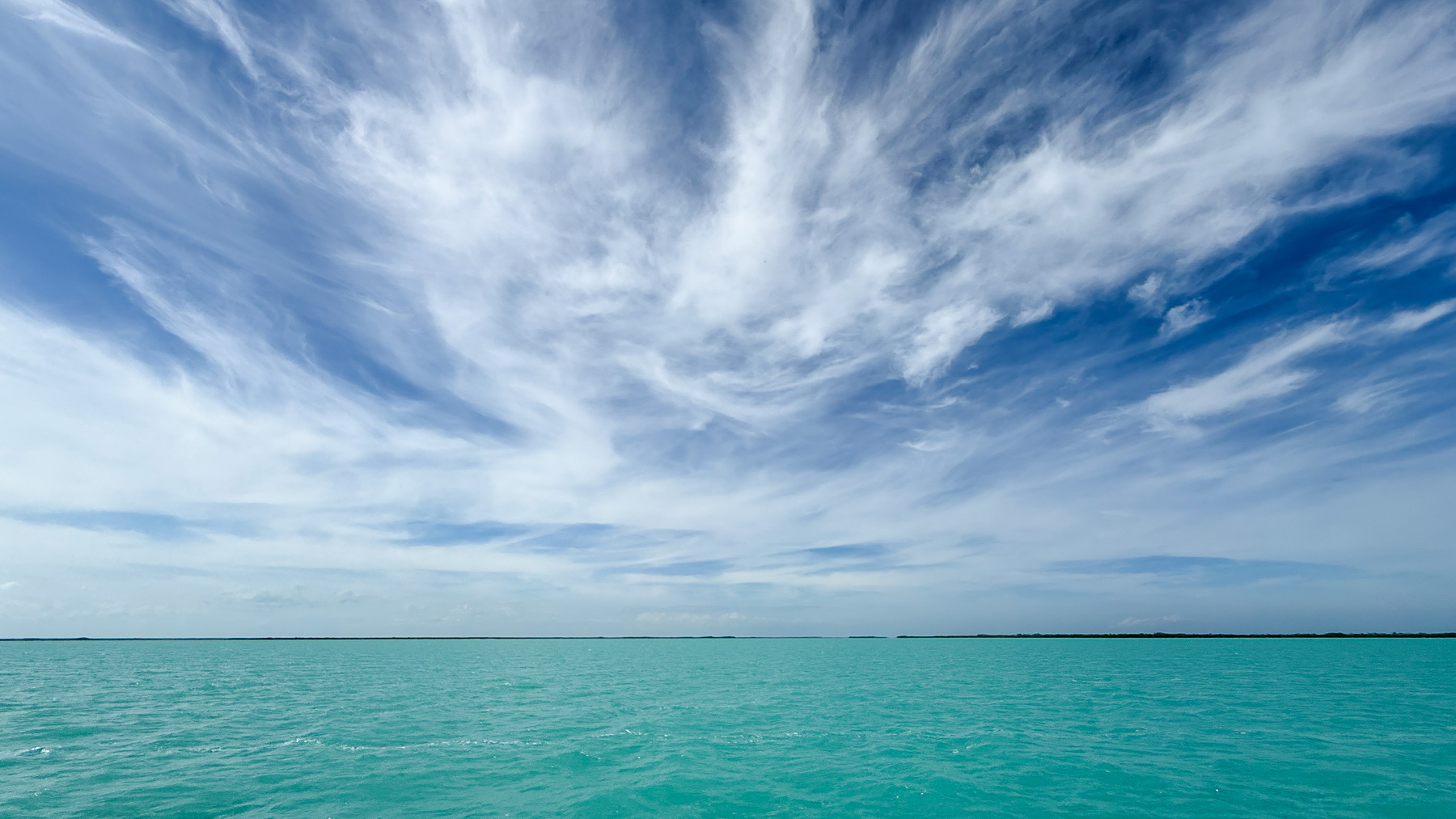
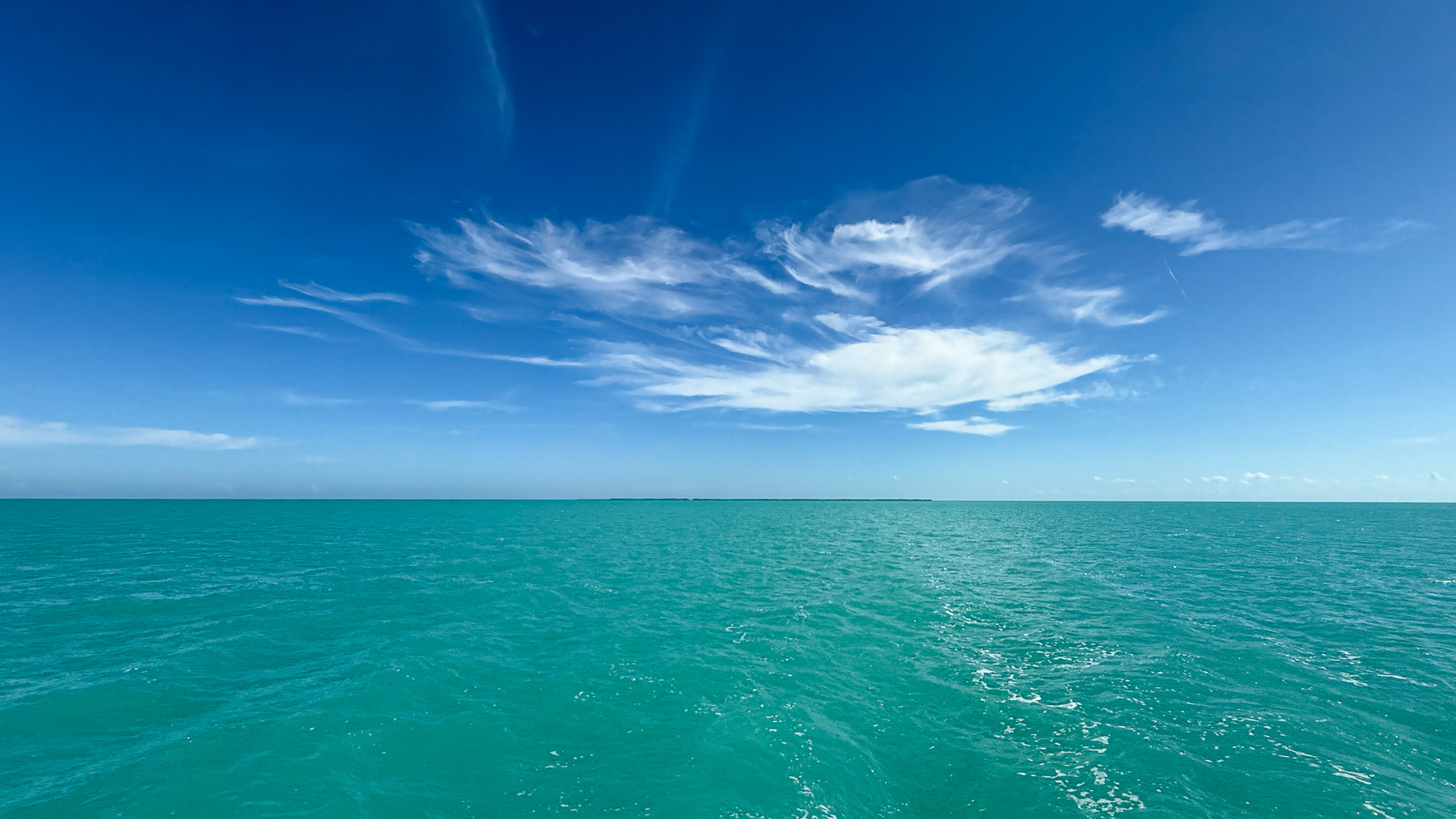
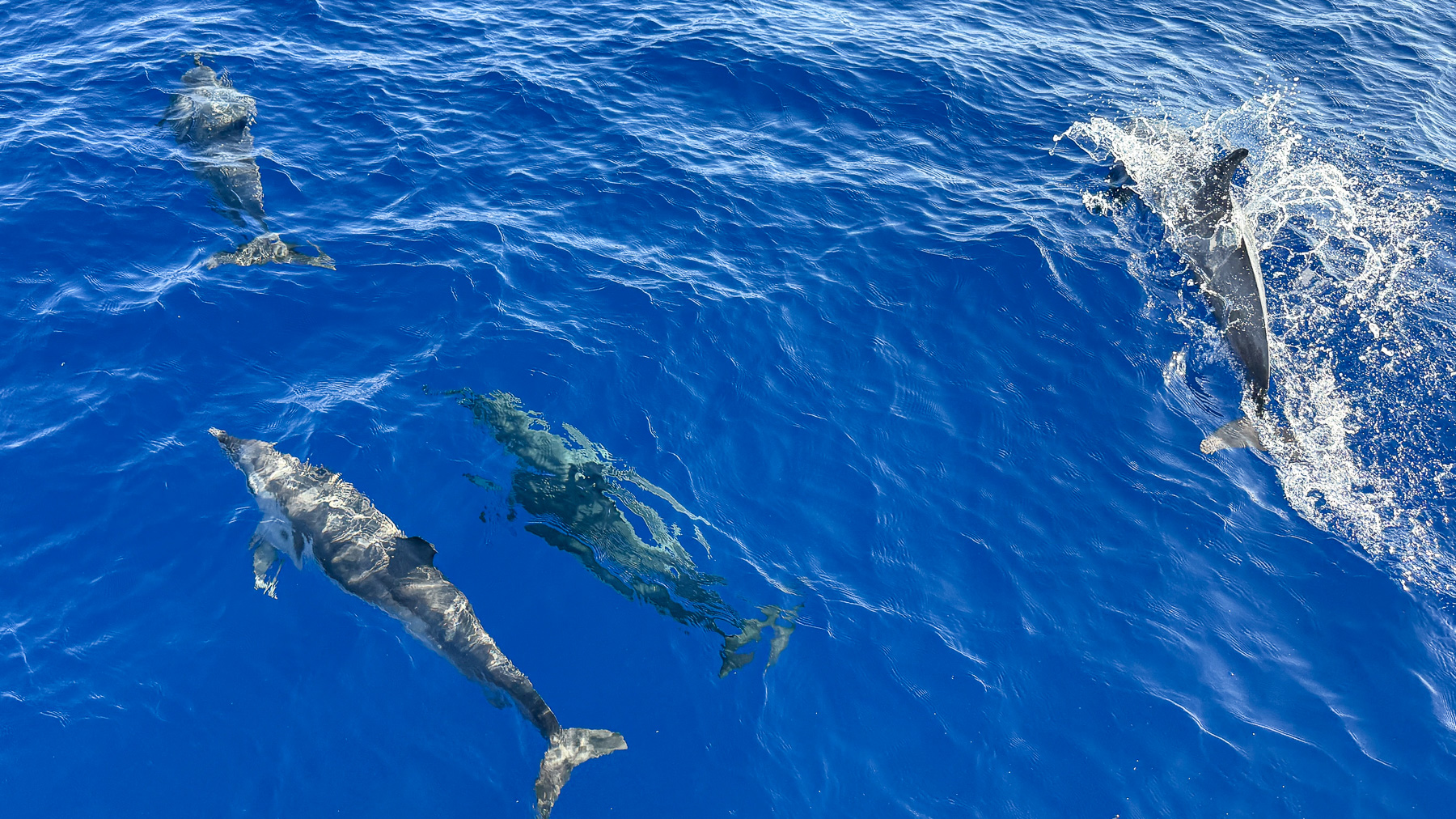
The sun rises. Around 9 AM, we drop the sails and turn right towards Punta Allen. Surprisingly, the current has picked up again and is now at 2.5 knots. This path also drags on – much more than we thought. And suddenly we enter turquoise-glowing water. Four bottlenose dolphins greet us, swim across under our hulls a few times, and then disappear again. Around us is only turquoise, a seemingly infinite expanse. We think the anchorage must be coming up soon, but we sail for hours. Around 4 PM, we’re there. Near the shore, a dolphin’s back glides out of the water, back in and out. But this loner doesn’t want to come to us. For our Amira, the water is too shallow where he is. So we anchor far out, and it feels as if we’re in the middle of the ocean on the high seas. If it weren’t for the fantastic turquoise of the water, a clear sign that it’s not deep here.
We anchor in the middle of nowhere, in a surreal world consisting only of turquoise, blue, and white tones, of sky and sea. The clouds above us have drawn patterns in the blue as if they wanted to prove to Caspar David Friedrich that reality is sometimes more beautiful than can ever be captured in pictures. We let ourselves fall into and be carried away by the unreal atmosphere of this place. And stay there for the next day.
Lucky dolphins
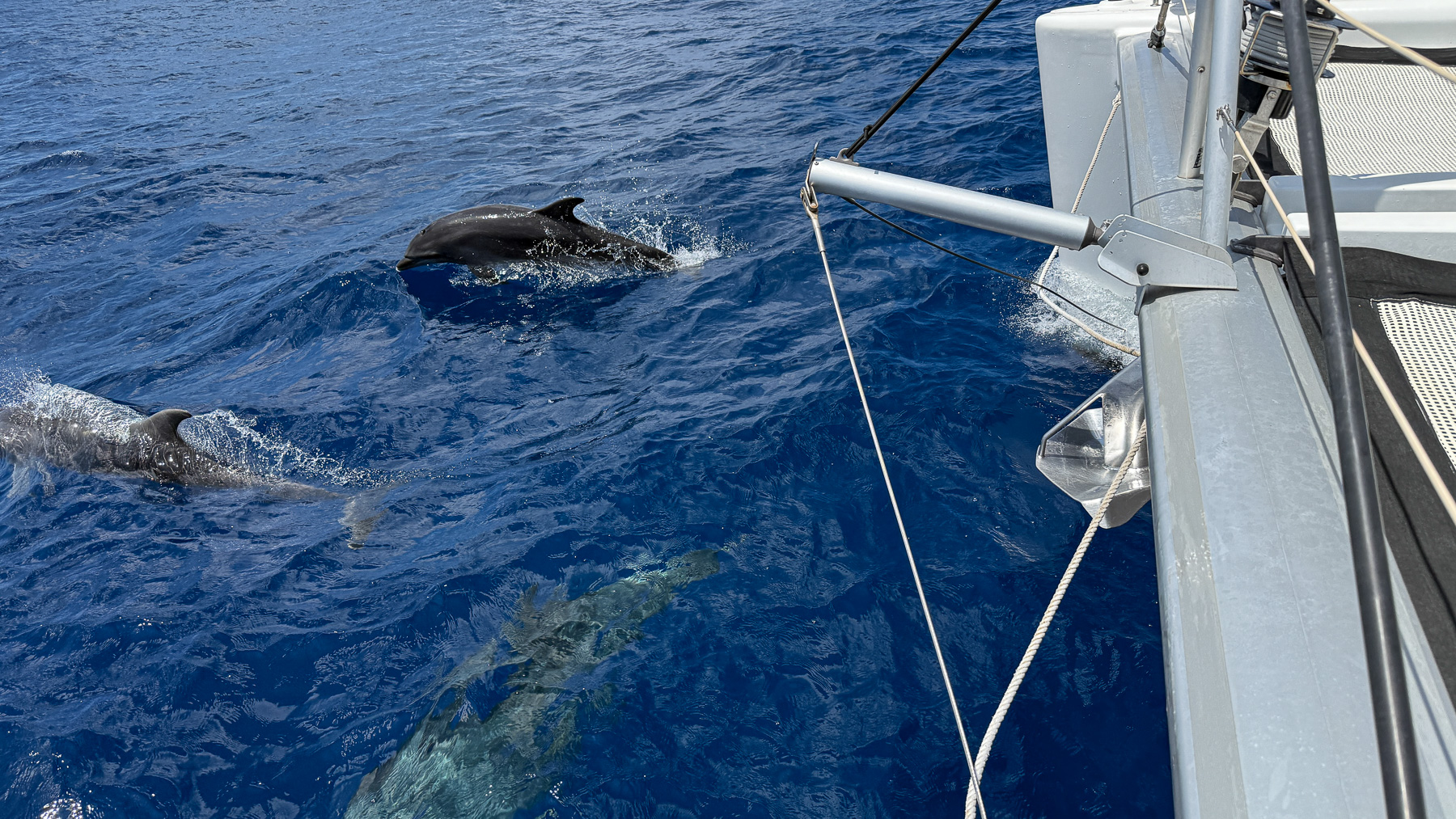
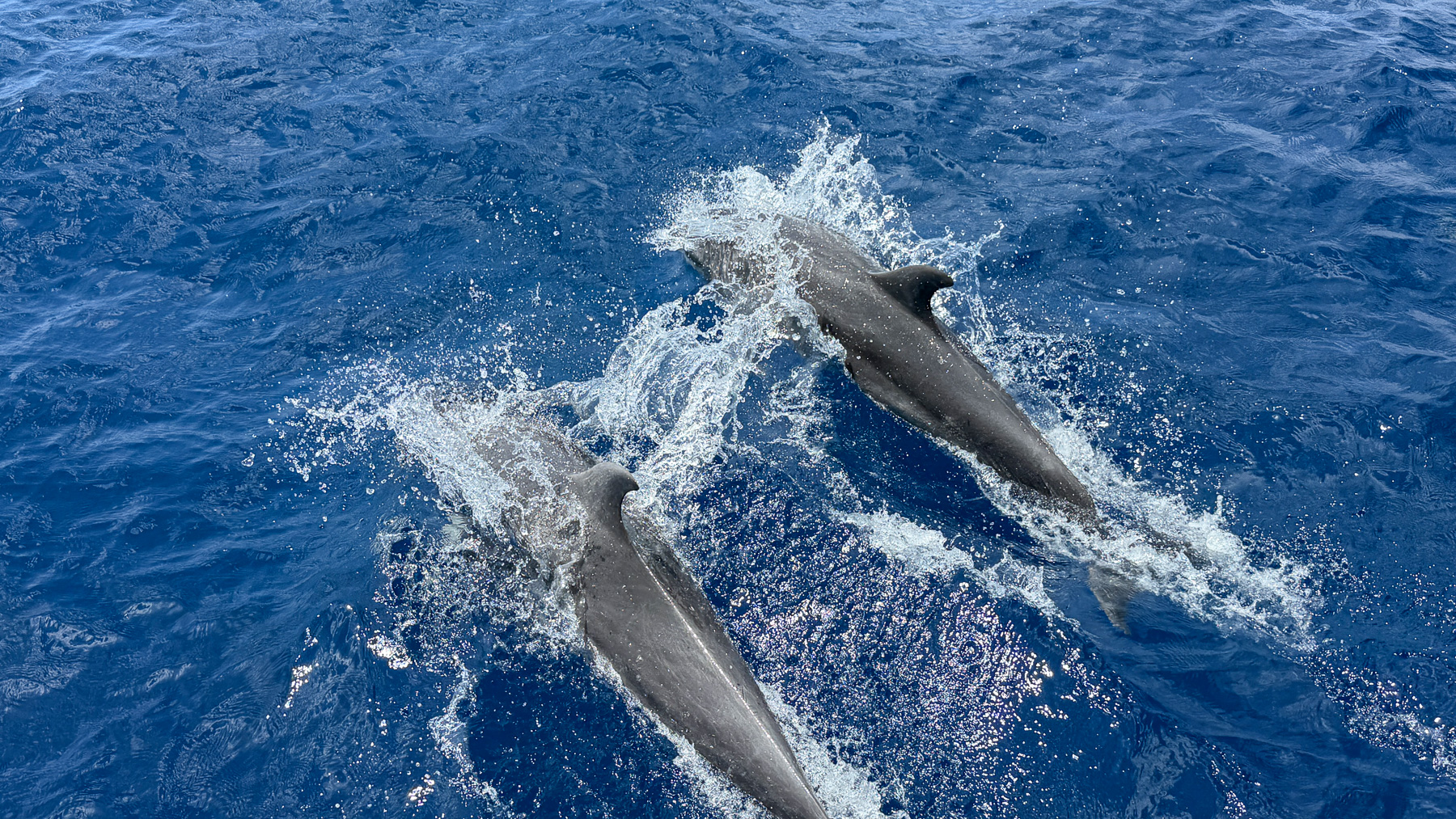
When we sail out of the bay again the next morning, six dolphins accompany us. They’re having fun at our bow hulls; some even swim on their backs between them and turn over again and again. Who’s faster, you with your sailboat or us?, they seem to ask. But it’s not really a question. The dolphins are just playing in the bow wave and using its energy. This typical dolphin behavior is considered a lucky charm. We hope, of course, that the dolphins really do bring us luck. In any case, the freezer is suddenly cooling again. On the first day at sea (or perhaps unnoticed even before), it had stopped working. Our vegetables and the frozen tuna pieces were already thawed when Peter checked the relay, fuse, and thermostat at the anchorage. The fan was running, but the compressor wasn’t; he tapped on it. Nothing happened. We moved on. And now, suddenly, the freezer is working again. Why, and is it permanent? We don’t know.
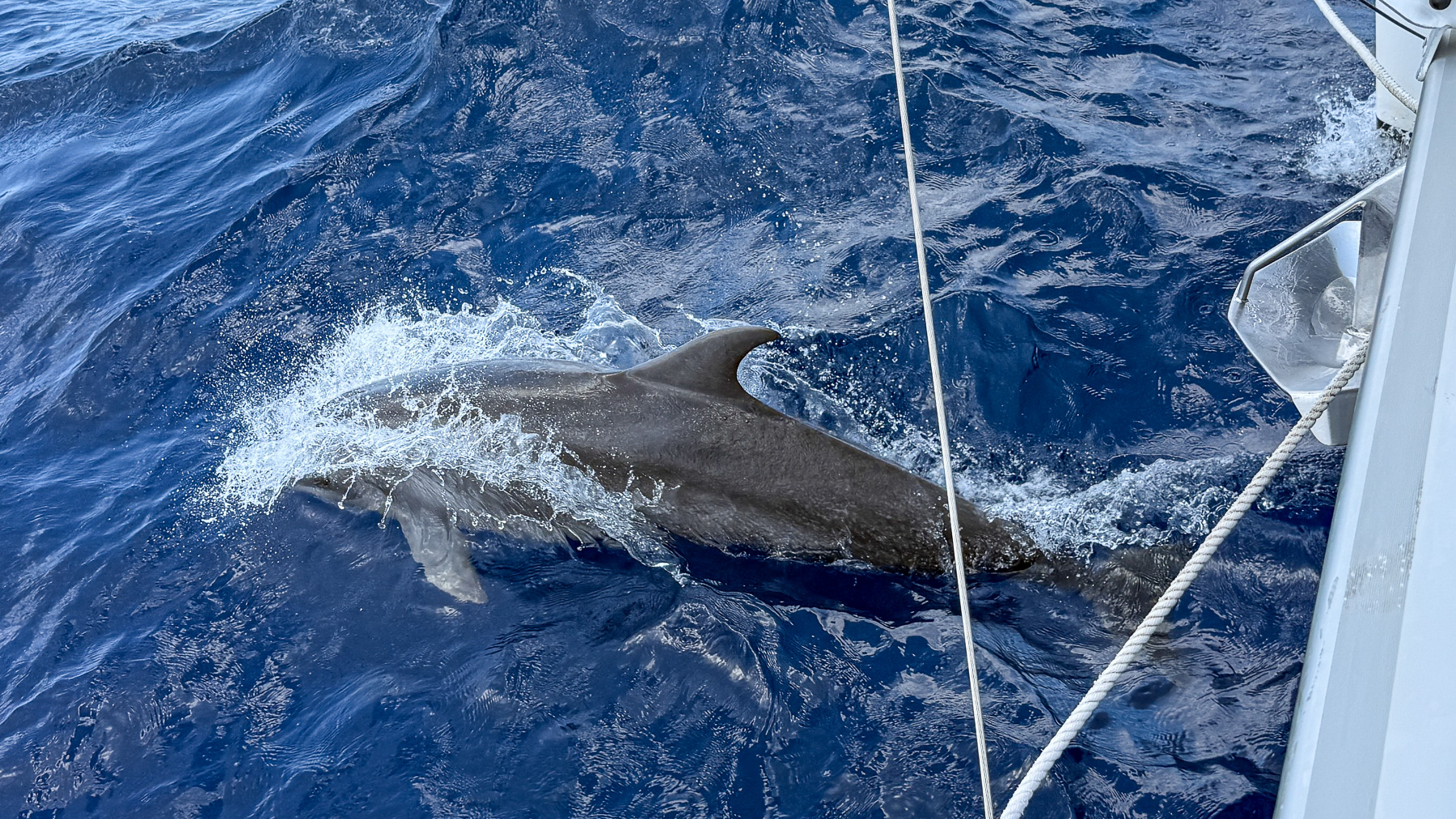
In the afternoon, a whole pod of about 16 dolphins appears. Playful and curious, they circle our bow tips, also seeming to race them. They accompany us for about half an hour. Then all the dolphins except one are gone. That one, however, is persistent; he stays with us. Another dolphin obviously wants to bring him back to the group, but this animal is not impressed and stays with us for another ten minutes.
We sail alone into the open sea. The wind is weak, too weak for sailing, so we’re back in hybrid mode. The side waves are two meters high, and the current is once again stronger than predicted – 2 instead of 0.5 knots. So we approach our destination, Utila, staggering and slowly.
Related posts
-
A true nightmare in Berlin
The trip home to Germany turns into a nightmare: Renate’s father dies, Peter ends up in the hospital with a broken vertebra, and the number of doctor’s appointments jumps from a planned 11 to 20. In the end, it also becomes clear that Peter isn’t getting enough air at night. READ MORE
-
Attack on the Sailing-Amira: reports and photos have disappeared
Sailing-Amira.de has also been affected by the global wp2shell security vulnerability in the WordPress website software. “During a security audit, we found concrete evidence that your WordPress site was compromised by this attack and that files and/or databases have been affected,” the web host informs us. READ MORE
-
Rainy Season on the Rio Dulce
Guatemala – It’s the rainy season on the Rio Dulce. And it’s lightning season. That can be dangerous for our Amira and the other boats. One lightning strike and all the electronics are destroyed. We’re getting the first jobs done on the boat and preparing for our trip home to Germany. READ MORE


