Over the hill to the Garifuna village
An American guides us to this freedom-loving people of Afro-Caribbean origin
By Renate Rüger, April 30, 2026
The American we meet near the dive station on Cayo Mayor frowns. “You’re looking for the way to the village?” he asks. It’s not easy to find. The footpath is poorly marked, and the red ribbons are often hard to spot. But he has to go to the village anyway to pick up the eggs he ordered there. We can follow him. We hike steeply uphill through dense jungle behind the American, past his house, which he is currently renovating. As a young man, he inherited it from his father, but only now does he actually want to use it, explains the American, who is from Texas. He has no running water or electricity.
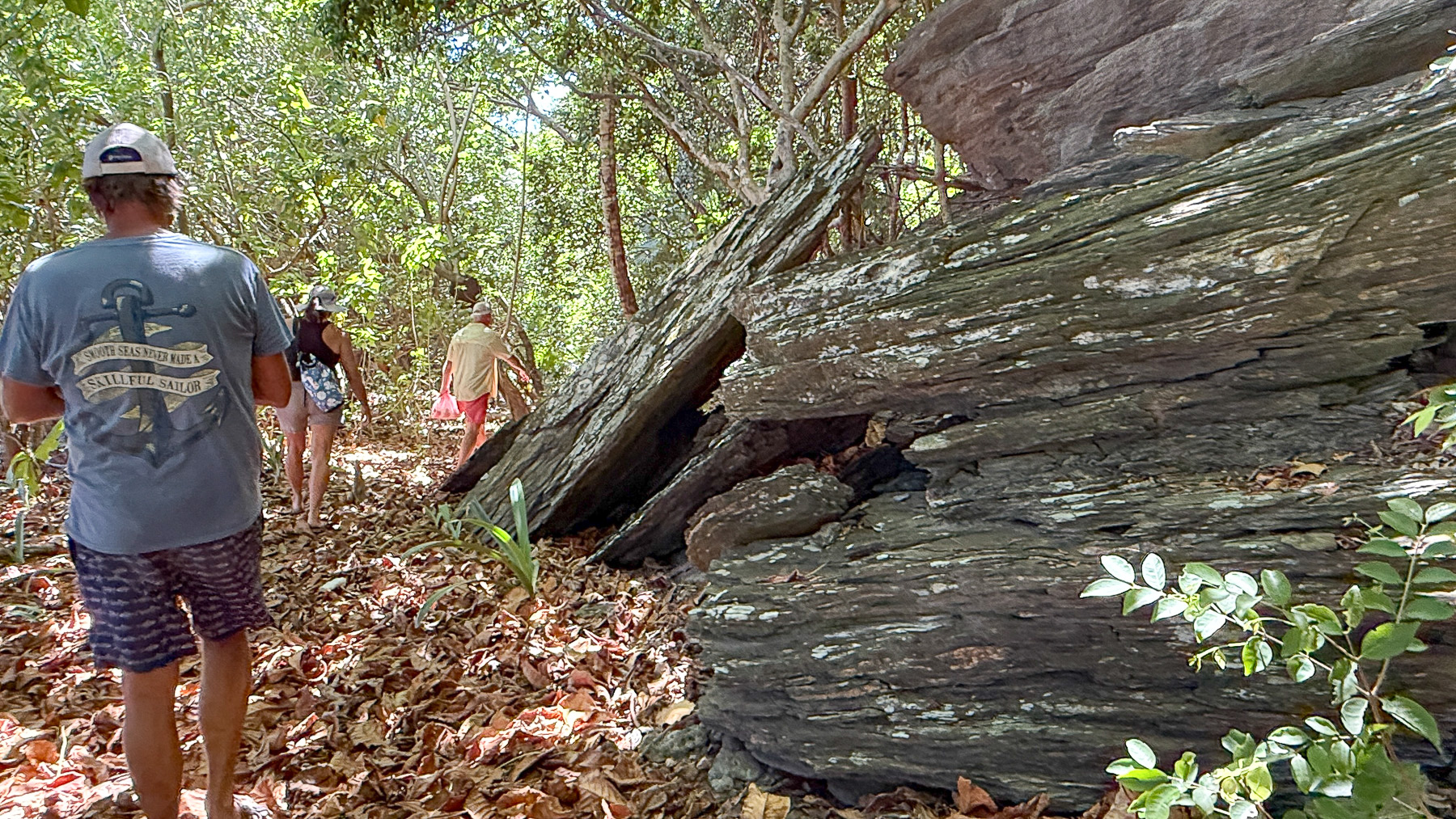
Somewhere nearby the lighthouse must be; we keep climbing up the path through the undergrowth. Now it’s steeply downhill again on the other side of the hill; in my flip-flops I slip a little, holding on to nearby branches. Yes, actually I only wanted to know the way, not walk it right away—otherwise I would have put on different shoes. But who ever gets the chance to have a guided walk like this? Going down the steep slope is harder than going up; pebbles and rough earth make us stumble. Then, between the trees: the sea. It gleams in the sun. A few minutes later we’re in the village.
The “Black Caribs”
Garifuna live here, a people of Afro-Caribbean origin that emerged on the island of St. Vincent in the 17th century. There, in the Lesser Antilles—known for its coral reefs and strong currents—one or more slave ships once ran aground and sprang a leak. According to Wikipedia, the ships’ origin and the date of the shipwreck are disputed. In any case, the people whom European colonialists had captured in Africa were able to free themselves in the chaos. They swam to the shore of the densely forested island of St. Vincent, which was controlled by the Kalinago—an Indigenous people who put up fierce resistance against the European conquerors. They took in the Africans, and through intermarriage a new ethnic group emerged: the Garifuna, whom Europeans called “Black Caribs” (as opposed to the purely Indigenous people, whom they called “Yellow Caribs”). For over 150 years, the Garifuna defended their freedom on St. Vincent, which was considered a “neutral island.” African slaves from neighboring islands such as Barbados or Martinique also fled here and joined the Garifuna as free people.
Only in the “Second Carib War” (1795 to 1797) did the British succeed in defeating the Garifuna. They first took the Garifuna to the neighboring island of Baliceaux, where more than half of them died within a short time from disease and malnutrition. The British then deported the roughly 2,300 surviving “Black Caribs” to the island of Roatán in 1797. From there, the Garifuna spread to the other Islas de la Bahía (Bay Islands), to the mainland of Honduras, and to Belize, Guatemala, and Nicaragua. Today, between 40,000 and 100,000 Garifuna live in Honduras. The number varies depending on the source. The United Nations and the Organization of Garifuna Communities in Honduras (OFRANEH) even assume there are 300,000 Garifuna, spread across about 45 communities along the Honduran Caribbean coast and the islands.
Colorfully painted huts
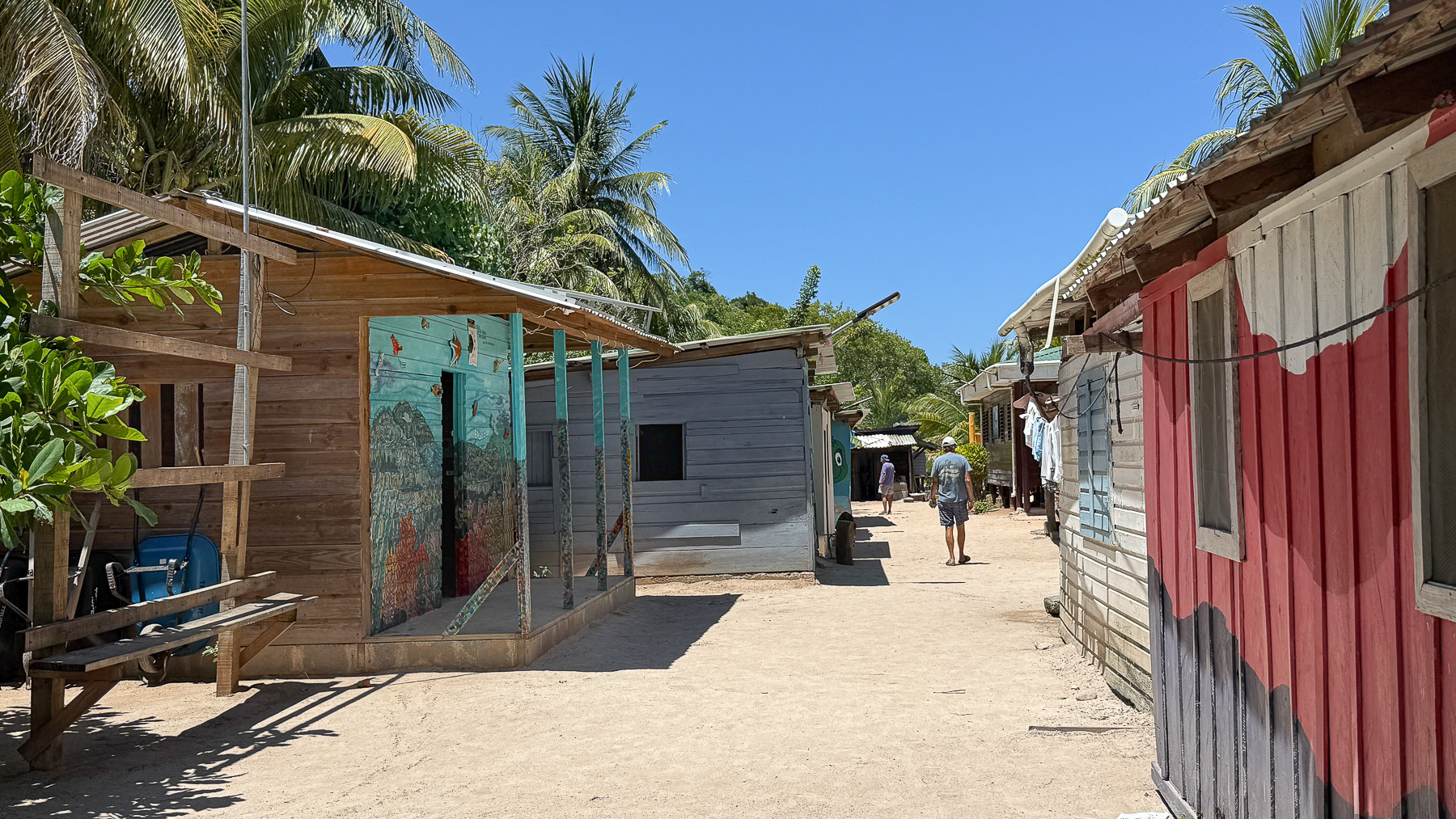
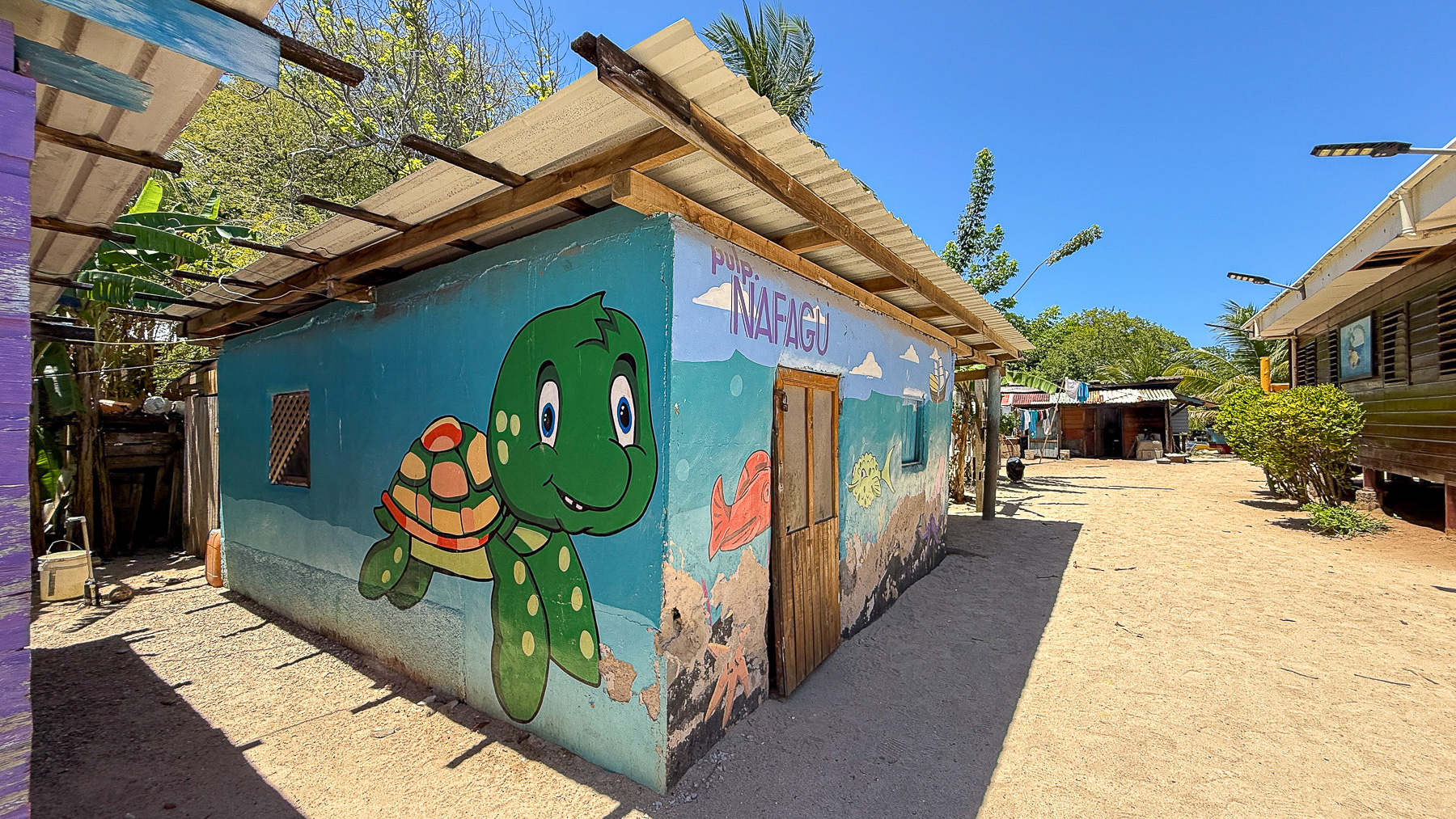
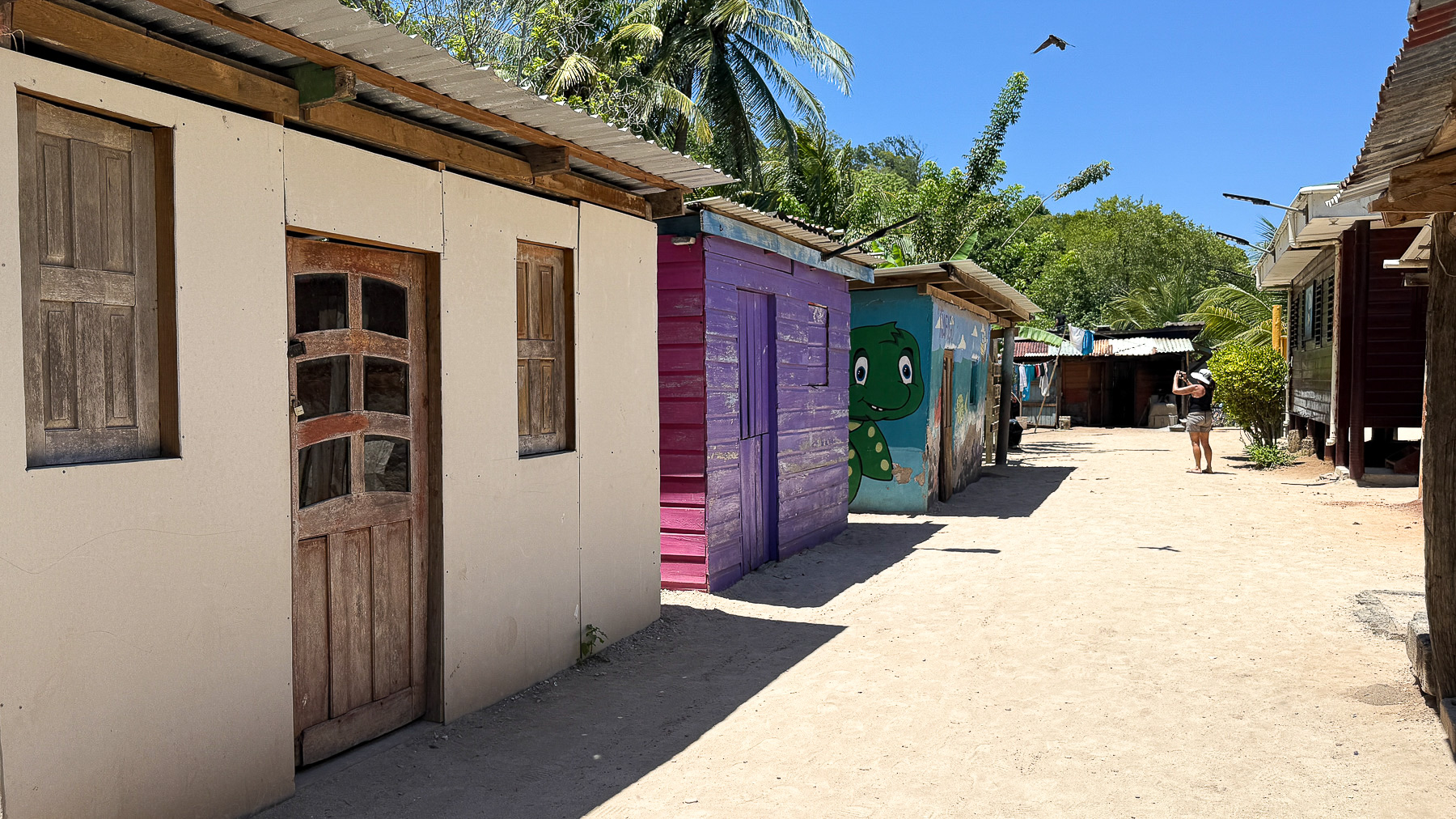
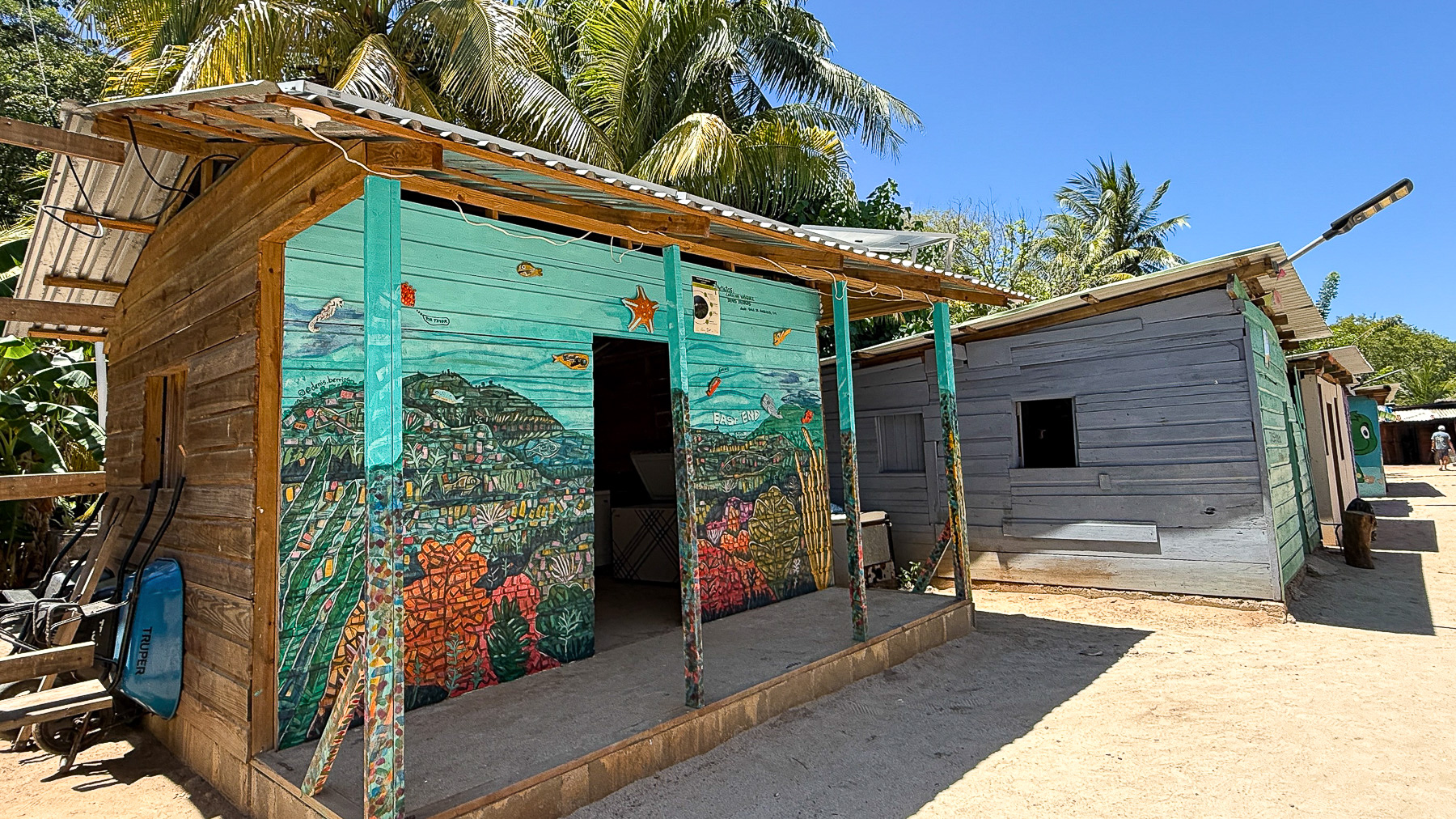
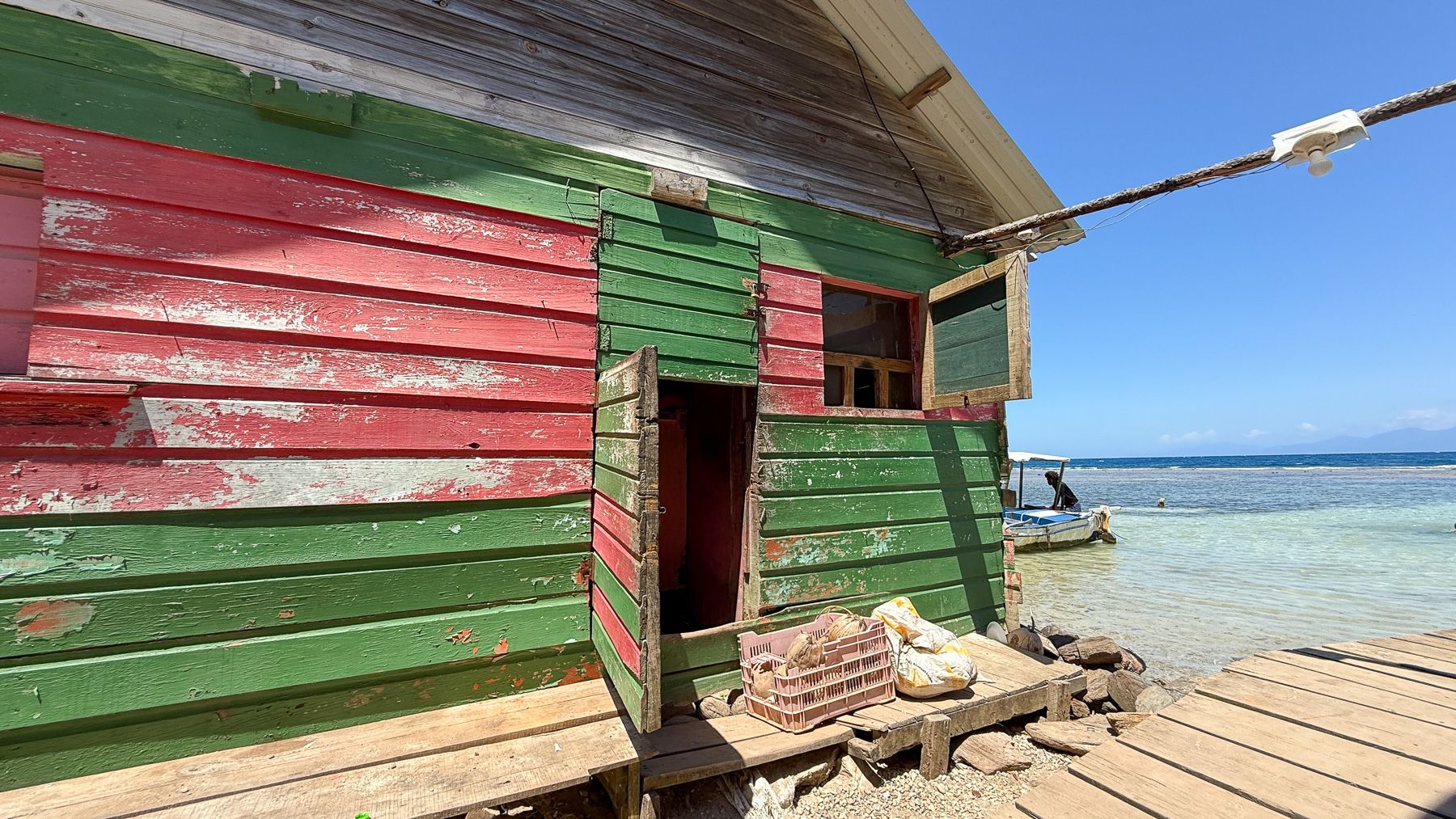
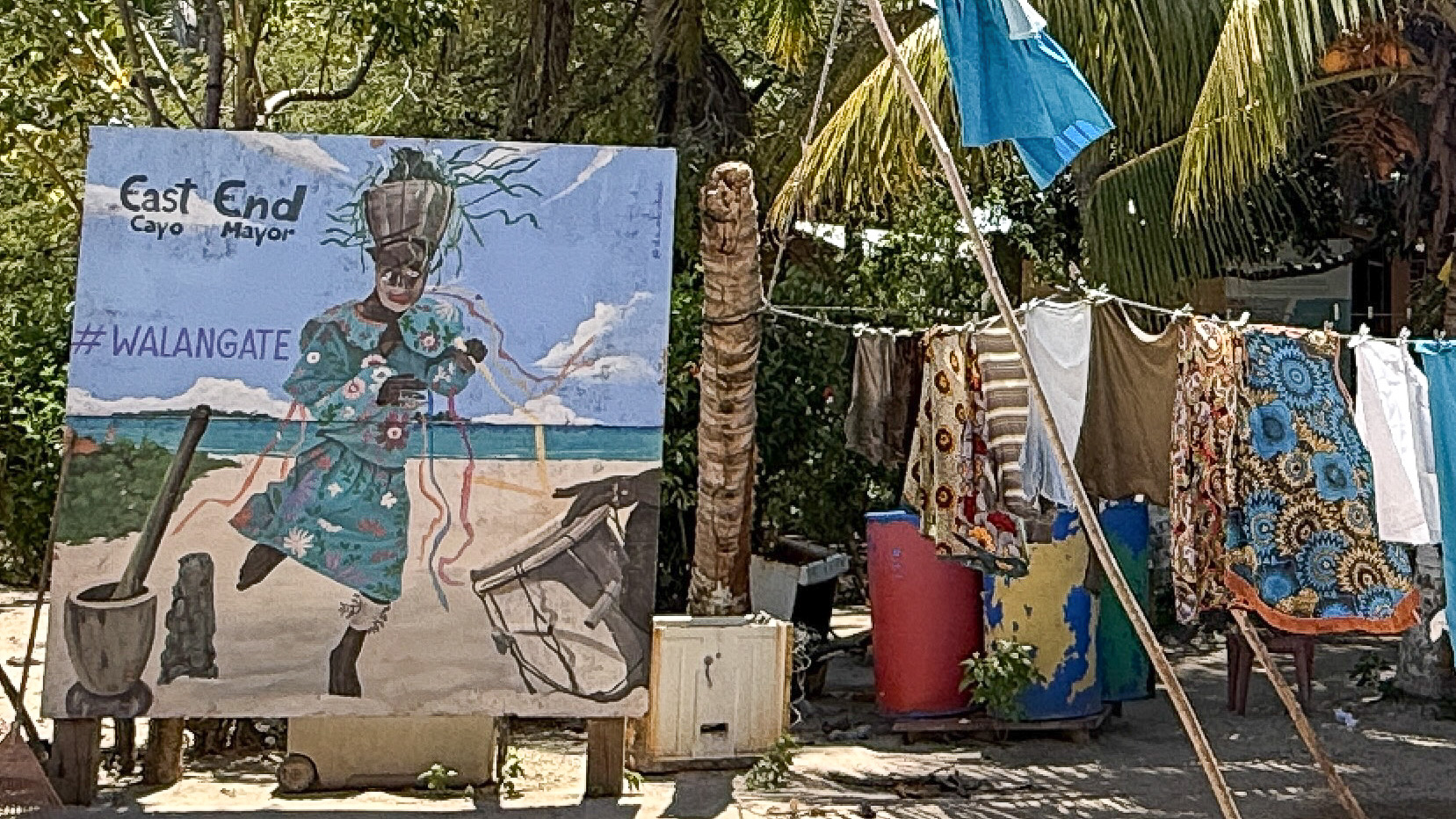
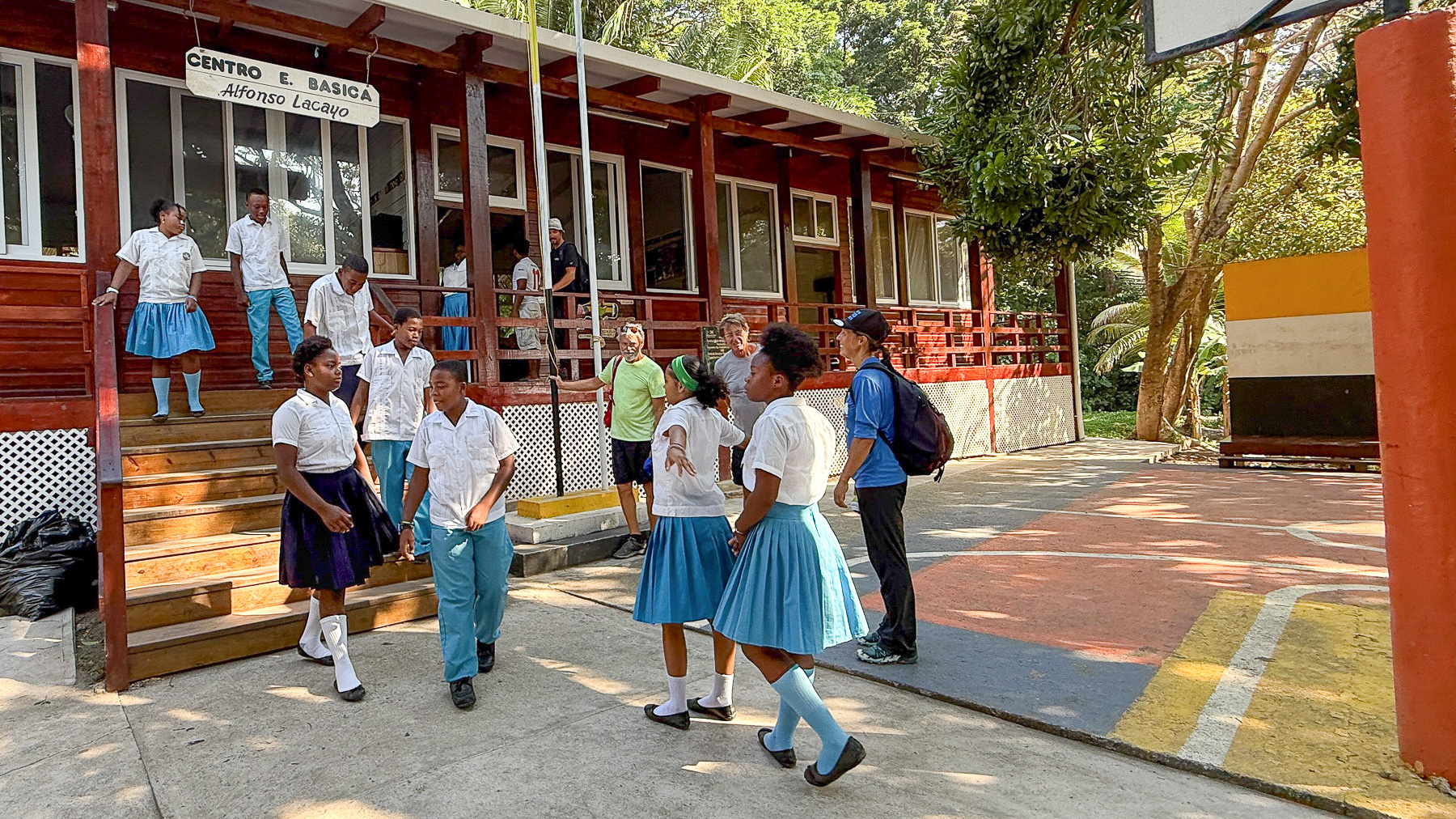
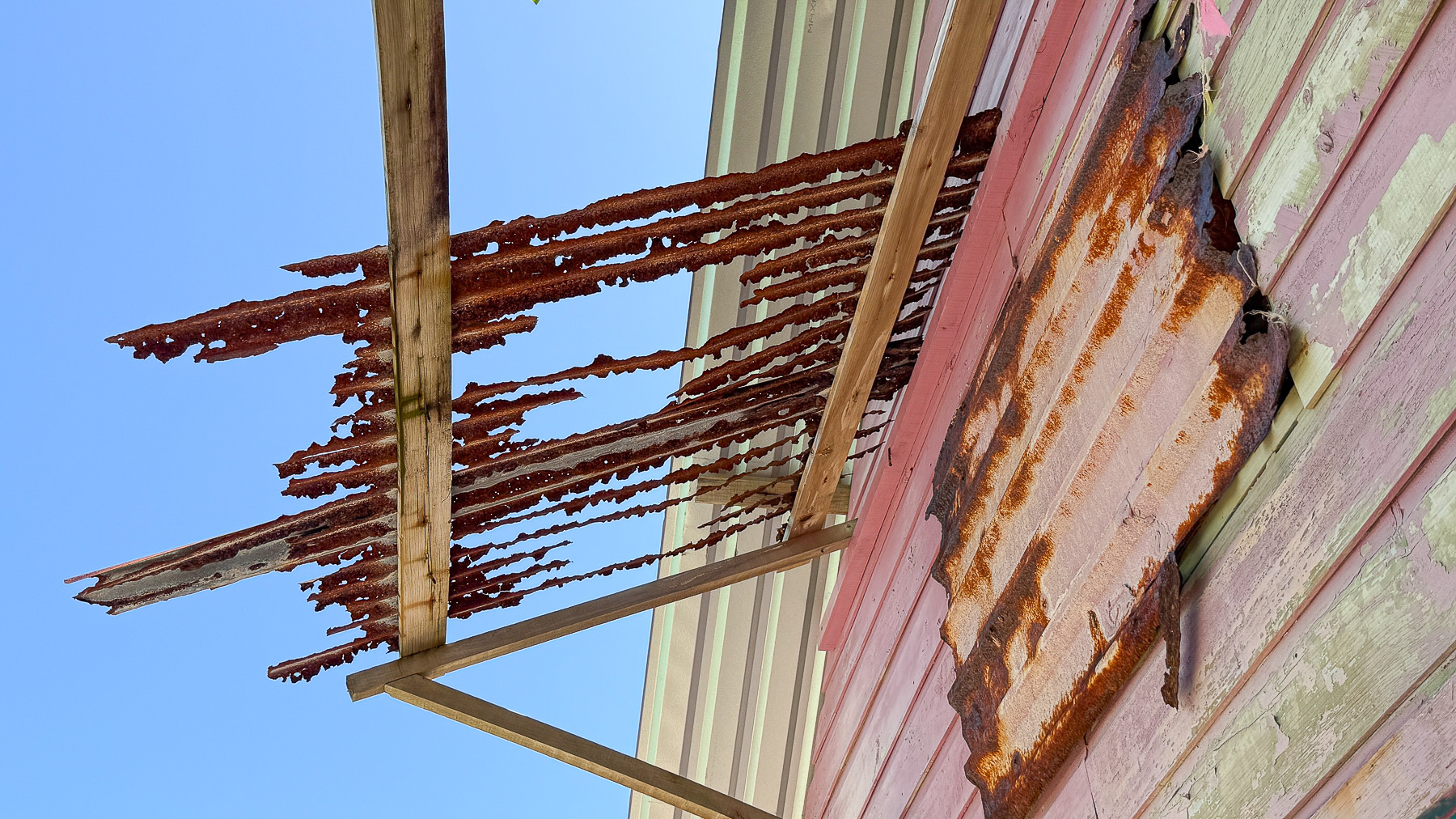
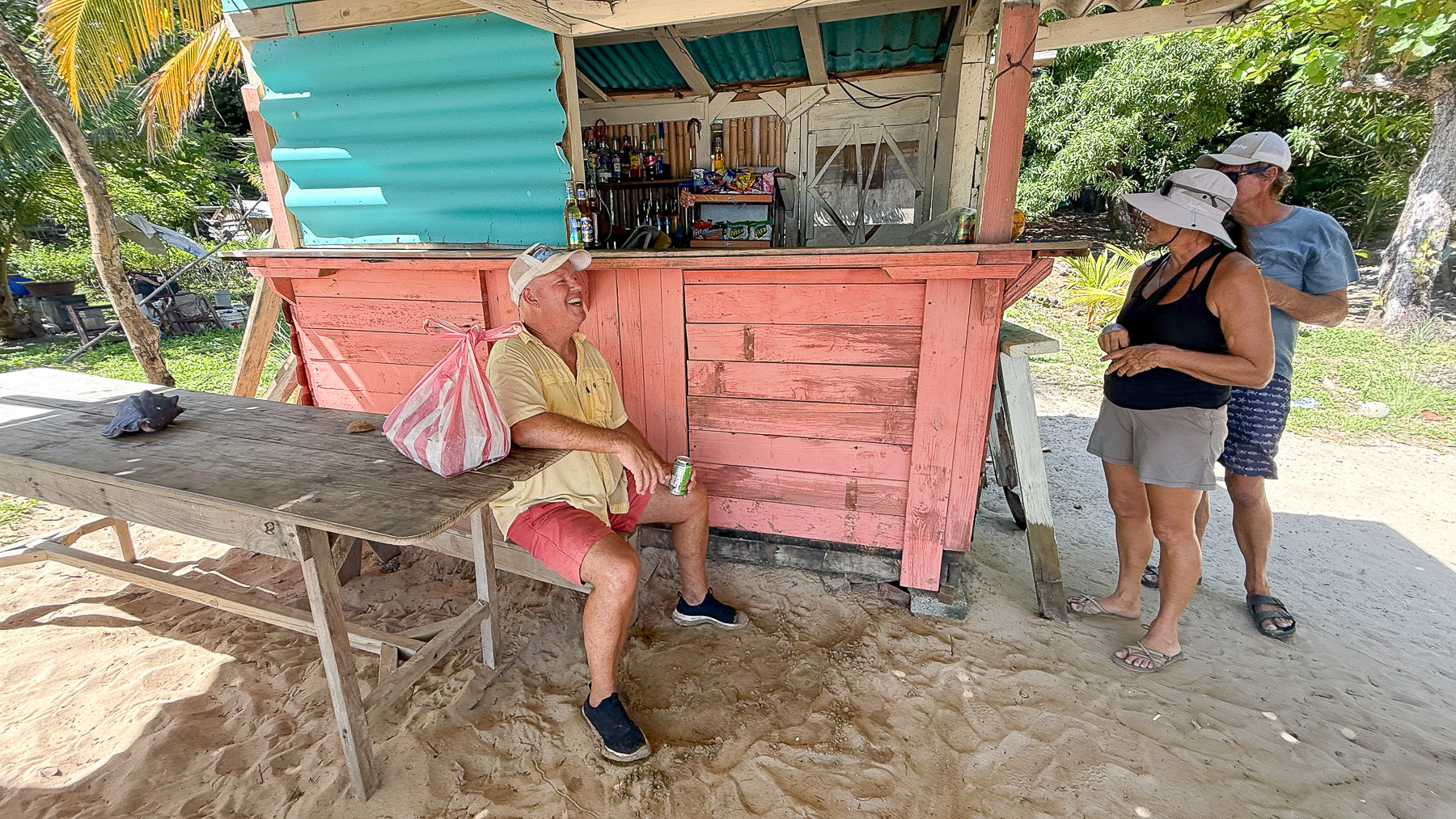
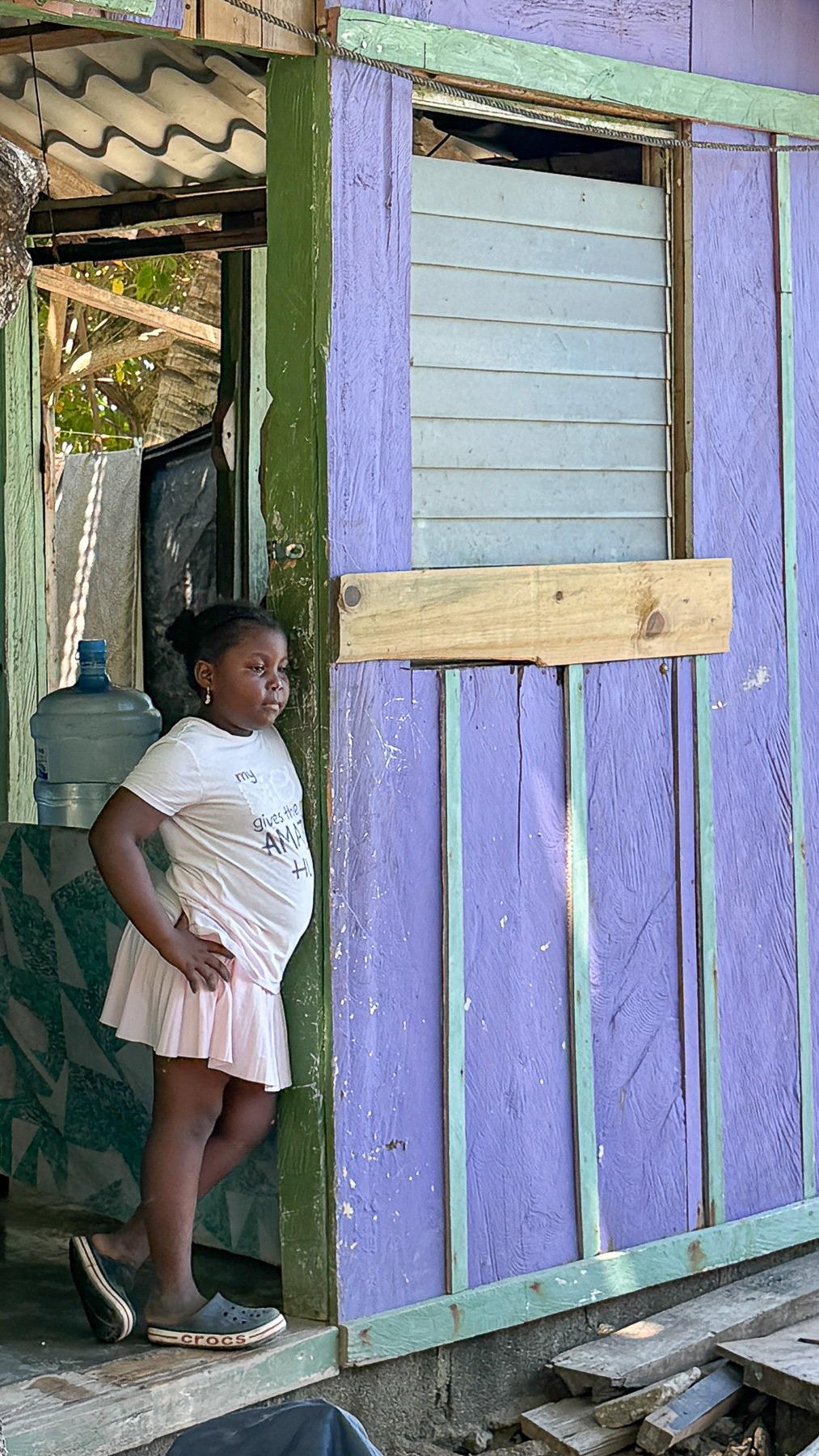
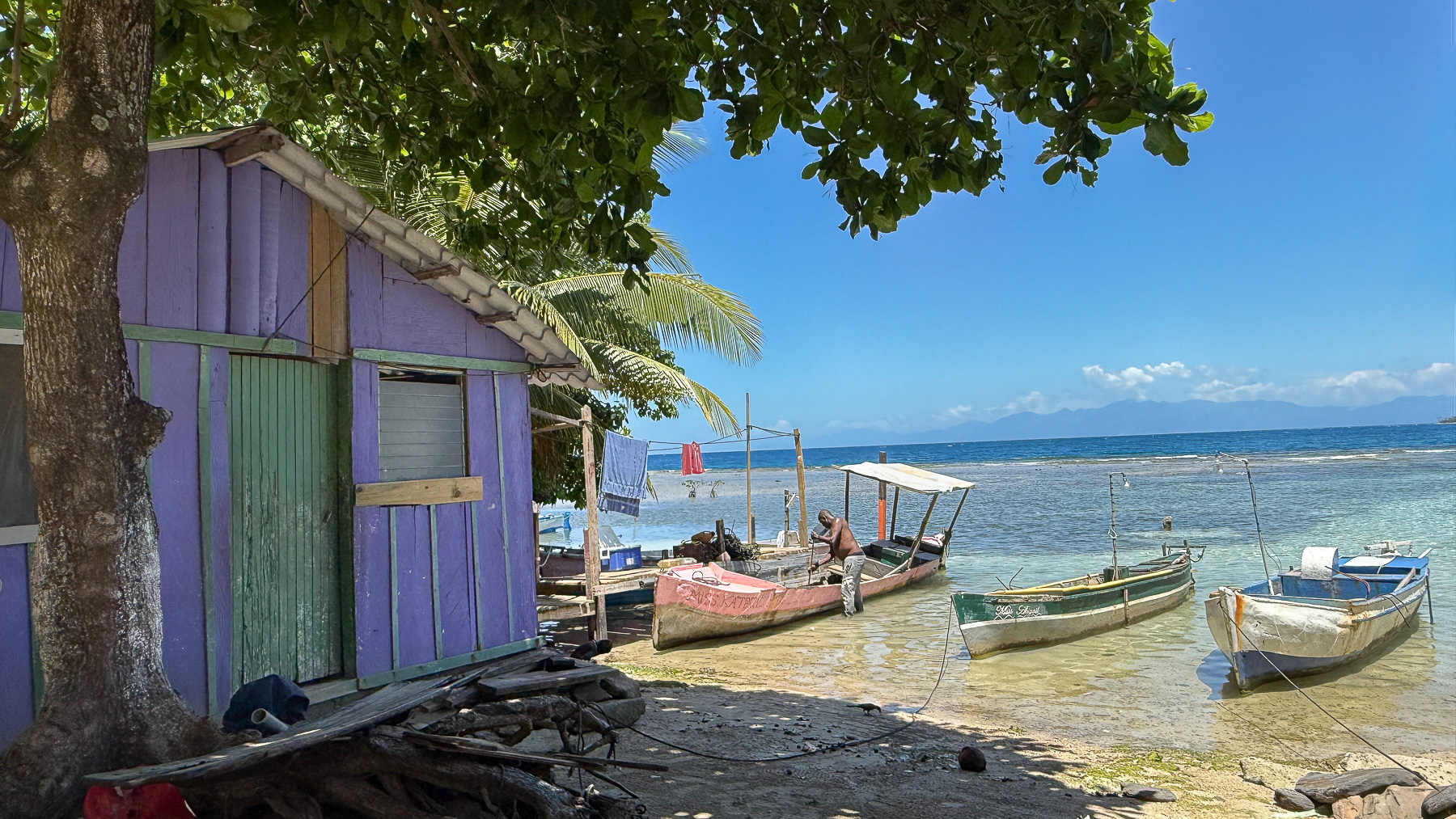
The Garifuna village of East End on Cayo Mayor seems almost deserted when we reach it around midday. It’s hot, and most of the roughly 70 residents seem to spend this time indoors. All the more striking are the brightly colored huts with wall paintings. Here an octopus, there an underwater landscape, here a sea turtle with a huge green head and big eyes, and on the left, on a large sign, a Garifuna dancer. Farther back stands a relatively large school, newly built with funds from the Honduran Ministry of Education, as a sign says. We’re thirsty. Is there a shop here? He’ll sort it out, says the American. A little later, a boy opens the door of a house whose green and red paint is already peeling. Water? No, there’s no water here. But there’s cola and beer. It takes a while; the boy seems to have to search with other friends for chilled bottles of cola, then he passes them through one of the three serving holes in the window.
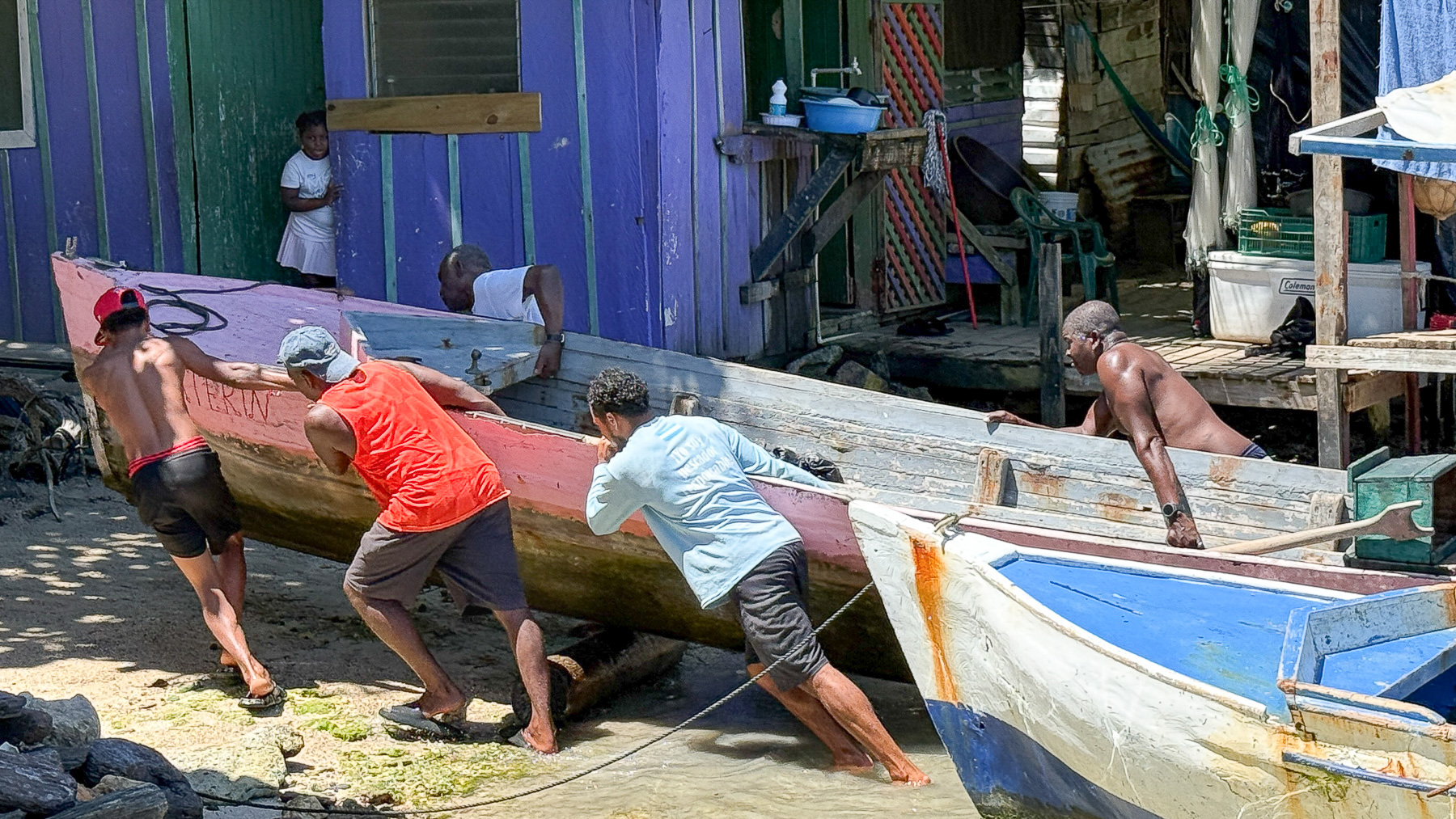
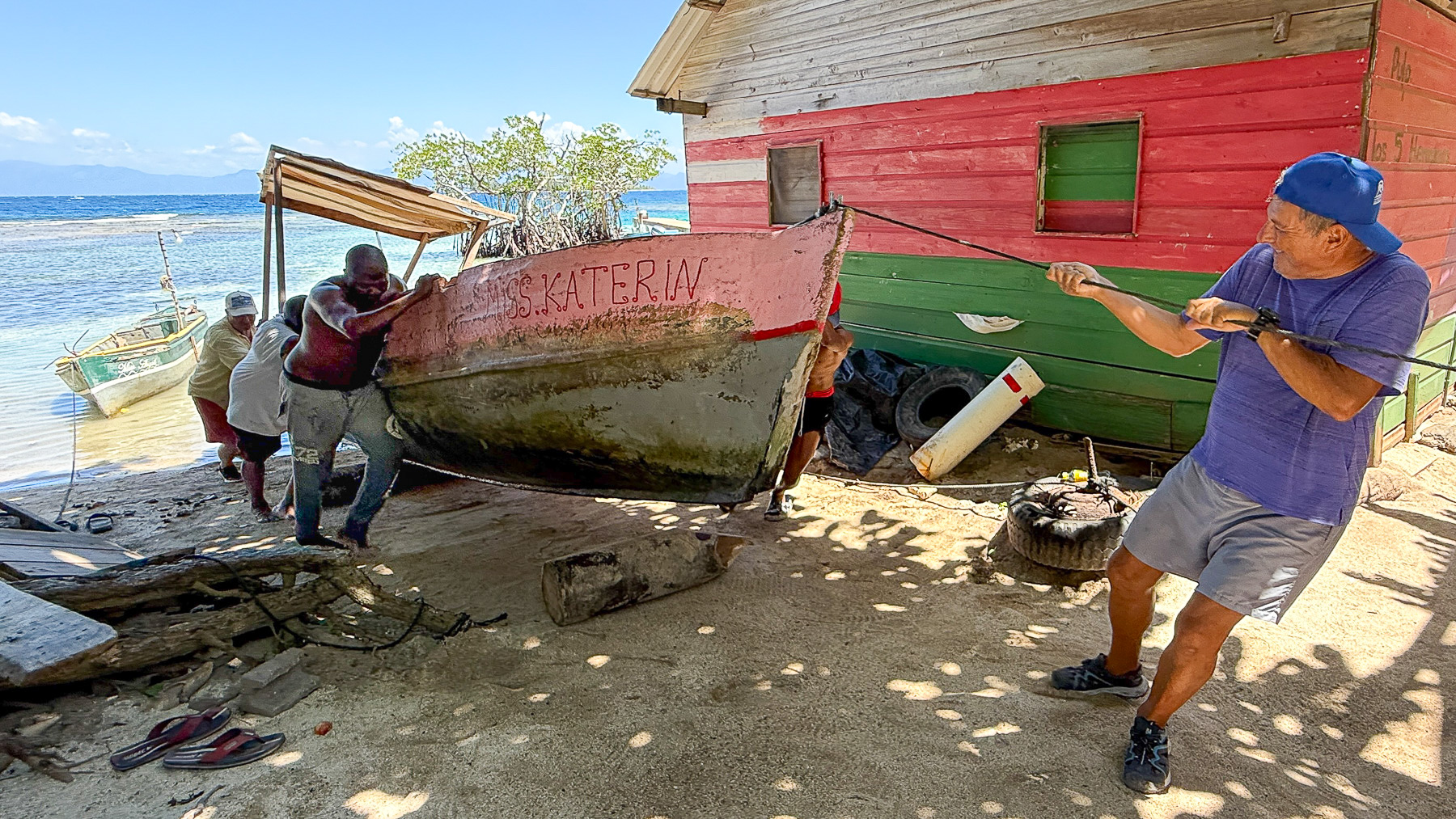
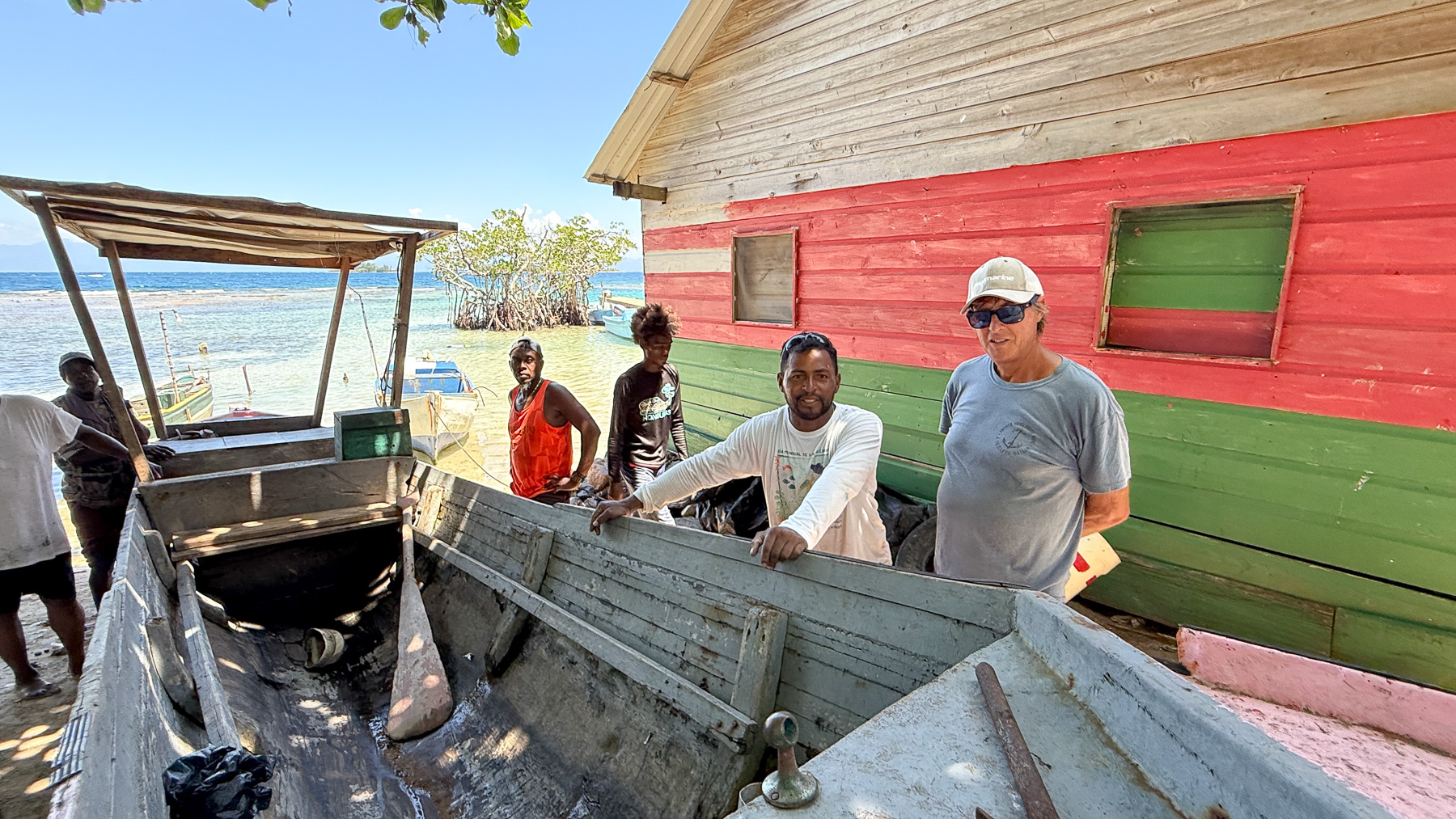
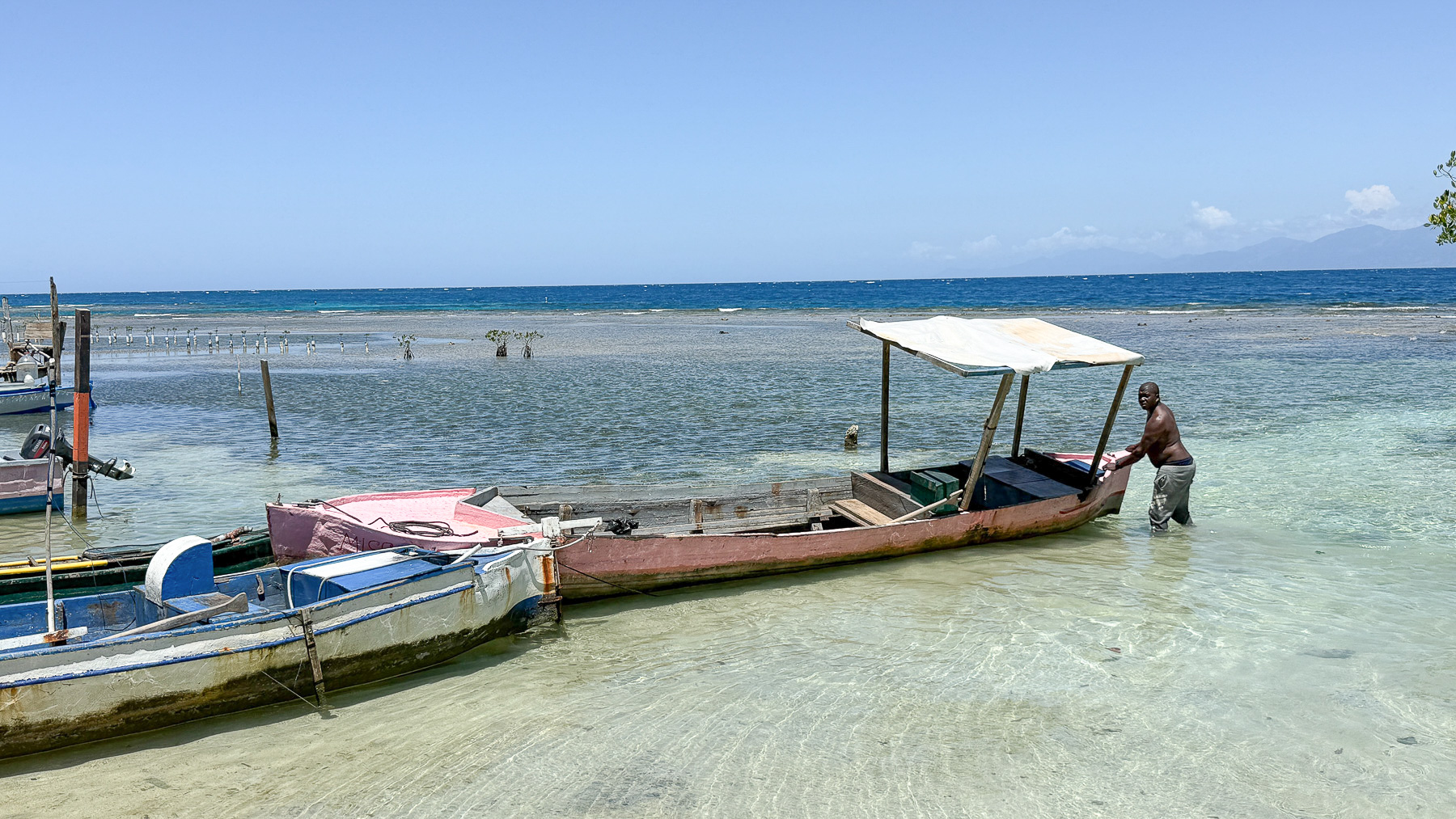
Meanwhile, seven Garifuna set to work on Miss Katerin, a long wooden motorboat. It’s leaking, has to come out of the water, and be sealed. So everyone helps pull the boat ashore. Carlo and Peter help too. The Garifuna—who mostly live from fishing and therefore depend on boats—appreciate that. Unfortunately, most of them don’t speak English. They do speak Spanish, but their own language is Garifuna, a linguistic phenomenon. This language, which belongs to the Arawakan language family, contains not only Carib and African elements but also influences from French, English, and Spanish. In everyday speech, women and men are also said to often use different words for the same thing. We think we understand a few words we’ve picked up—and yet we understand nothing at all. Where are you from? asks a Garifuna who speaks English. From Germany and Belgium. He points at me. “Are there many people there with such blue eyes?” Carlo takes off his sunglasses. “Here, I have blue eyes too.” But yes, there are also people with brown eyes…
Back along the sea
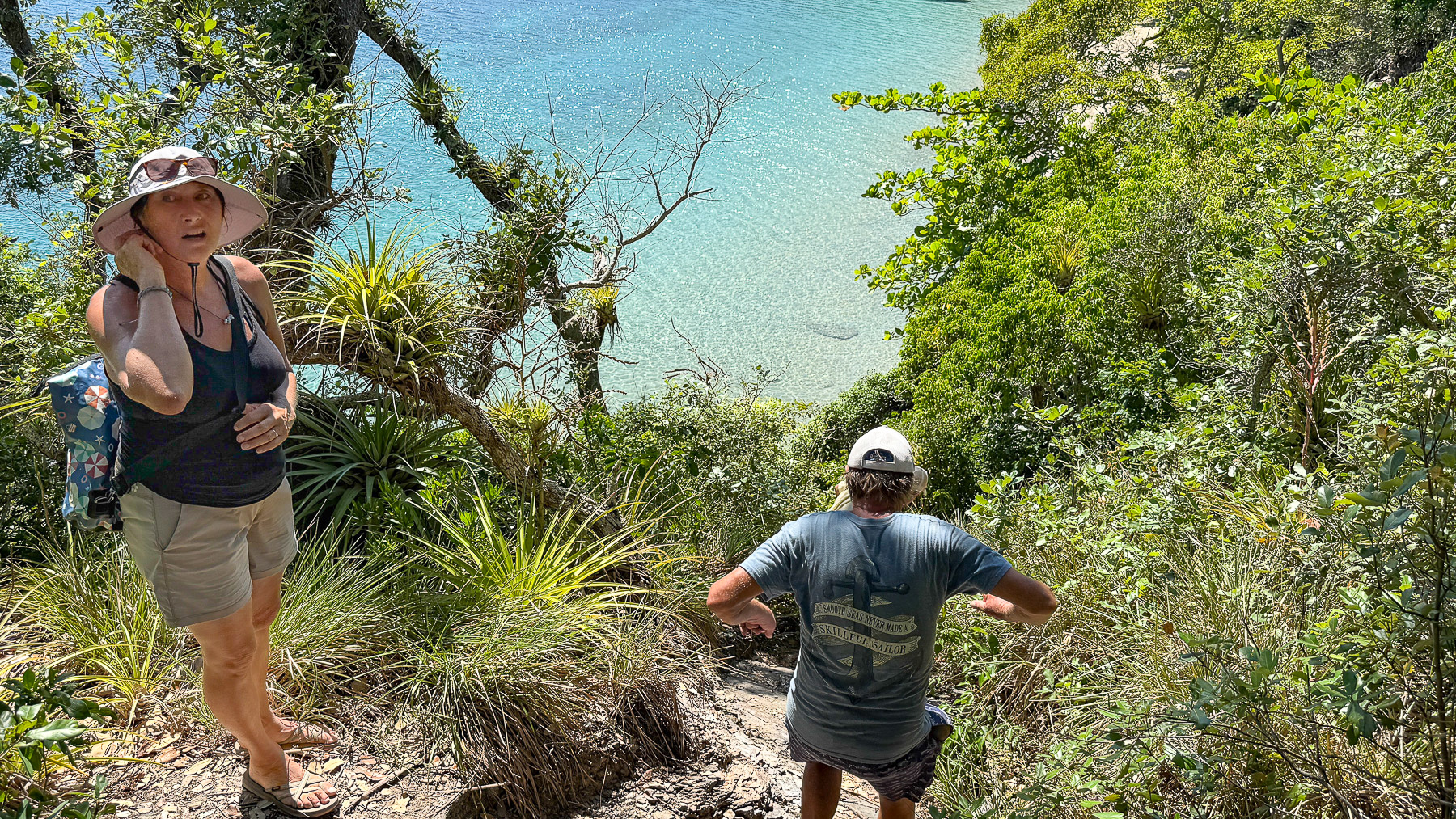
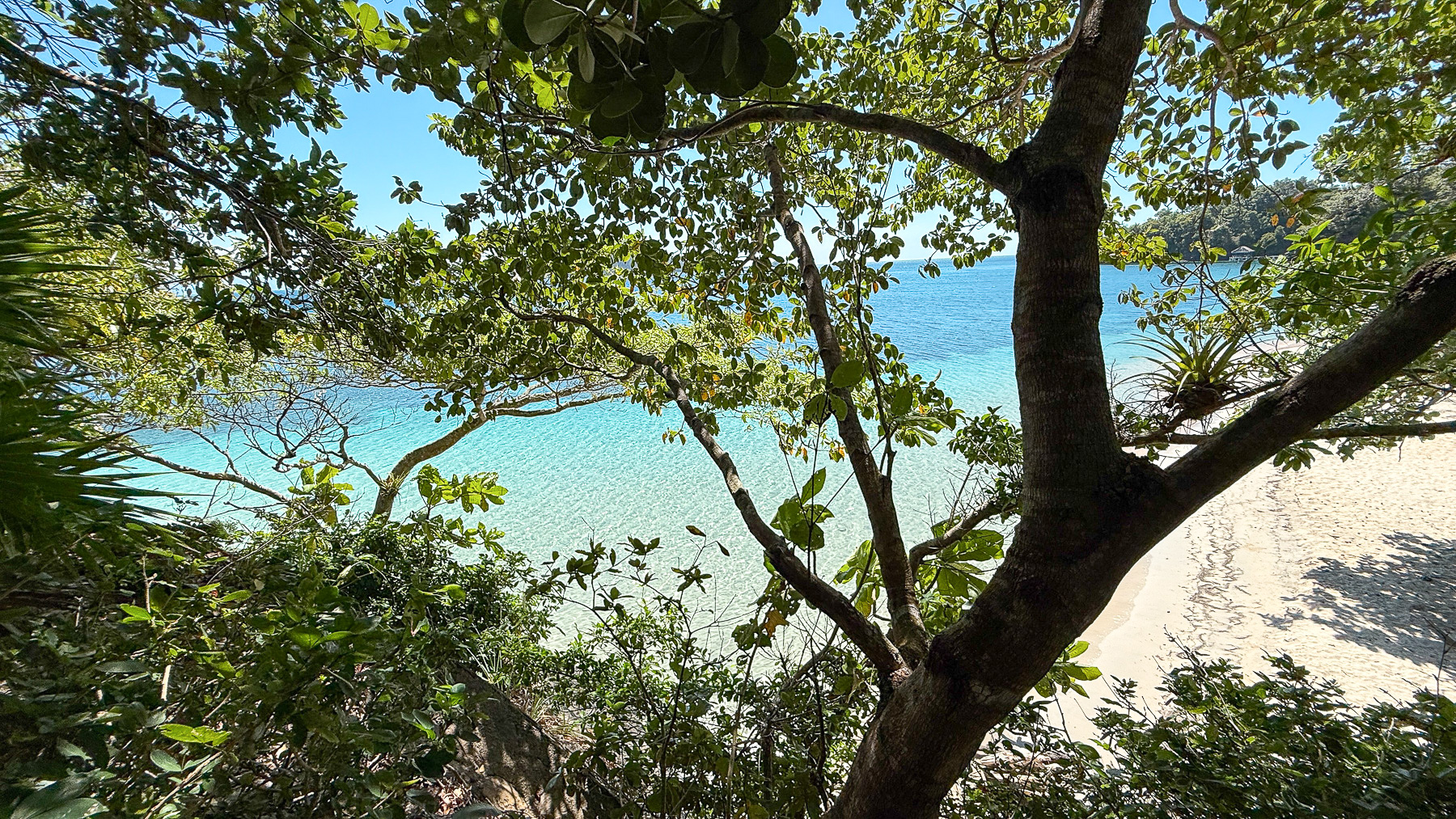
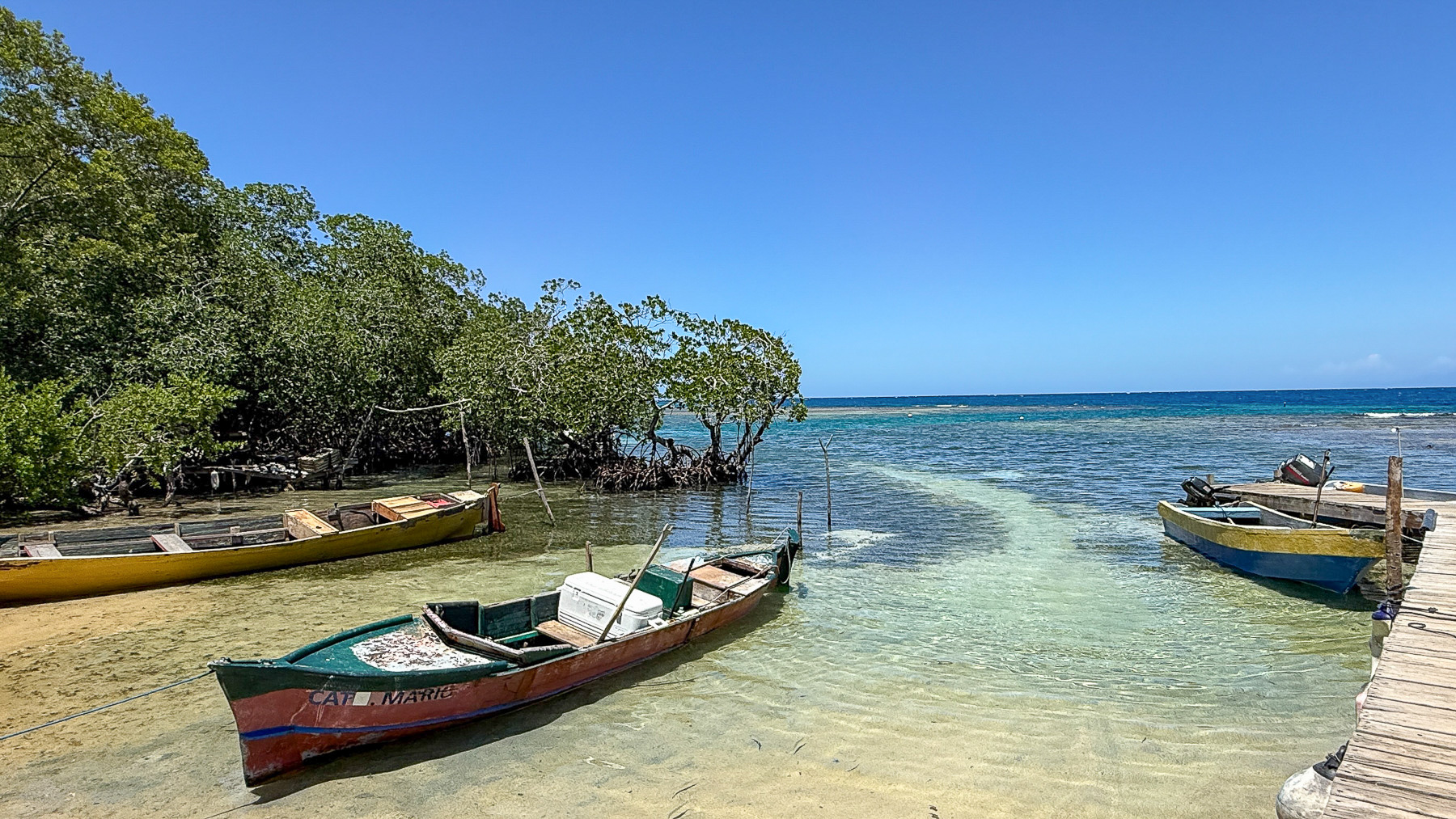
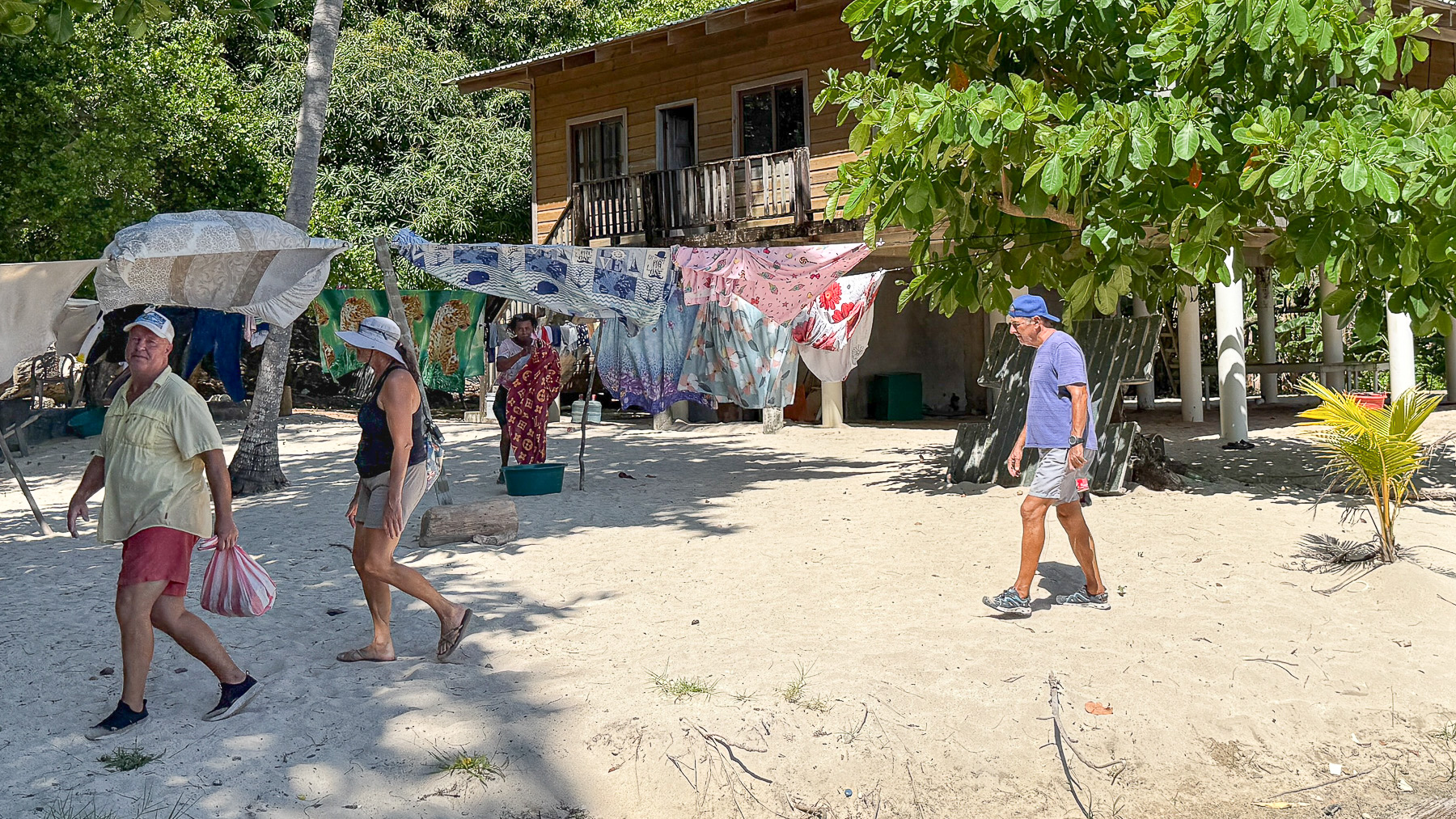
We have to move on. The American has his eggs and wants to head back. This time we go along the beach. Over sand, gravel, branches … and a whole lot of trash. Plastic bottles—small, large, clear and colored—flip-flops and sandals, small, large, black and colorful, filled garbage bags… No, it doesn’t come from the Garifuna, or only to a tiny extent; this plastic waste comes from the sea, washed ashore, as on many Caribbean beaches. The American leads us through the undergrowth. We thought everything along the sea would be flat. But we were wrong. Now it goes uphill again, even up steps. At the top we look through the trees far out over the sea, which shimmers a light turquoise toward the shore. A few minutes later we’re at a sandy beach. A few huts stand here, laundry flutters in the wind, and a woman is just hanging a sheet on the line.
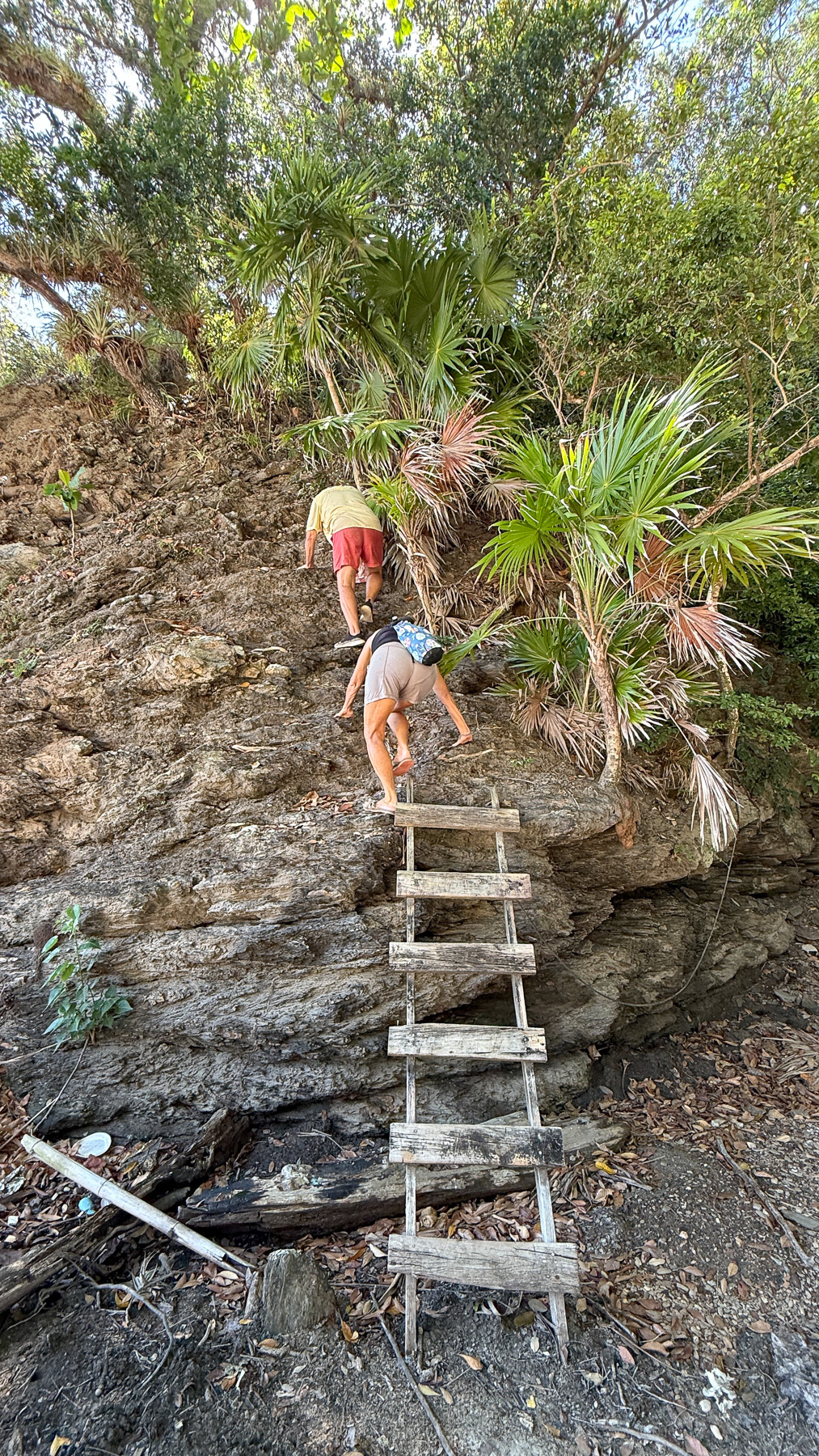
Then we’re standing in front of a huge boulder. A wooden ladder leads to the first ledge, but then what? Are we really supposed to climb up there—or would it be better to swim around the rocky outcrop? The American climbs ahead; we follow and are surprised at how well it works. Has the rock been worked? Everywhere there seem to be spots where you can place a foot securely. At the top again: a fantastic view of a bay with a sandy beach. Getting down, however, is a bit tricky, as we’re sliding more than we’re walking. A wooden hut turns out to be a beach bar, but it’s closed. The American calls a woman over; she opens it and sells us cola. After that, it’s steeply uphill once more to the next bay; at the top, a view of our boats, and a few minutes later we’re at our dinghies. What a wonderful adventure tour! We could never have booked something like this—thank you so much!, we say gratefully to the American.