Nightmare in Berlin
Peter ends up in the hospital and Renate’s father dies
By Renate Rüger, September 14, 2026
Berlin/Bocholt – We knew the trip home would be exhausting. There’s not just the joyful reunion with family and friends, but also a running back and forth between doctors and the tedious hunt for spare parts for the boat. What we didn’t expect: this trip home turned into a true nightmare. Renate’s father died, Peter ended up in the hospital with a broken vertebra, and the number of doctor’s appointments jumped from a planned 11 to 20. A physical and, above all, emotional ordeal. And then it turns out that Peter isn’t getting enough air at night anymore, either.
Peter’s fourth lumbar vertebra is broken
It actually all started back at the Rio Dulce. Peter had been suffering from back pain for about two weeks and was popping one ibuprofen after another. Had he twisted something during his desperate attempt to repair the water pump? Massages, yes, but going to the doctor — absolutely not. No, not in Guatemala, and definitely not at the Rio Dulce, where hardly anyone outside the marina speaks English. So he toughed it out, somehow survived the two-day trip to Berlin by bus, taxi, plane, and train. And then it’s the weekend. More painkillers on Saturday, more on Sunday. Popping pills is nothing new for Peter.
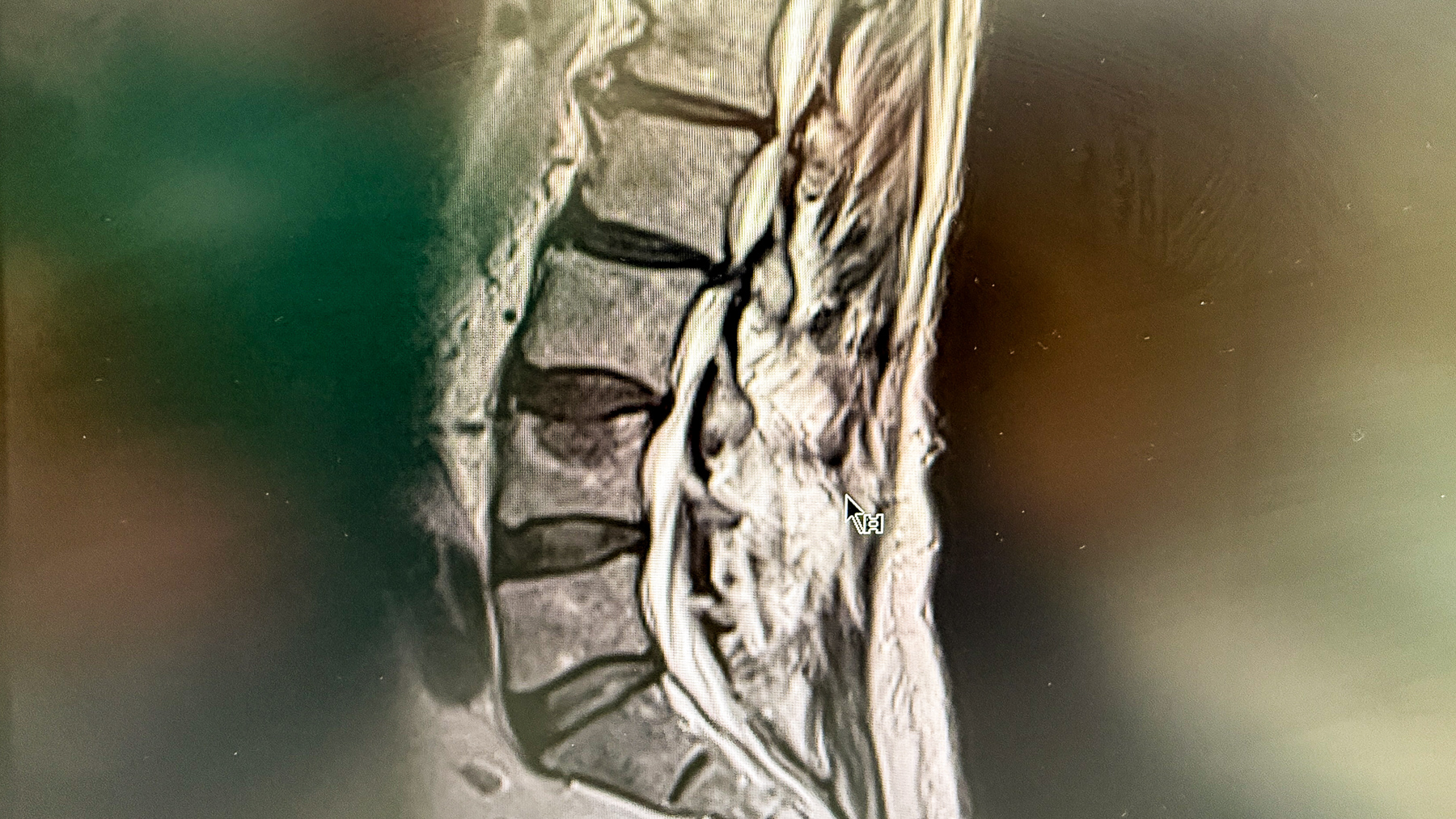
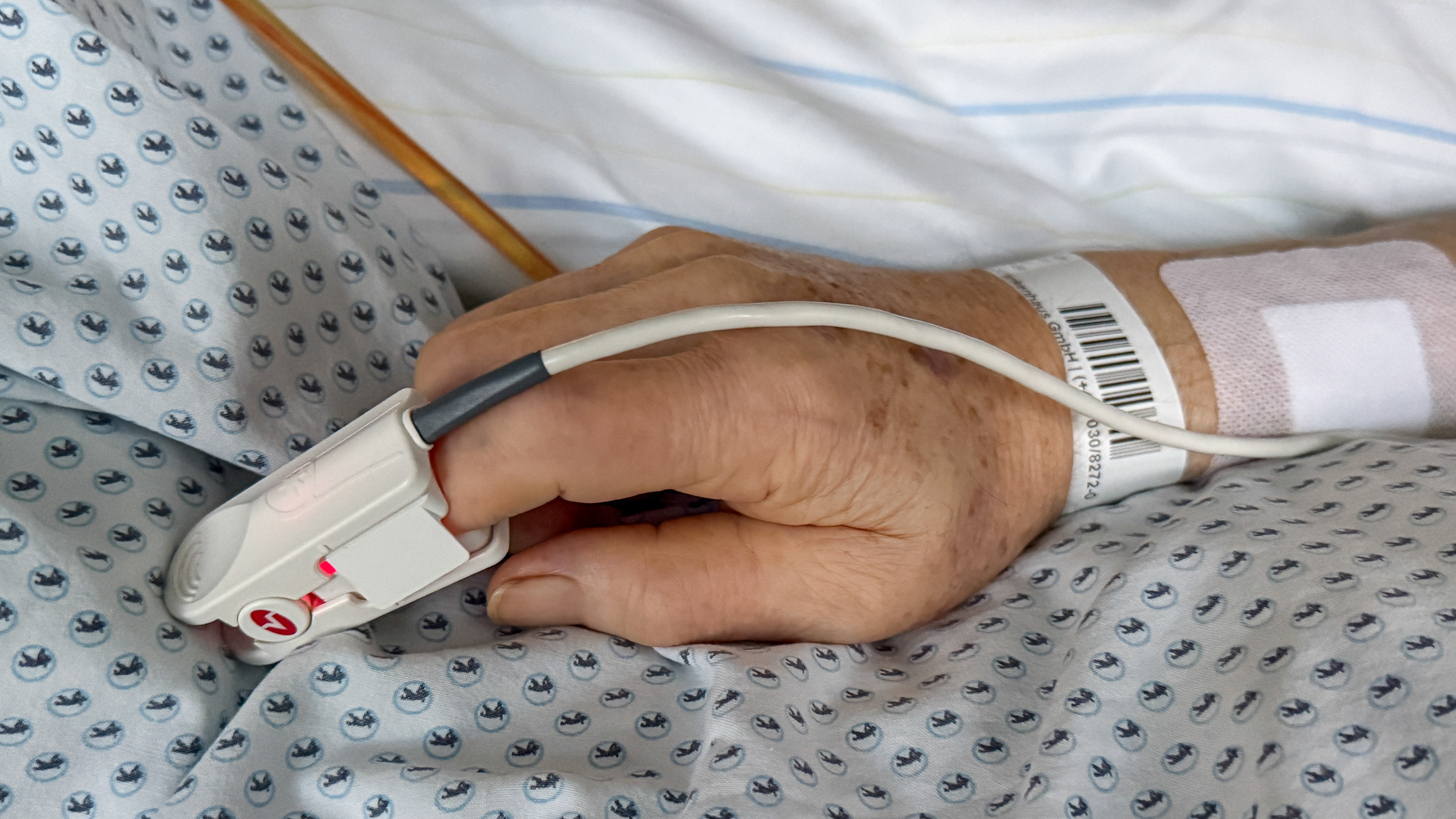
Monday finally brings an appointment with the orthopedist. The doctor prescribes stronger painkillers and gives him an injection as well. It’s not a slipped disc, he says, kneading around on Peter a bit. The pain pills don’t work. Peter goes back to the orthopedist. Is the doctor not taking him seriously? On the third visit, the receptionist turns him away: no, he can’t be squeezed in today, not until Thursday. That’s the last straw for Peter. He moans and groans, can no longer get out of bed to go to the bathroom. Renate finally calls an ambulance. The MRI at the hospital shows it: the endplate of the fourth lumbar vertebra has collapsed, and the disc is no longer where it should be.
The doctors recommend conservative treatment, meaning: they give him strong painkillers until Peter can stand up again. Everything should heal within six to twelve weeks, they say. Until then, Peter shouldn’t carry more than 5 kg, and afterward he should go to physical therapy to build up his back muscles. After three nights, Peter is able to leave the hospital again.
False alarm: no cancer, neither in the breast nor the skin
Meanwhile, Renate runs from the gynecologist to the mammogram and ultrasound exam. Then comes the relief: the breast cancer hasn’t come back. The self-paid skin cancer screening (self-paid because otherwise a statutory health insurance patient couldn’t get one for months), on the other hand, produces no results at first, because the data for several patients was destroyed for some reason. After a second screening a week later comes the shock: suspected skin cancer in two spots. A false alarm, another dermatologist later determines.
Family reunion and shopping for the boat
The only good part of this time is seeing our children and Renate’s parents again. Holding them all in our arms again feels good. We enjoy sitting together as a big group at the table, celebrating our daughter’s birthday in Hanover together, and another daughter’s birthday in Berlin. Time flies.
We’re getting more and more restless, feeling rushed, trying to get hold of everything we can’t get in Guatemala — or can only get with difficulty or at great expense. A cordless angle grinder, for example, is one of those things. We need one in case our mast ever breaks and we have to cut through the stainless steel shrouds. We wouldn’t get far with our big bolt cutters, especially since they’re so heavy that Renate can barely carry them. We’d thought mast failures were rare — until we arrived in the Caribbean and immediately met several sailors who had exactly that happen to them. If the mast ends up in the water, it can punch a hole in the hull or put strain on the boat through its weight and water resistance. That’s why we need to be able to cut the wire cables that hold the mast to the boat. A grinder can be bought anywhere; spare parts are trickier. Even the broken fan in Peter’s laptop can’t be replaced that easily, and so on, and so on…

Twice back from Bocholt to Berlin
The schedule for Bocholt is packed. Arrival and dinner at our friend Sabine’s place, where we’re staying; a get-to-know-you coffee with the “in-laws” of our daughter who actually lives in Berlin; attending the Bocholt Pride parade with our queer child and their partner; general practitioner, dentist, eye doctor, ENT specialist, neurologist, and a brain MRI (nine doctor’s appointments in total); meeting up with friends and former colleagues; sourcing spare parts in nearby Wesel… And we actually still want to enjoy life with — and especially with — Sabine. But now we have to go back to Berlin for a day, to the US consulate. Because we need a US visa.
The visa situation
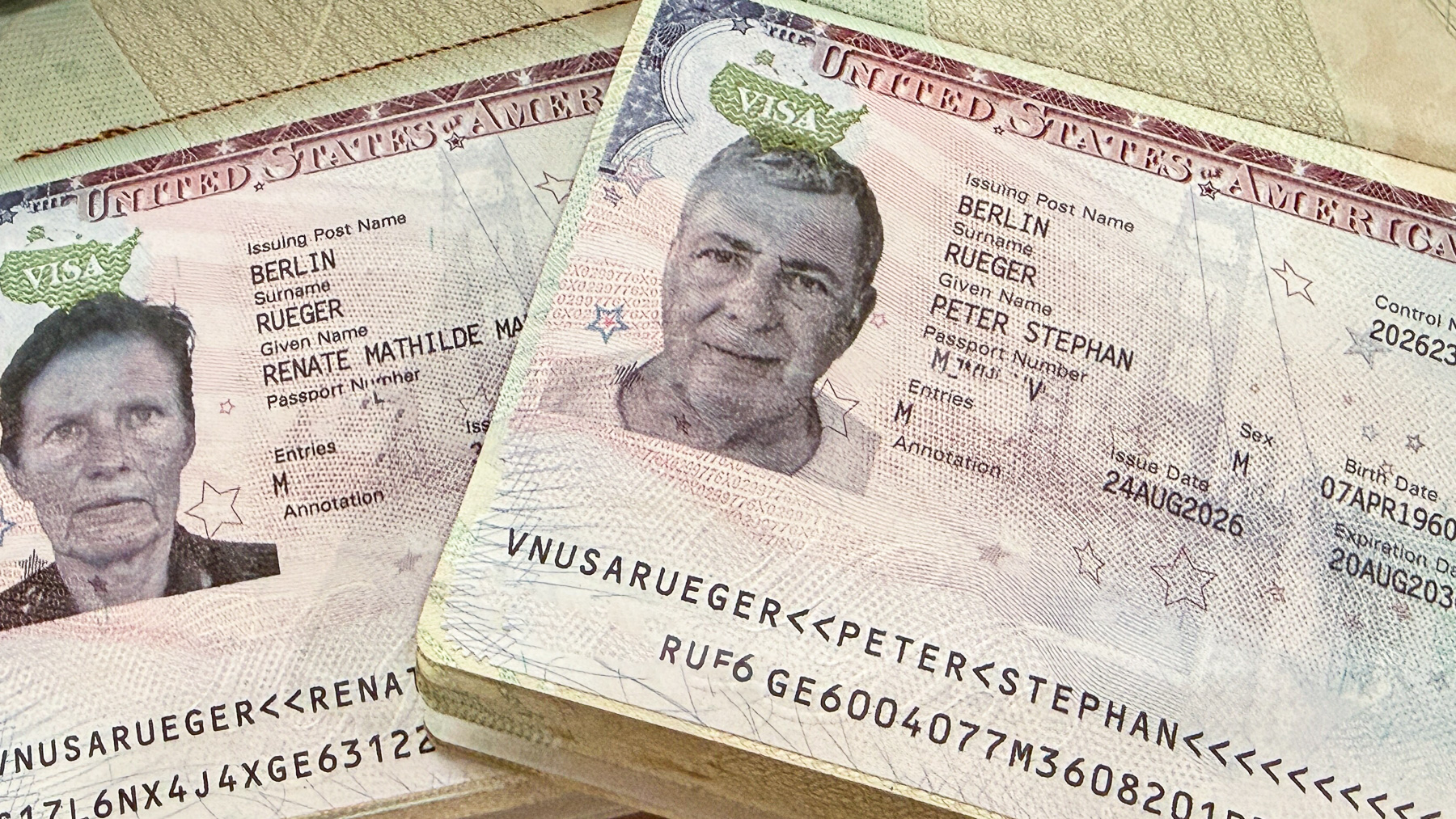
We don’t actually plan to head to Hawaii during our Pacific crossing. But you never know what’s coming. Either way, we don’t want a repeat of what happened in spring. In April, we had wanted to sail from Mexico to the Bahamas. But the weather couldn’t be reliably forecast for the whole route. We didn’t want to risk the passage without a stopover in Key West, USA. Cuba was out of the question as a stop because of the emergency situation there. So in the end we sailed back to Guatemala. In order to be allowed to sail into US waters in the future, we’ve now applied for a B1/B2 visa. The electronic travel authorization ESTA isn’t enough for entry by private boat. We’d already tried once at the US consulate in Curaçao two years ago and waited in vain for an interview appointment. This time, it worked out at the US consulate in Berlin. It would take us 45 minutes to get there by subway, everything was prepared — until Peter ended up in the hospital on the very day before the appointment, of all days. Every day, Renate now checked the US embassy website, always hoping another appointment would open up during the time we were in Berlin. No luck. But at least we still get an appointment while we’re in Germany.
By FlixTrain from Bocholt to Berlin, hotel, consulate the next morning, and back to Bocholt again. Everything goes off without a hitch. And before we leave, we also manage to visit my — that is, Renate’s — parents at the nursing home. My father had been taken to the hospital, my sister had told me the day before. We want to visit him there, but he’s already back and visibly happy to see us. He’d only been in the hospital briefly, because of his freshly pulled teeth, or rather the resulting wound, and because he takes the blood thinner Marcumar.
Renate’s father dies
My 92-year-old father has been doing poorly, at least since his upper teeth were pulled. Before that, my sister tells me, he’d still been walking with a rollator. Now he’s gotten much weaker, sits in a wheelchair, and can only get up with a lot of effort and help. The lower teeth are infected and apparently need to be pulled too. My father waves it off. He doesn’t say anything, but makes it unmistakably clear that he doesn’t actually want that. Every day during our three-week stay in Berlin, I had visited him and my mother at the nursing home, usually with Peter along. This visit was meant to be one last surprise visit. An hour later, my sister arrives to accompany my father to a follow-up appointment at the dentist’s a few houses down. We walk along, say our goodbyes, watch the two of them disappear behind the tinted glass door, and head down to the subway that takes us to the train station. It’s the last time I see my father alive and fully conscious. Somehow I seem to sense it, because just a few hours later I’m already asking what the dentist said. It was just a follow-up checkup, my sister answers.
Okay. I try to calm myself down and plan a get-together with former colleagues in Bocholt. Four days later, my sister calls: my father is in the hospital, it’s serious. A perforated stomach, a colostomy is put in, his kidneys have stopped working. One of our daughters drives me to Berlin in her car. We drive through the night. When we arrive around three in the morning, a young doctor gives us a lengthy briefing and bluntly advises us to stop life-sustaining treatment. We’re supposed to make the decision the next morning. The three of us stay sitting by the bed, stroking our father and grandfather, talking quietly, telling him things, even though he probably can’t hear it. We’re still not ready to “pull the plug,” as the saying goes. Another doctor suggests waiting one more night. Maybe the organs would recover. My daughter and I stay by the bed that night too; later I go to the hotel for three hours of sleep, while my daughter lies down in the bed next to my father’s.
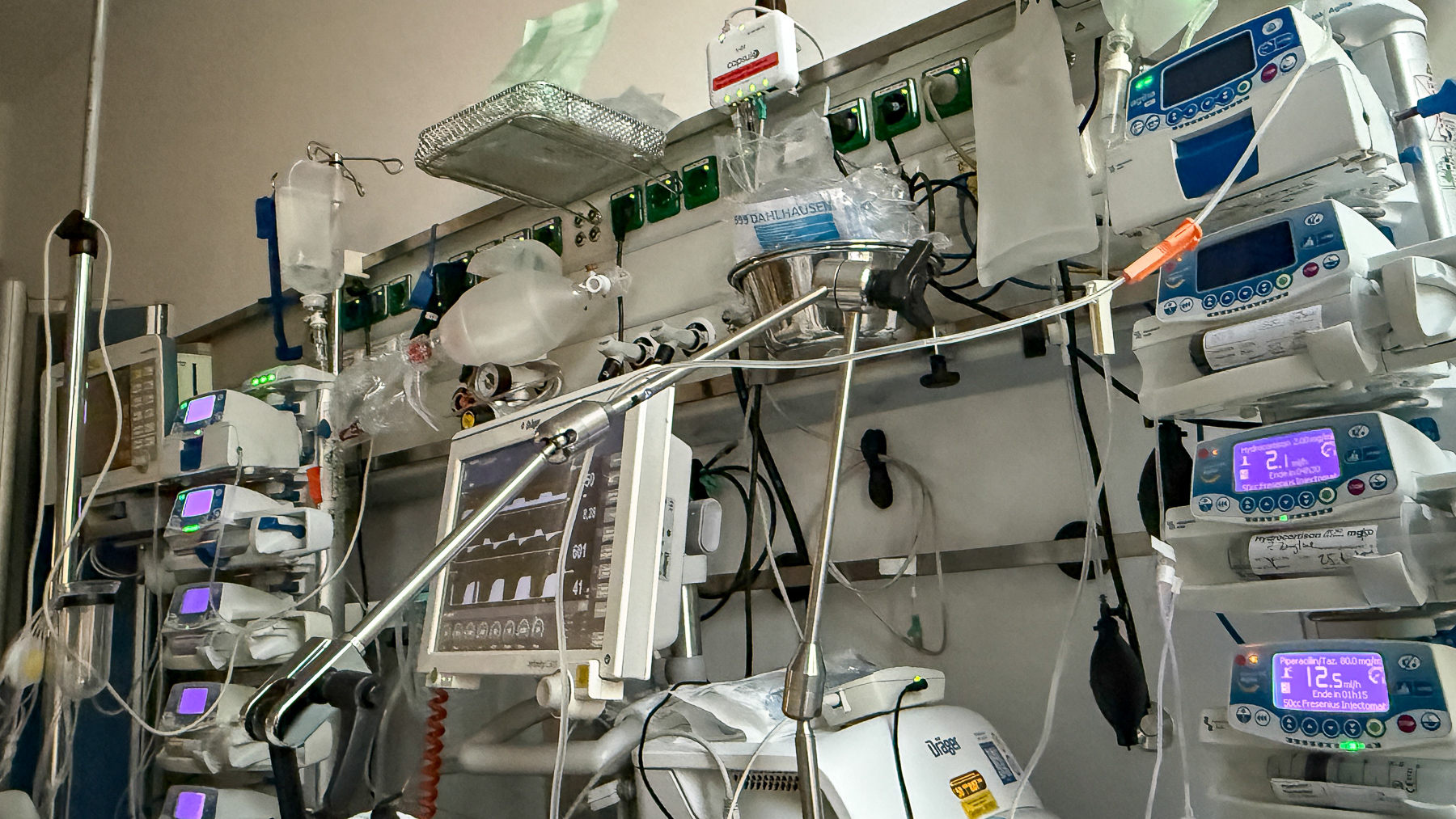
But it doesn’t help. My father’s organ values don’t improve. He never wakes up from the induced coma. The doctor now only keeps the pumps running for pain medication and sedatives, along with the device for his breathing difficulties. 25 minutes later, my father is dead. Pain, emptiness, and everything that follows and comes with this death form a nightmare for me, one I only slowly start to recover from, months later.

The funeral in Berlin can’t take place for at least five weeks, specifically on September 29th. So we cancel our flight to Guatemala, book a new one for October 3rd, and rent a new Airbnb for the additional, unplanned three weeks in Berlin. Pretty worn out, after one more week in Bocholt we then head off — as planned — to Switzerland, and then to our friends in Mannheim. It turns out to be two restful weeks, the only days of our trip home that actually feel like a vacation and take our minds off things. The same goes for our stop on the way to Switzerland: with Christiane in Frankfurt. She and her husband Franz will later drive us to the airport in a van, since we have six suitcases and four smaller bags — about 120 kg of luggage. Our friends in Mannheim had actually wanted to drive us to the airport on September 14th, but because of the funeral and the flight change, everything got thrown off.
Peter isn’t getting enough air
On September 14th, after our “vacation,” it’s back to Berlin, where a new battle begins — the battle for a polygraphy device, a spot in a sleep lab, and an APAP breathing therapy device with a nasal or face mask. Because Peter suffers from severe sleep apnea. He has an average of 66 breathing interruptions per hour. In other words, his breathing stops a little more than once a minute while he sleeps.