Tulum I: Brown algae on the beach
A carpet of stinky sargassum is ruining our swim in the ocean
By Renate Rüger, April 12, 2026
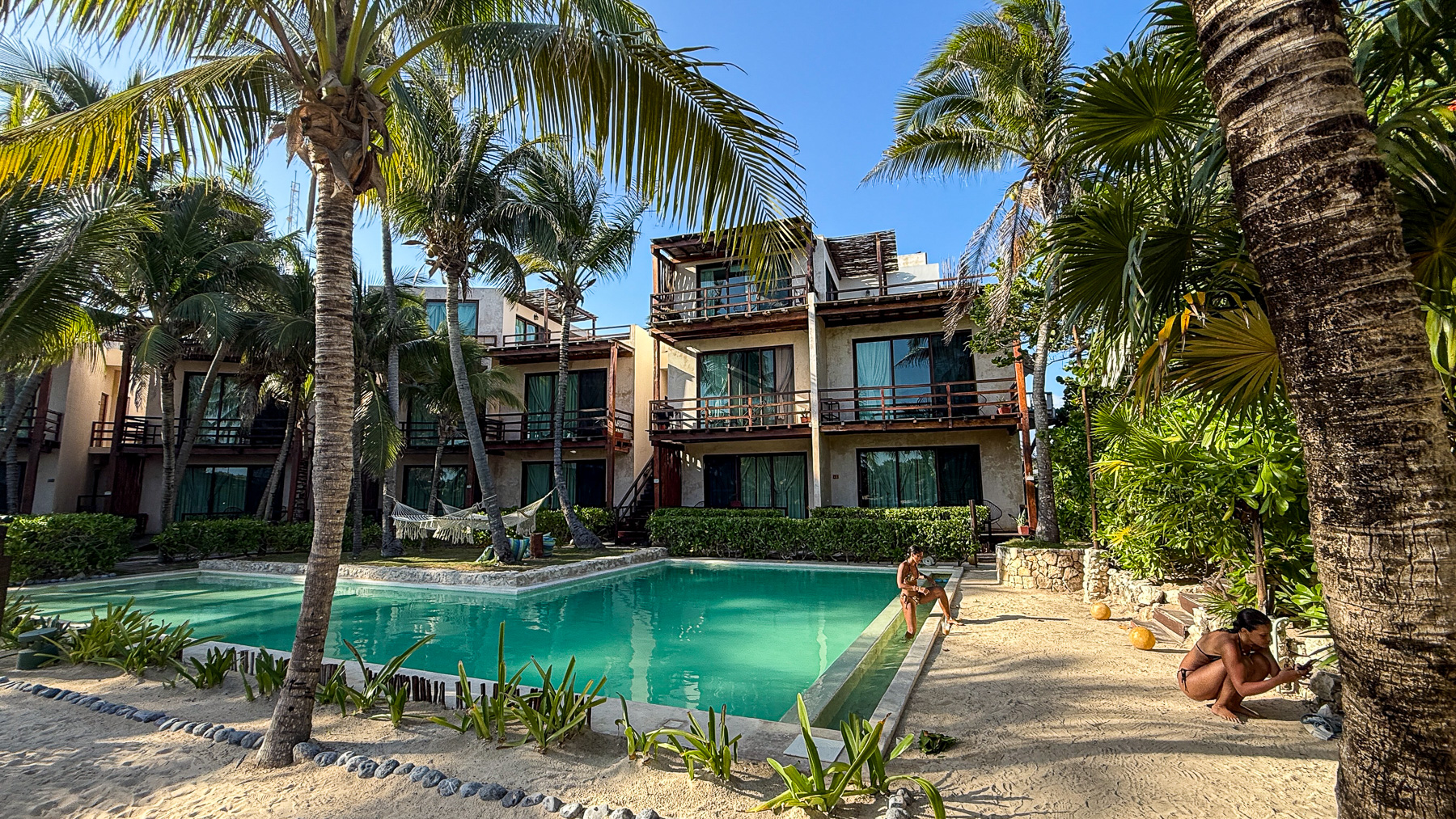
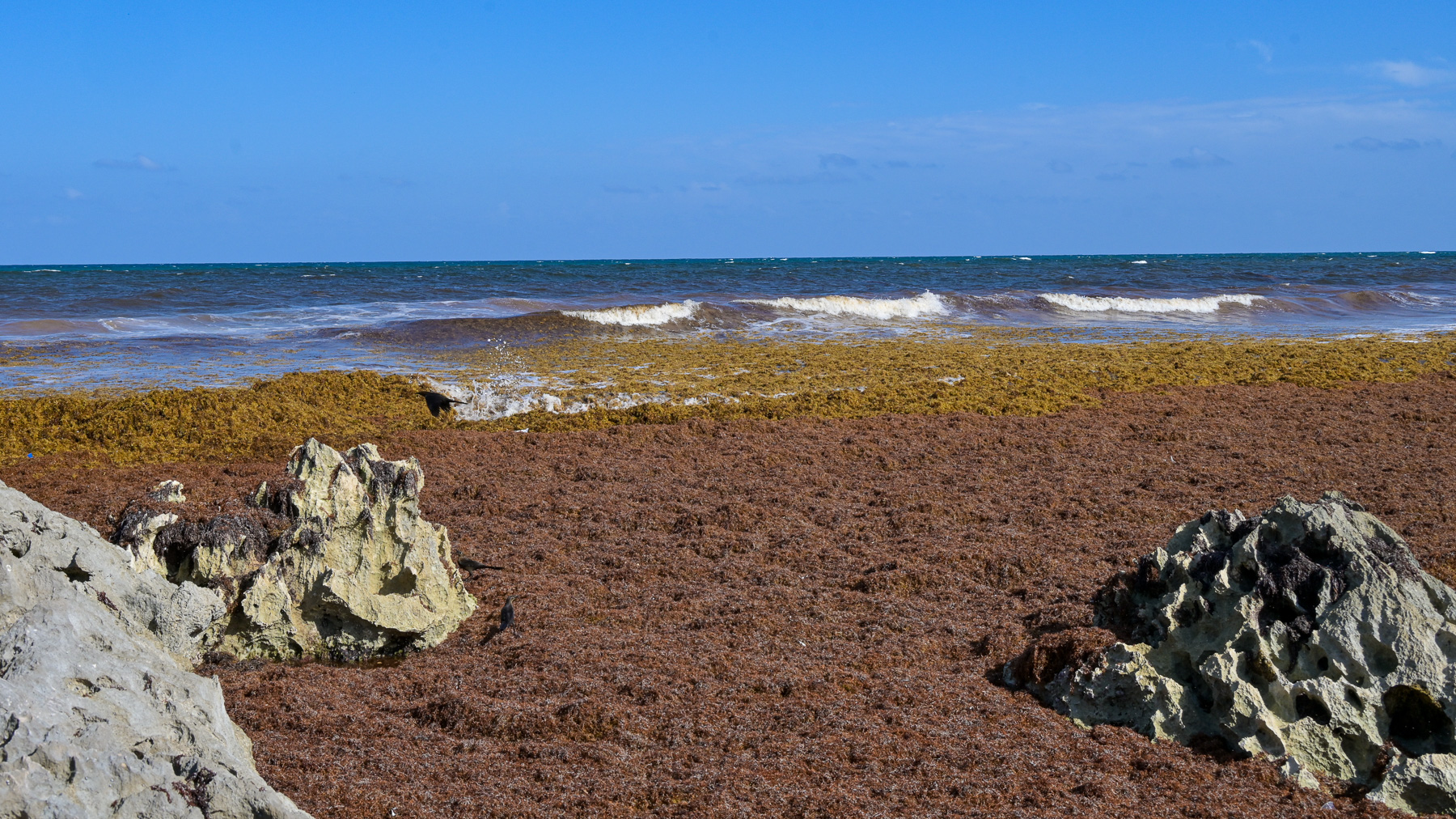
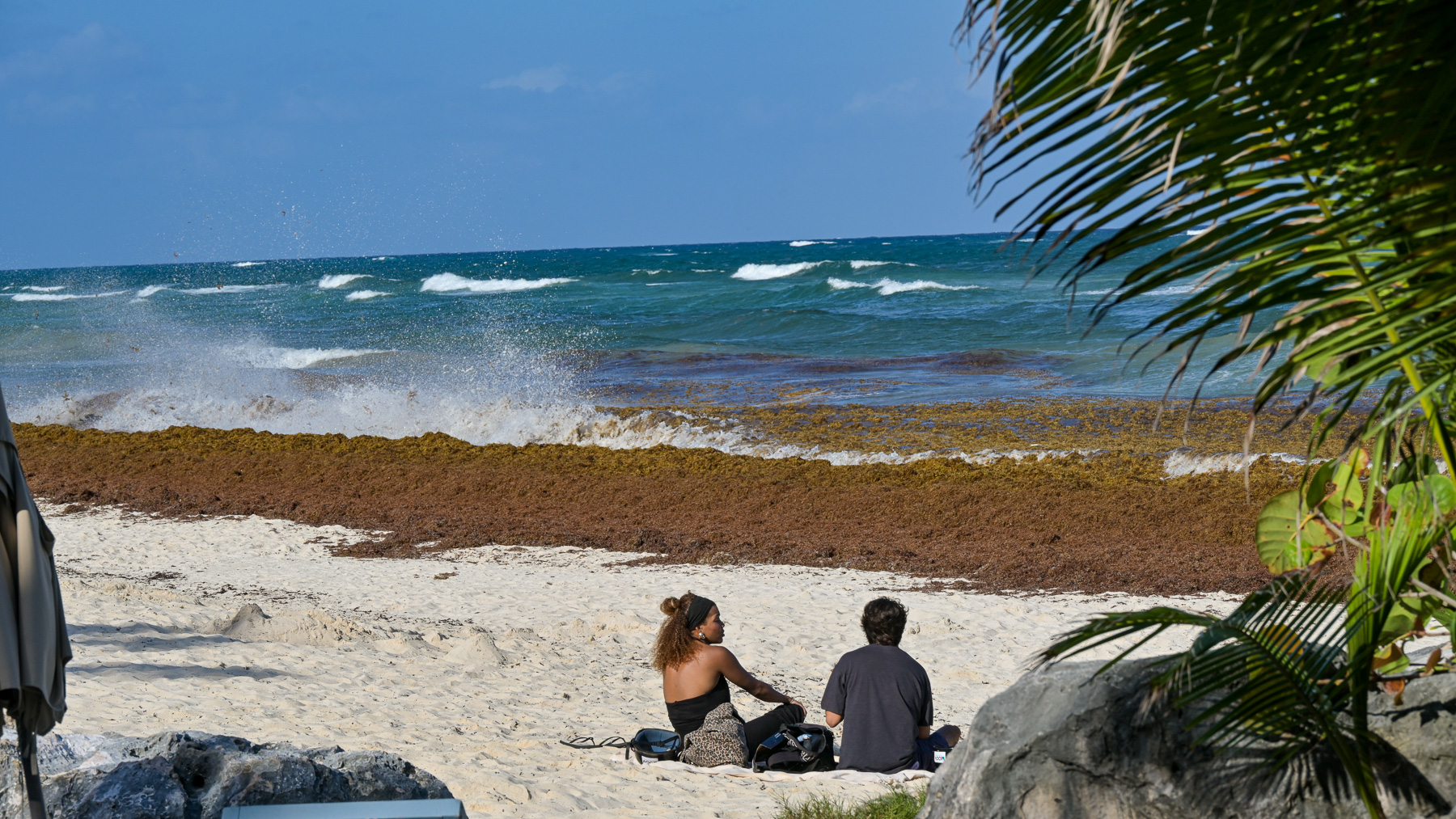
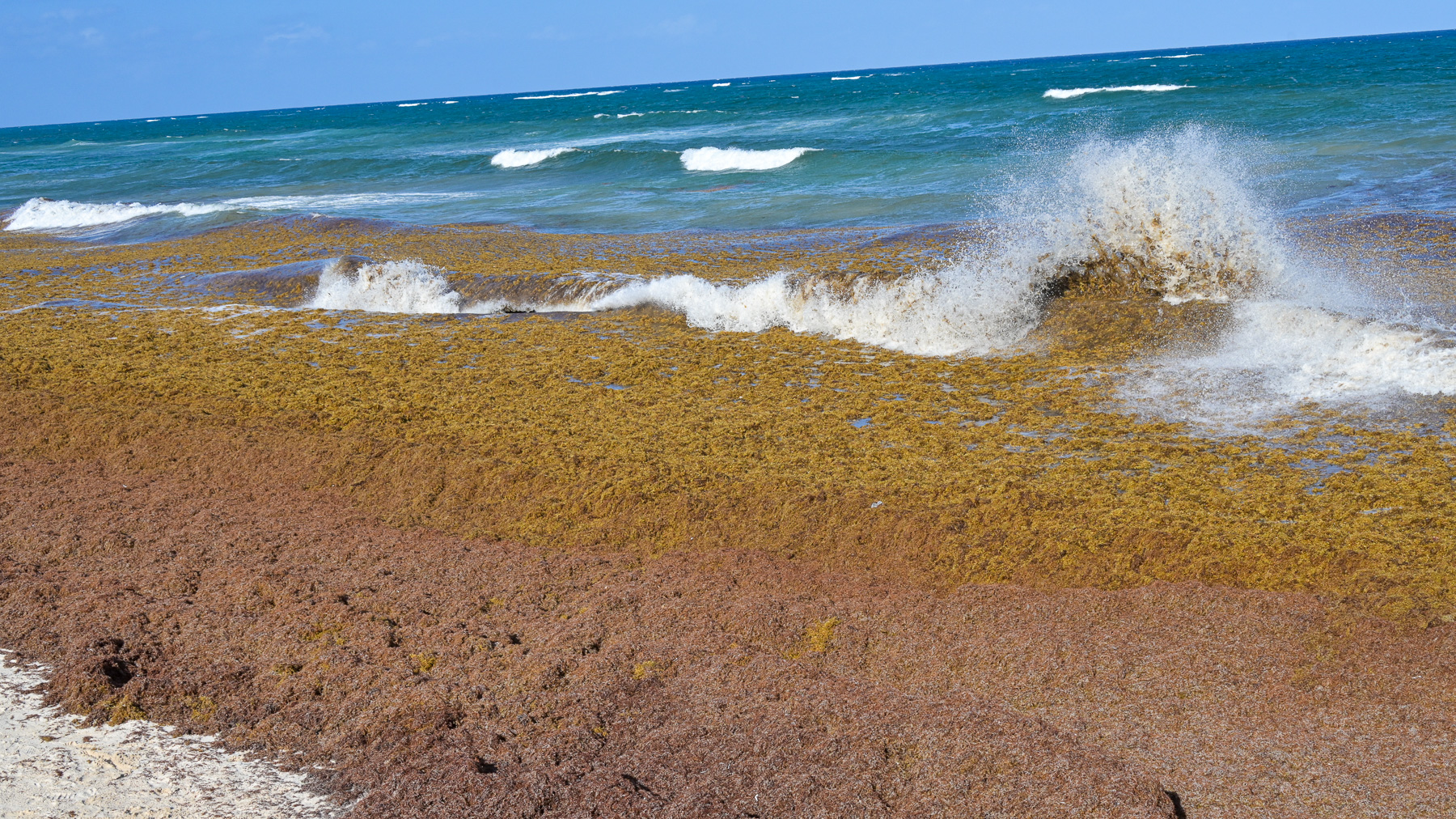
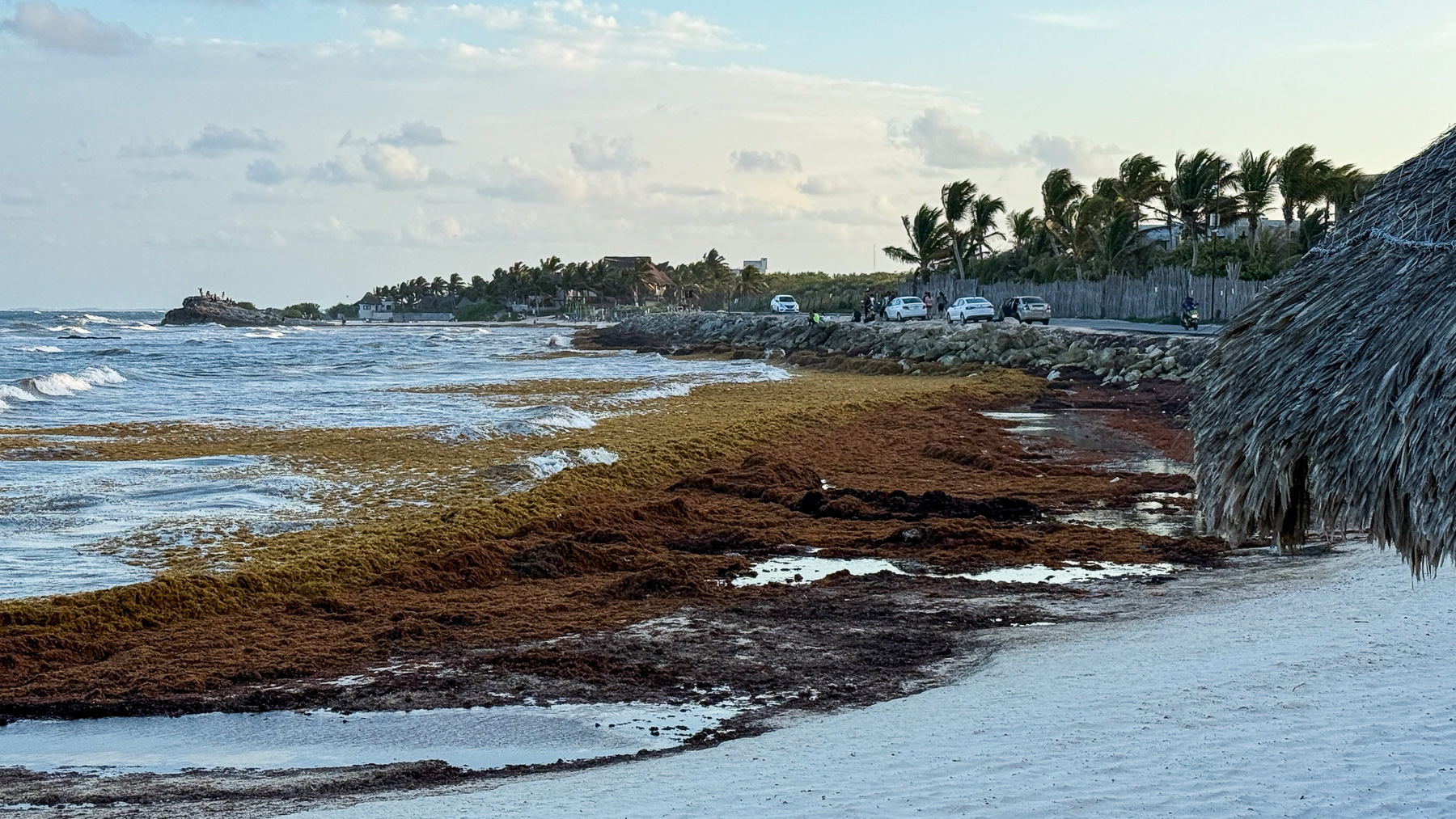
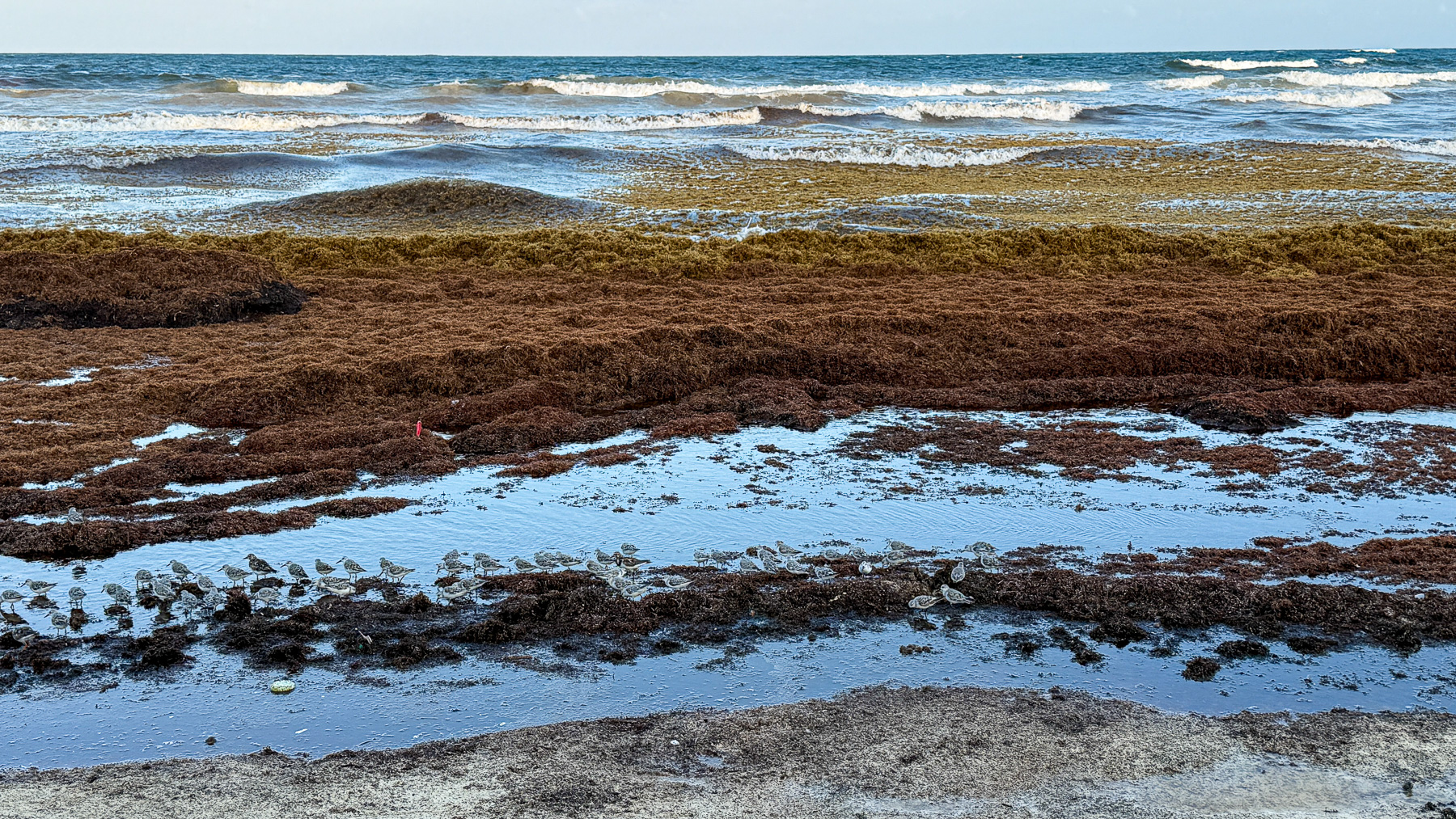
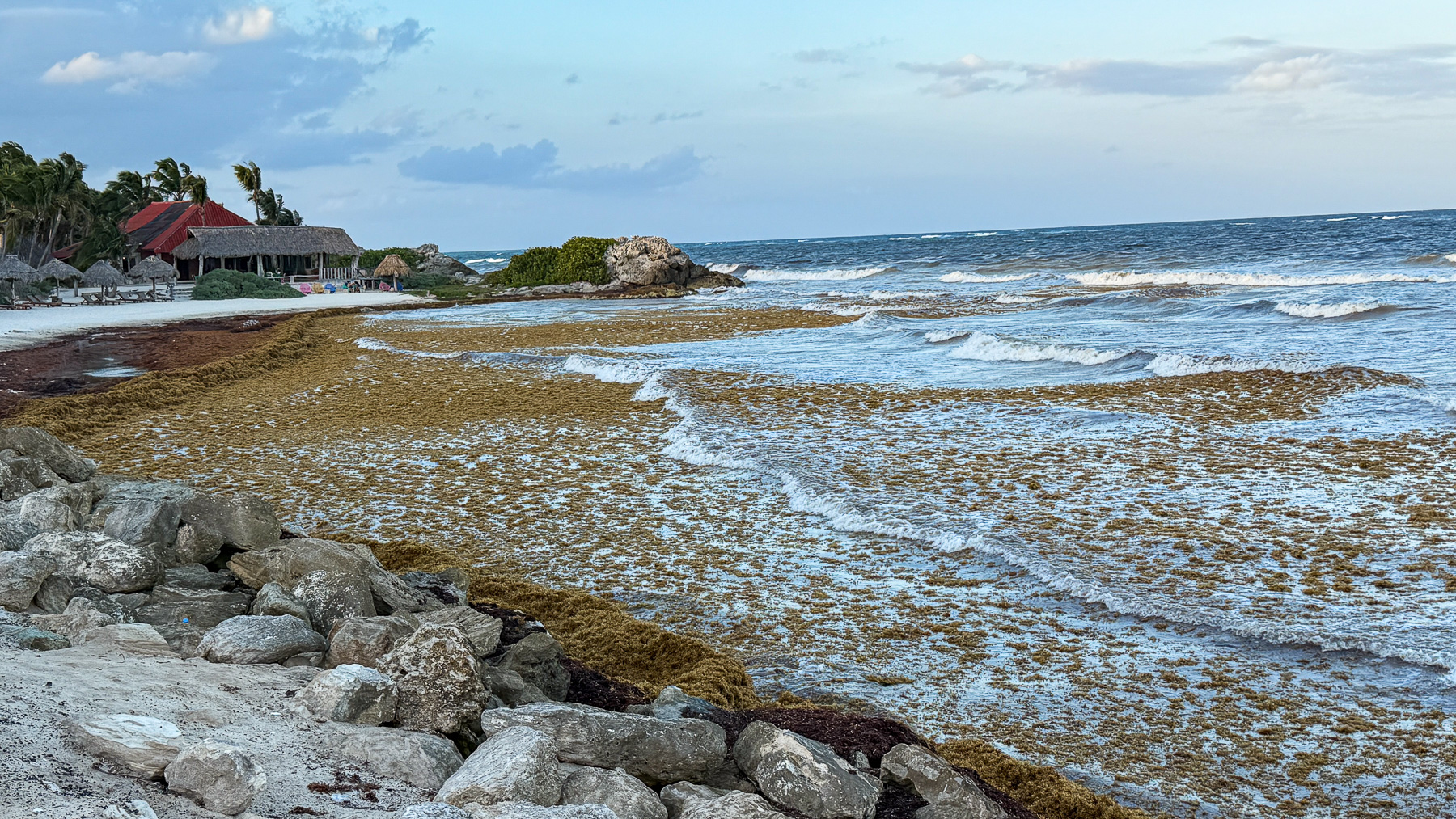
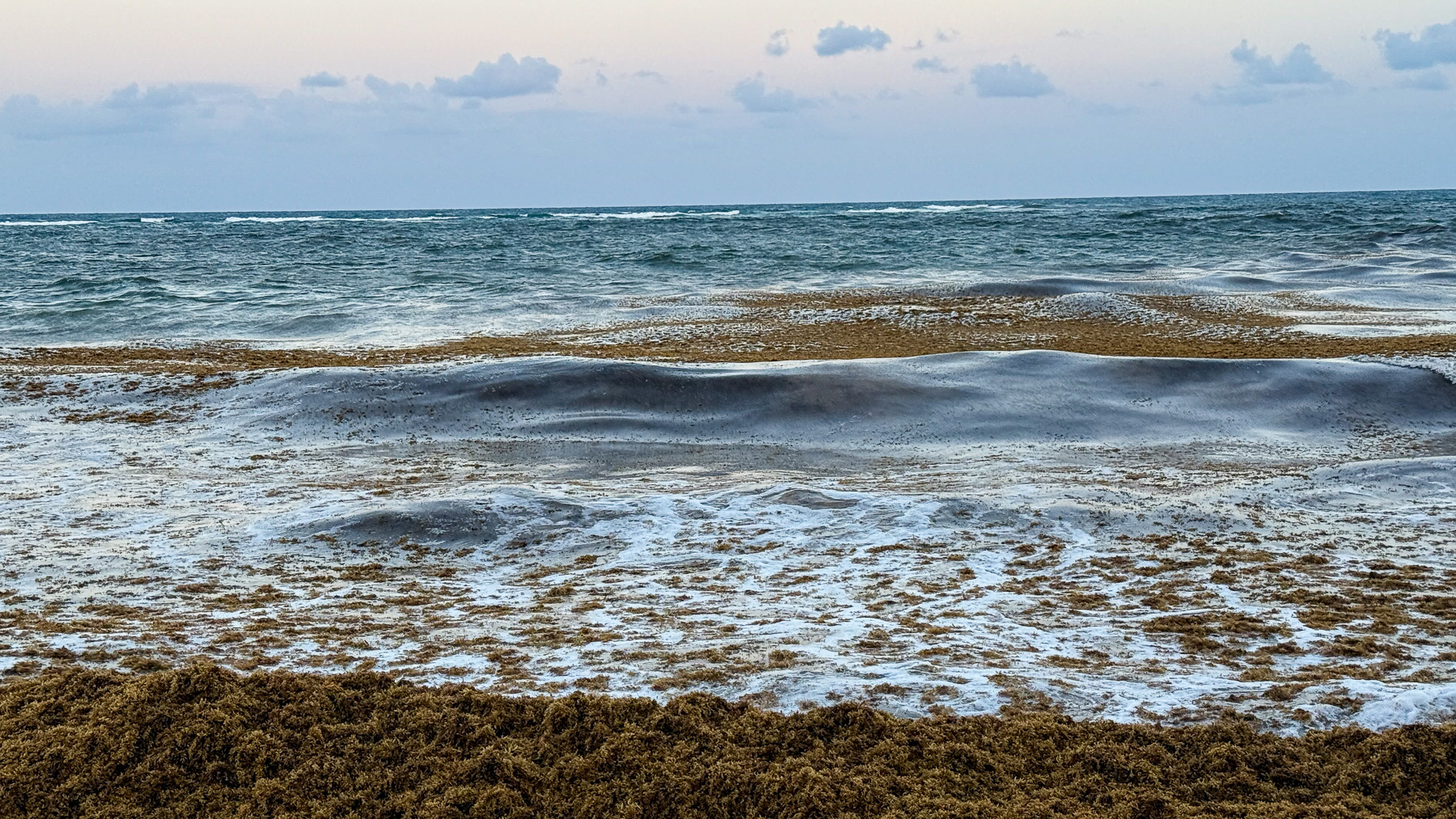
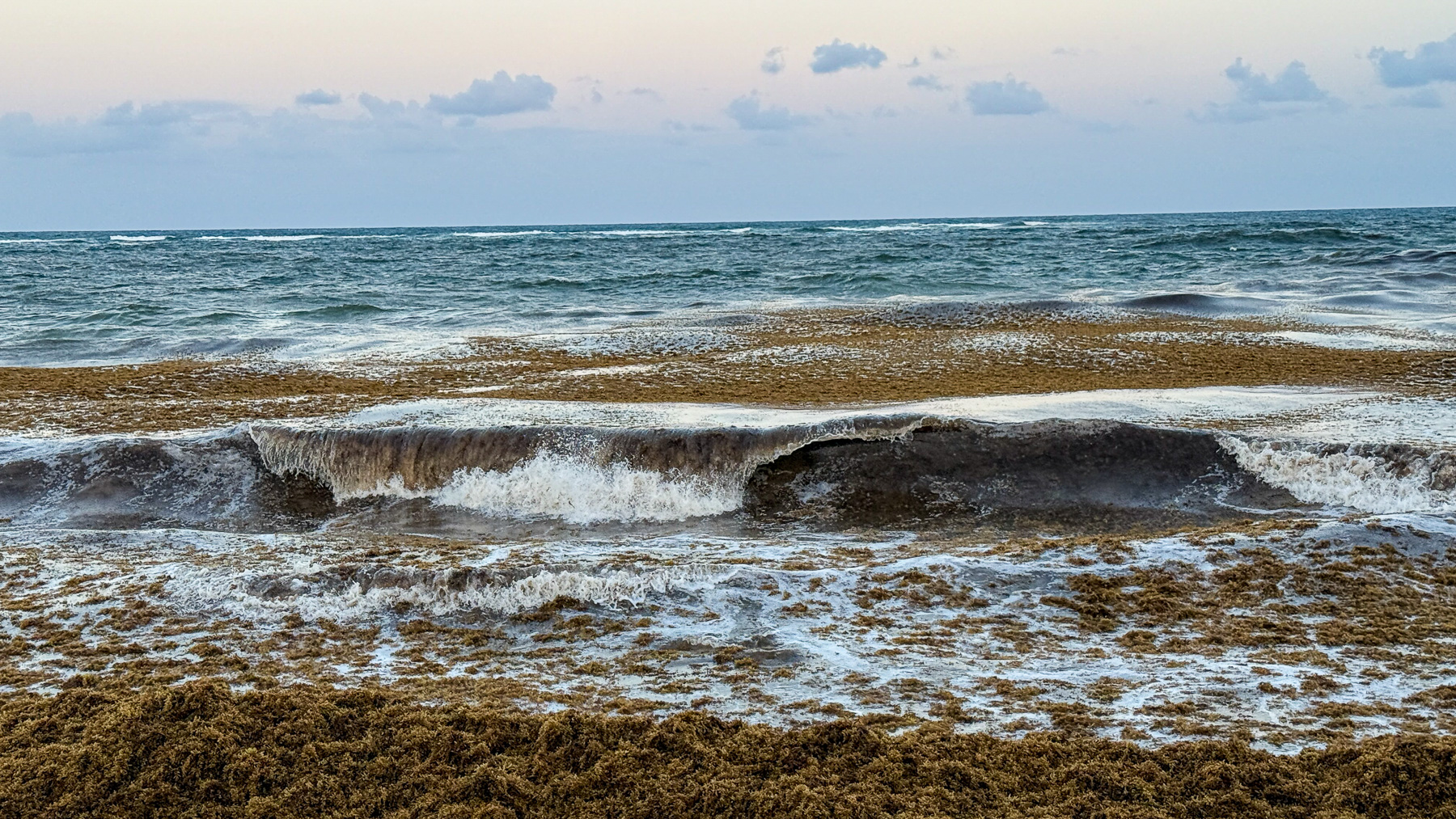
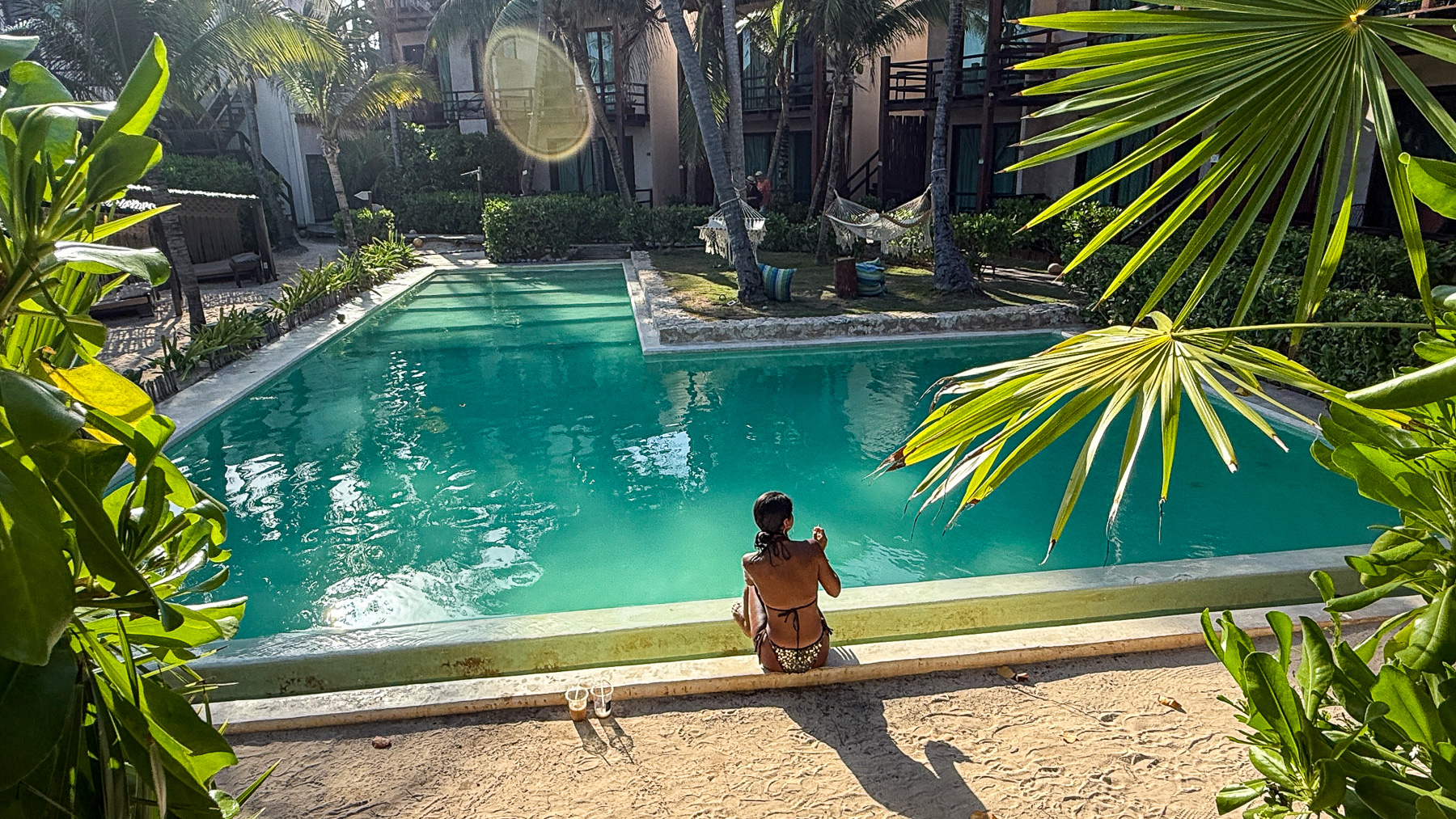
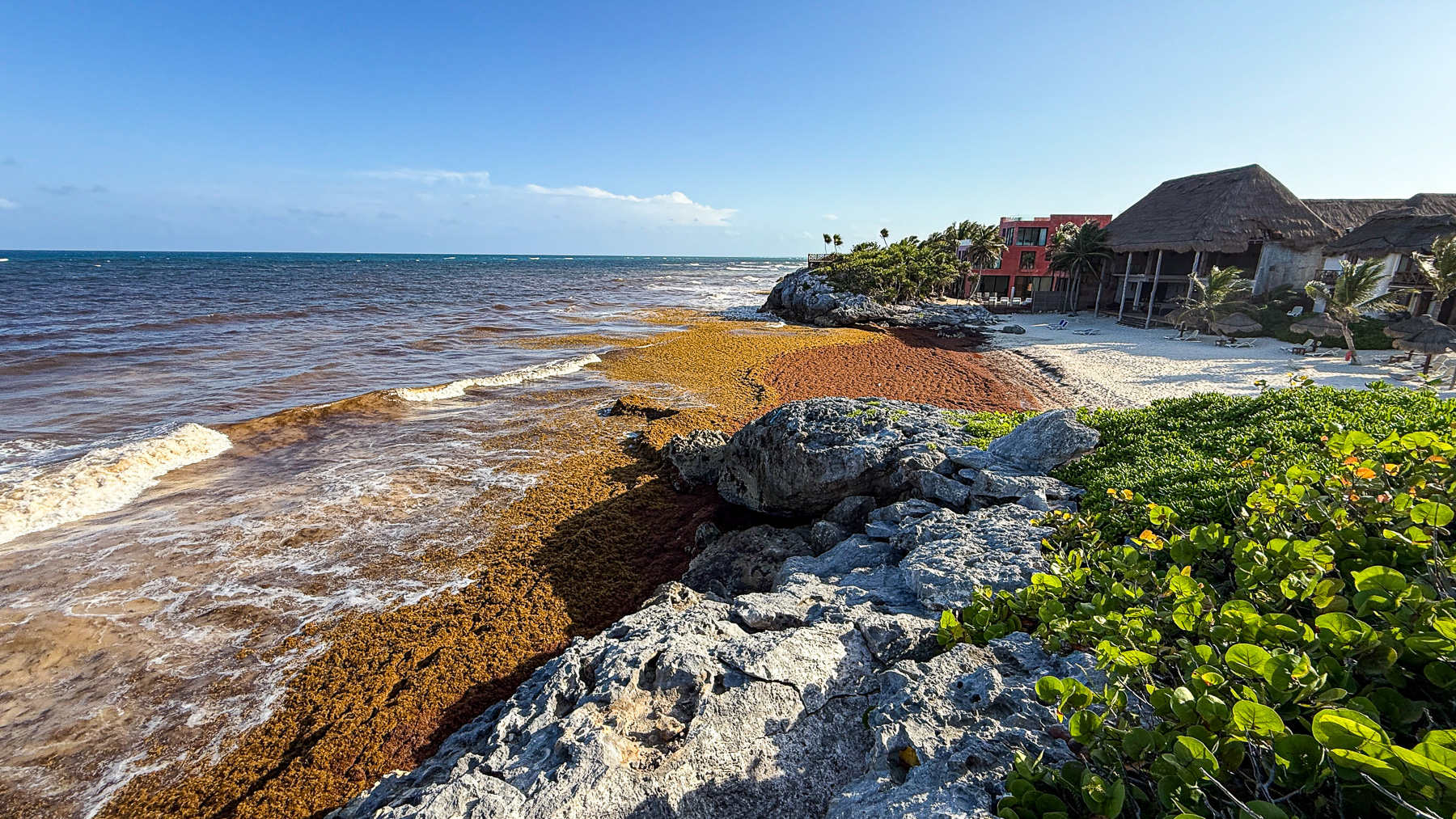
Mexico – It smells like rotten eggs. Brown algae—known as Sargassum—is piling up on the beach in front of our hotel in Tulum. We came here by taxi, ferry, and rental car to see the Mayan ruins along the coast. We really like this small hotel with its pool and private beach. We don’t want to go into the ocean because of the Sargassum, which gives off this unpleasant sulfur smell as it rots. The hotel bellhop tells us that yesterday the sand was still clean and access to the water was clear. The Sargassum must have washed up overnight. “There might be less on the beach next door,” he adds, showing us the way. No—although staff here are shoveling the sargassum aside, their battle against the brown piles is like tilting at windmills.
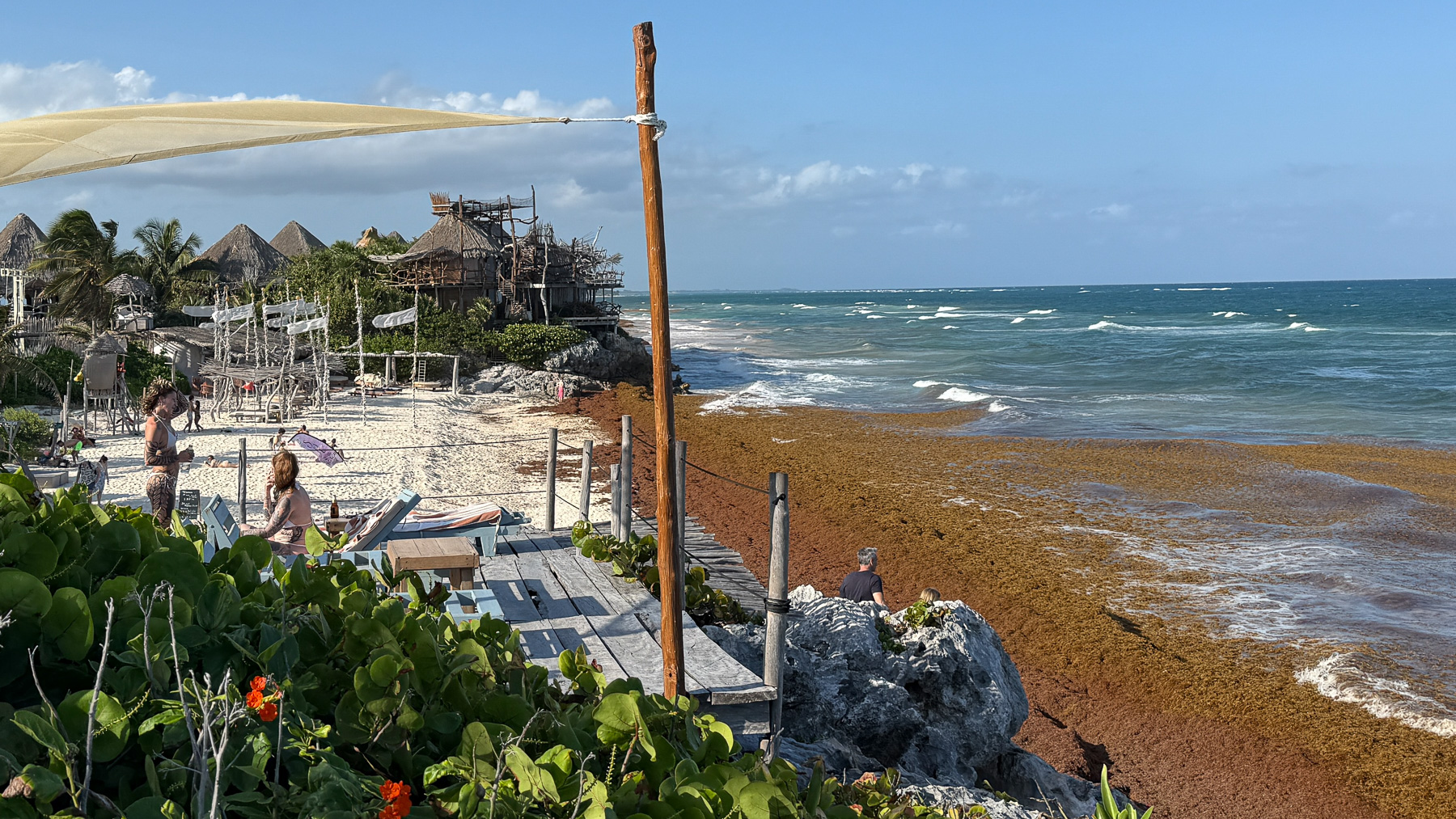
That stinky stuff comes from the Atlantic Ocean. We had already seen huge mats of it drifting westward during our Atlantic crossing. Since 2011, researchers have been observing the recurring formation of the “Great Atlantic Sargassum Belt,” which stretches from West Africa to the Gulf of Mexico. Overfertilization, deforestation of the Amazon rainforests, and rising water temperatures due to climate change are cited as causes. Exactly when and where the algae wash ashore depends on wind and waves, but Mexico, the Dominican Republic, and Florida are the hardest-hit countries. Tulum is considered a hotspot: by early 2026, there was already four times as much brown algae there as in the previous year. Even from the Mayan ruins, mountains of Sargassum can be seen—along with fishing boats that have run aground on it.