Rainy Season on the Rio Dulce
Lots of water, lots of lightning, lots of work on the boat / Next week we’re heading home to Germany
By Renate Rüger, July 18, 2026
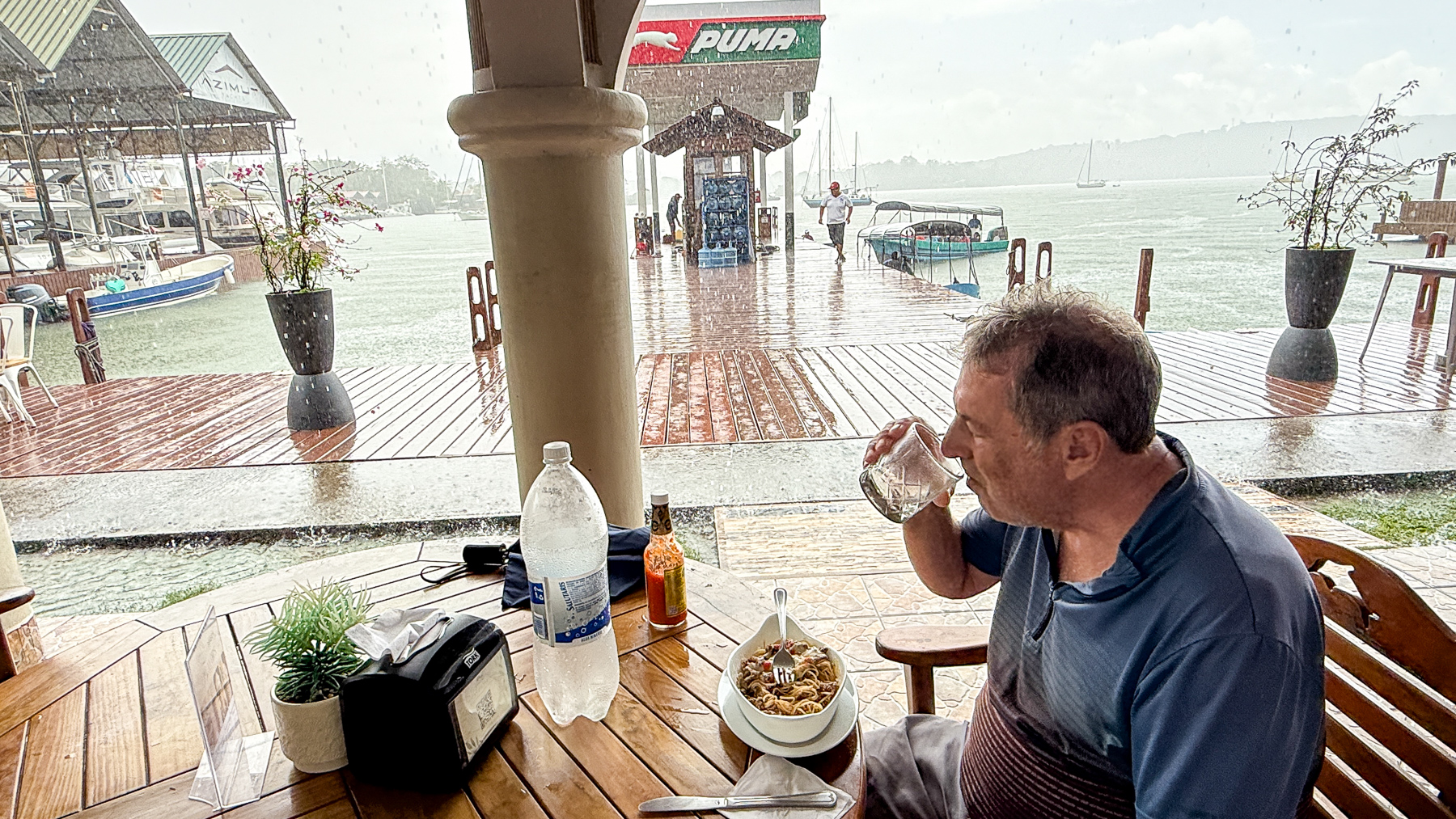
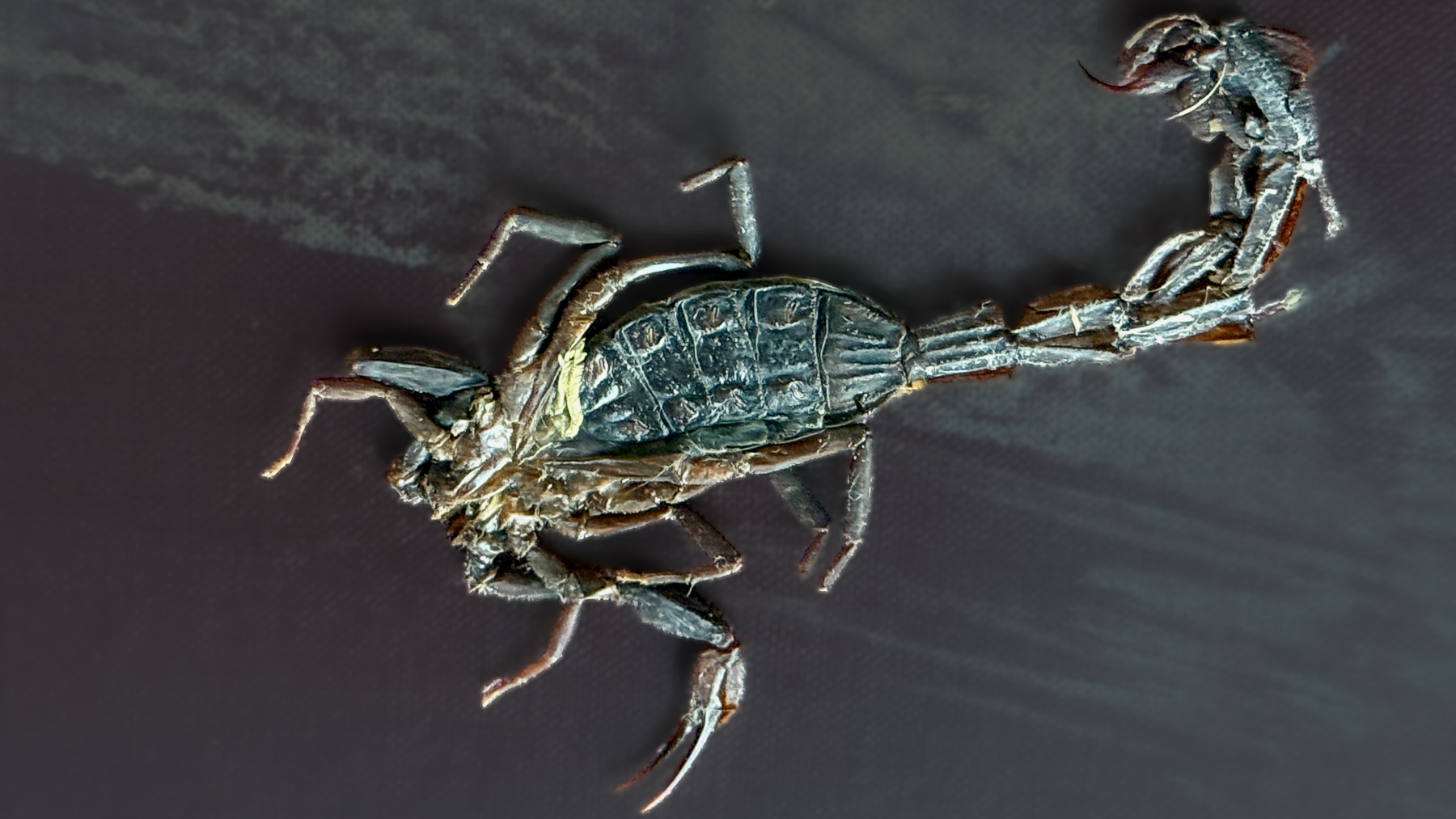
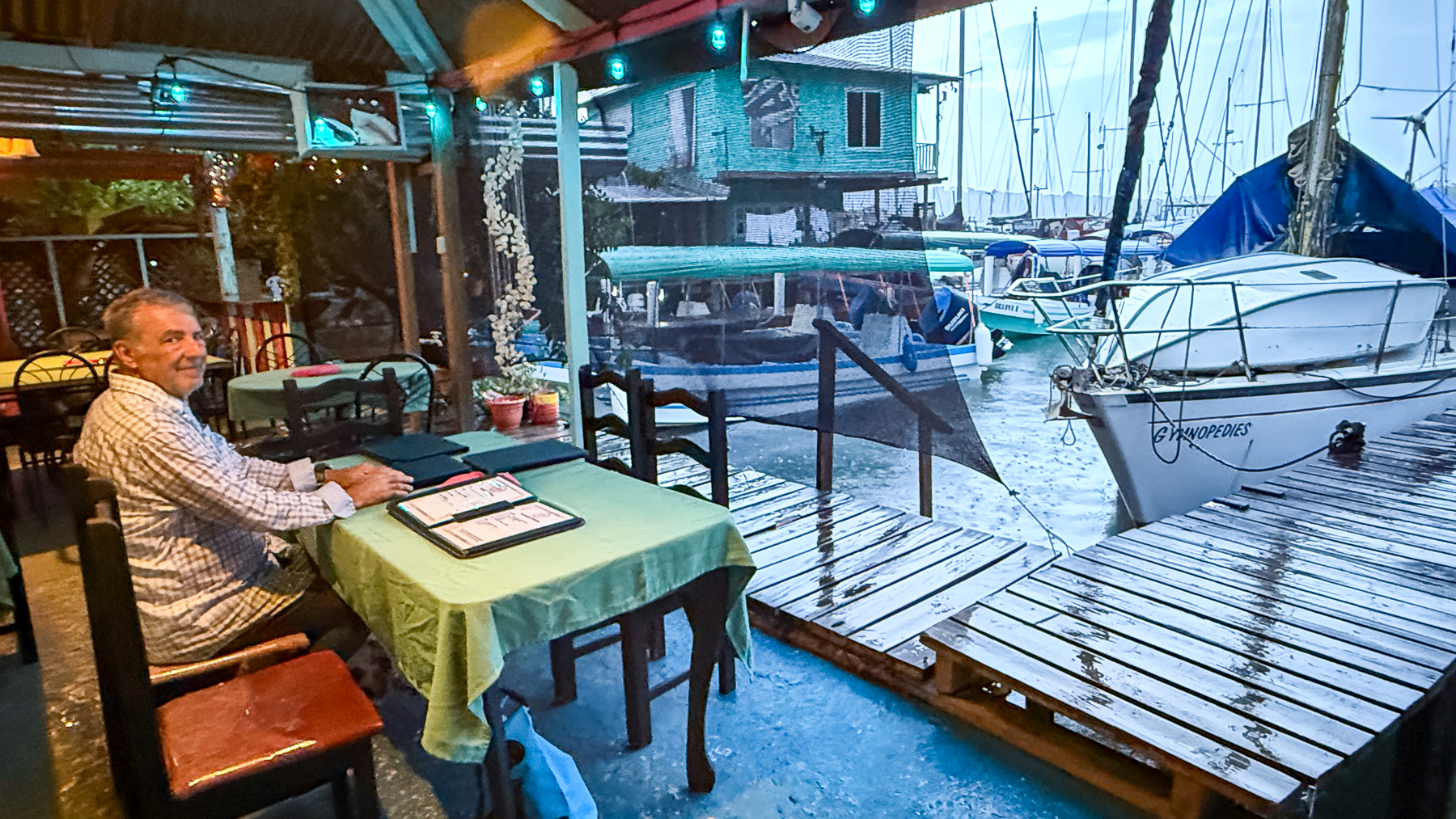
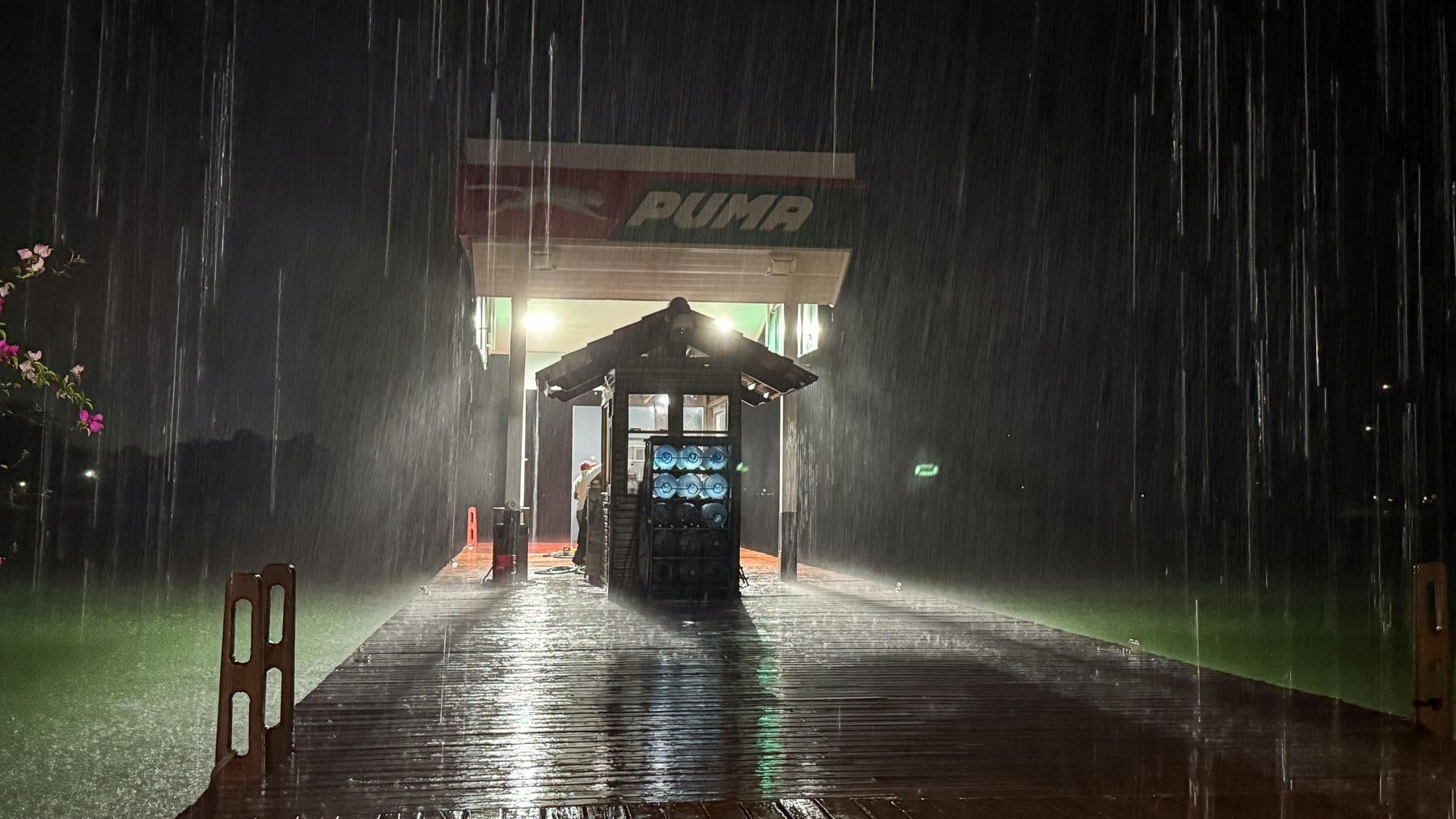
Guatemala – Rain hammers on the corrugated metal roof, hard, loud, and faster and faster. More water pours down, crackles, thunders so loudly that we can’t hear our own words anymore. At RAM Marina there are two apartments, each with three bedrooms, two bathrooms, and a shared kitchen-living area. We’re in one of them. It’s better than sleeping ashore now from the ship, especially since at night we’d have to walk through the rain and between all the stilts the boats are standing on to get to the toilets. At night it always rains. Sometimes only in phases, sometimes almost nonstop all night long. During the day it’s better: hot and humid and mostly sunny. But when it rains, it rains hard—on bare arms and legs it feels like a thousand stings. Ants swarm over the damp wall of our room; our kitchen attracts a scorpion. It’s the rainy season on the Rio Dulce. And it’s lightning season. That can be dangerous for our Amira and the other boats—one lightning strike and all the electronics on board are destroyed. For milliseconds the yard lights up, once, a second time; a second later comes the thunder. Often, far too often, it cracks right above us. Every time, we flinch. Is Amira still okay?
To Germany in more than 42 hours
We’ll be escaping this weather for six weeks and leaving Amira behind. We’re going on vacation in Germany and are looking forward to seeing our kids, parents, and friends again. The countdown is on. We’re leaving on Thursday. As always, the trip from Rio Dulce is quite arduous: 8:50 a.m. by tuk-tuk to the bus, a seven-and-a-half-hour ride to Guatemala City (270 km), around 5:00 p.m. from the Litegua bus station to the hotel, up at 3:00 a.m., check-in at the airport at 4:00 a.m., 6:15 a.m. departure for Houston, Texas. By then, we’ll already have been on the road for over 21 hours. 10:19 a.m. landing in the U.S. ( time difference +1 hour), lines at U.S. passport control, hauling the suitcases onto the conveyor belt for the connecting flight, the remaining eight hours of waiting, 6:20 p.m. departure, landing in Frankfurt the next day at 11:15 a.m. (time difference +7 hours)—after a travel time of 32 hours. 2:15 p.m.: Train to Berlin-Spandau; 8:00 p.m.: Arrival; then on to the Airbnb via subway and on foot, waiting for the keys to be handed over. All in all, a trip that would theoretically take about 42 hours using four modes of transportation. Theoretically, that is, if all the scheduled travel times were met… Deutsche Bahn had already announced a 28-minute delay on Wednesday.
Working in the Hurricane Hole
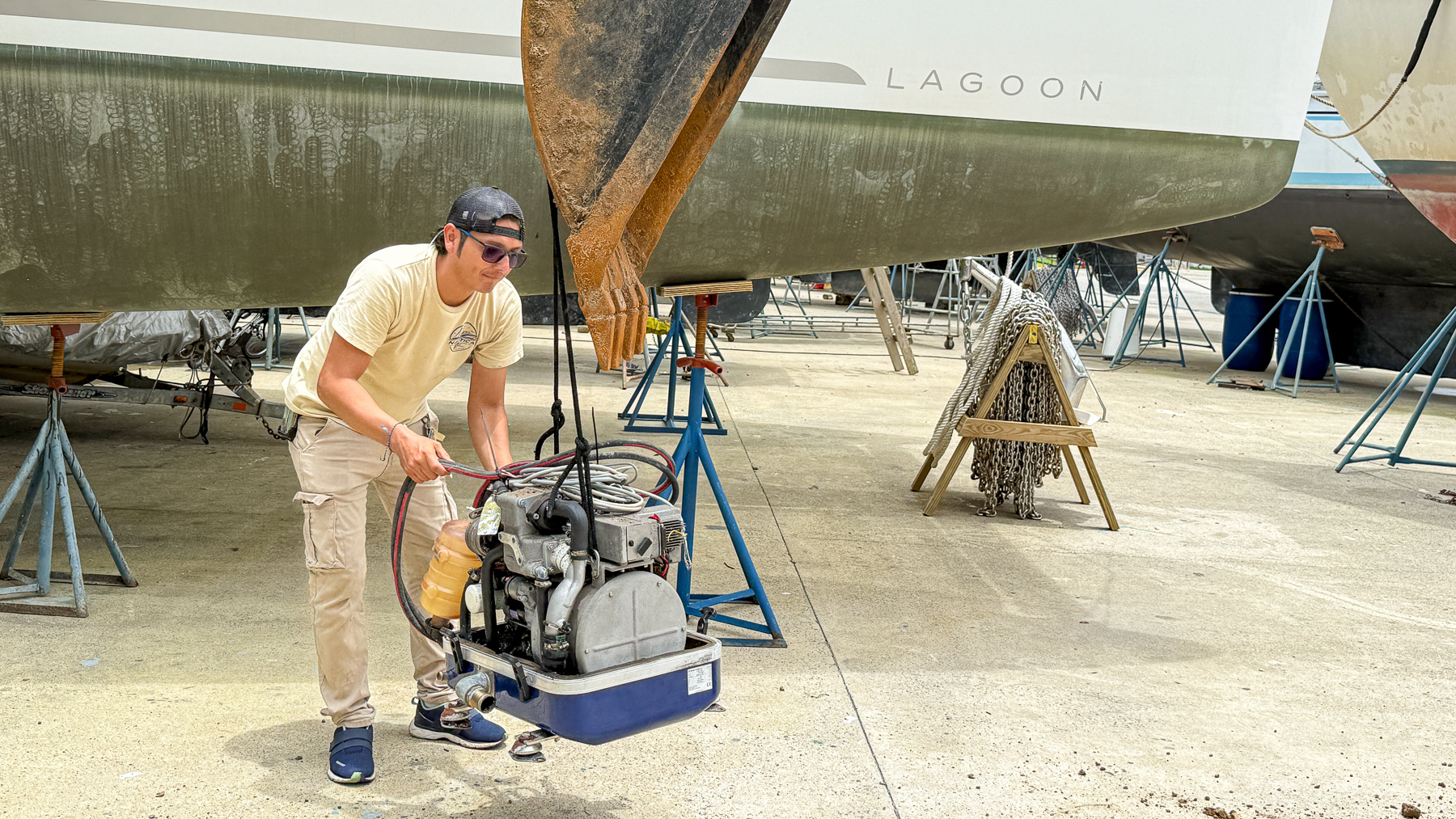
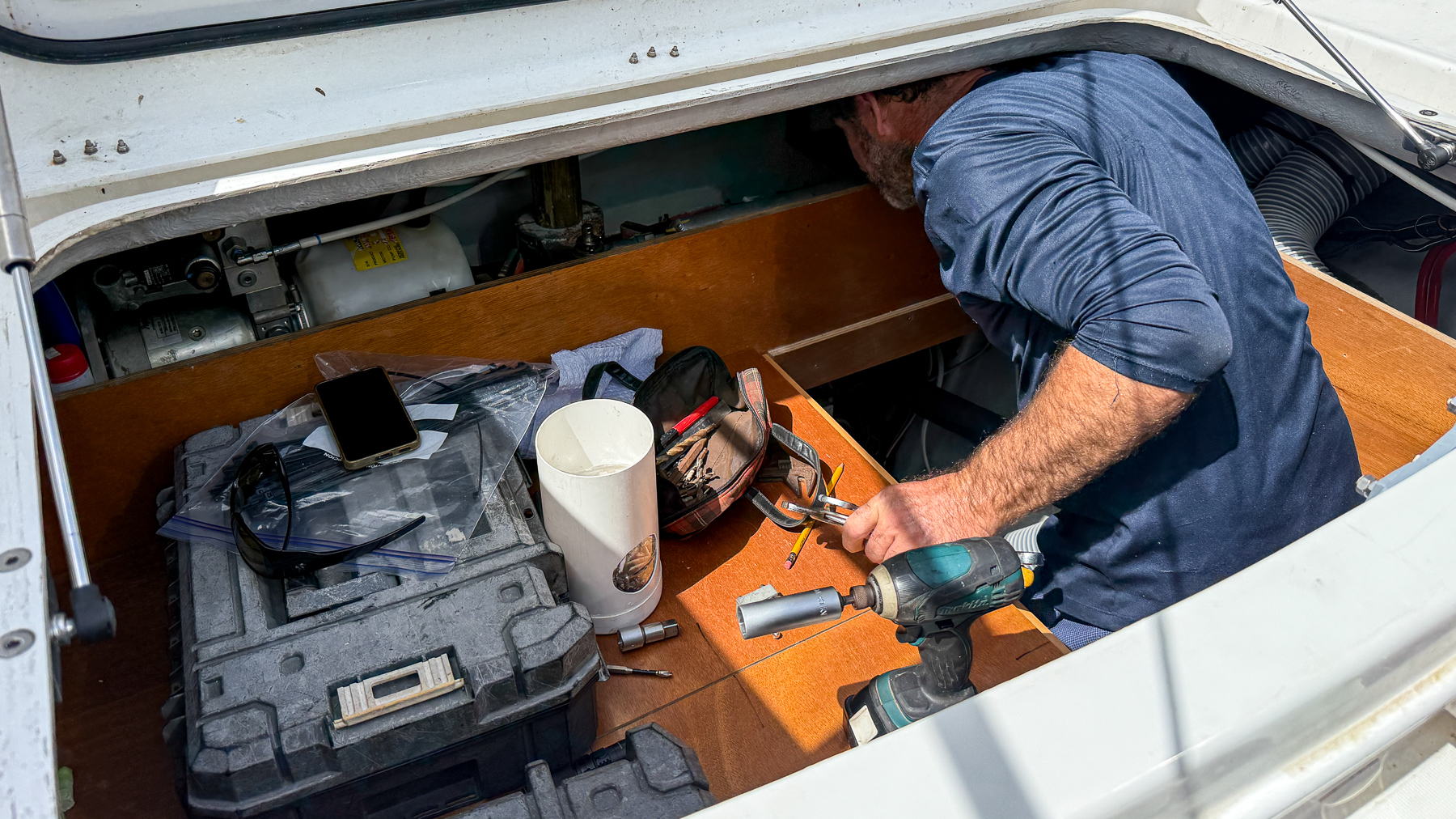
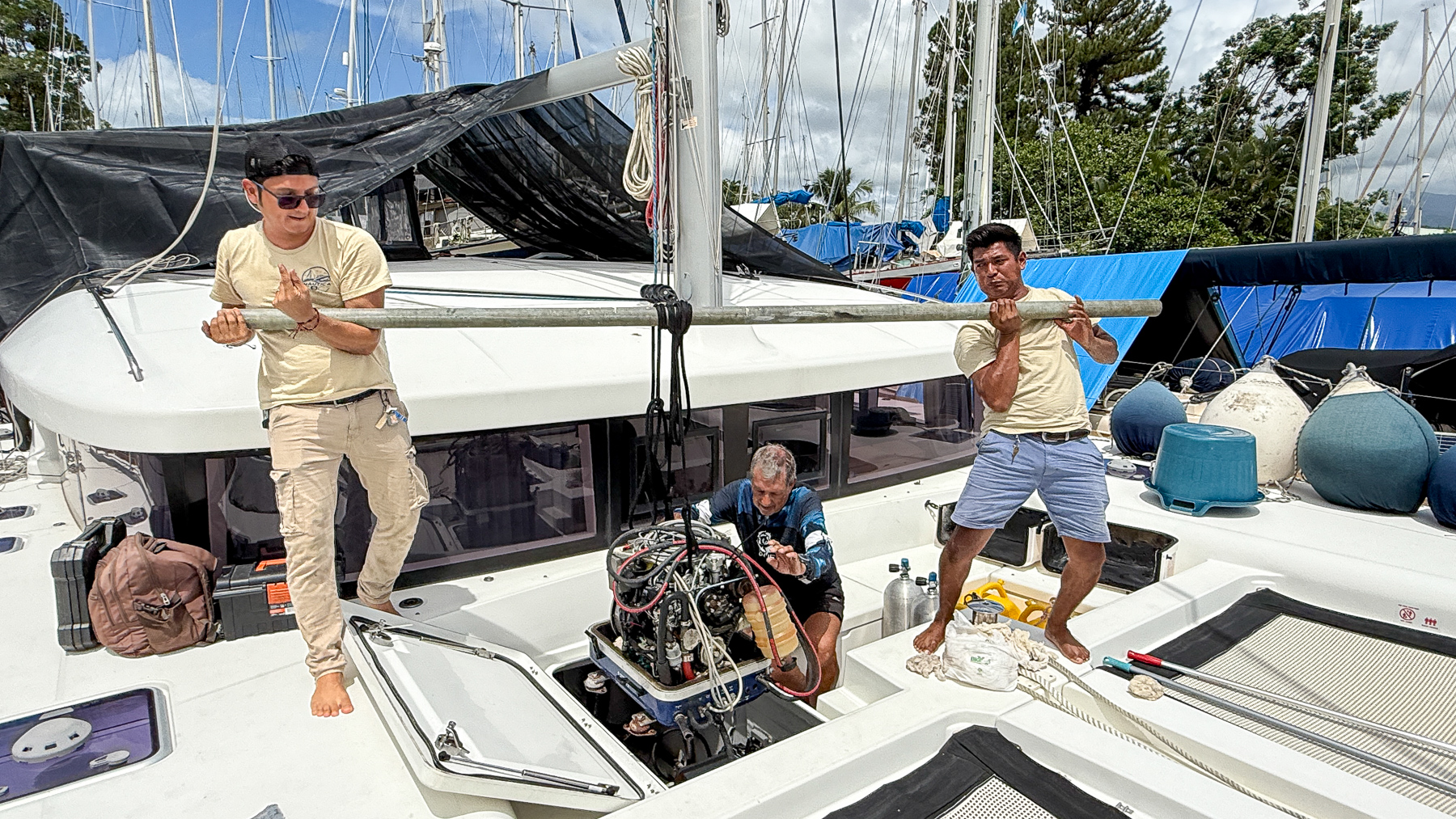
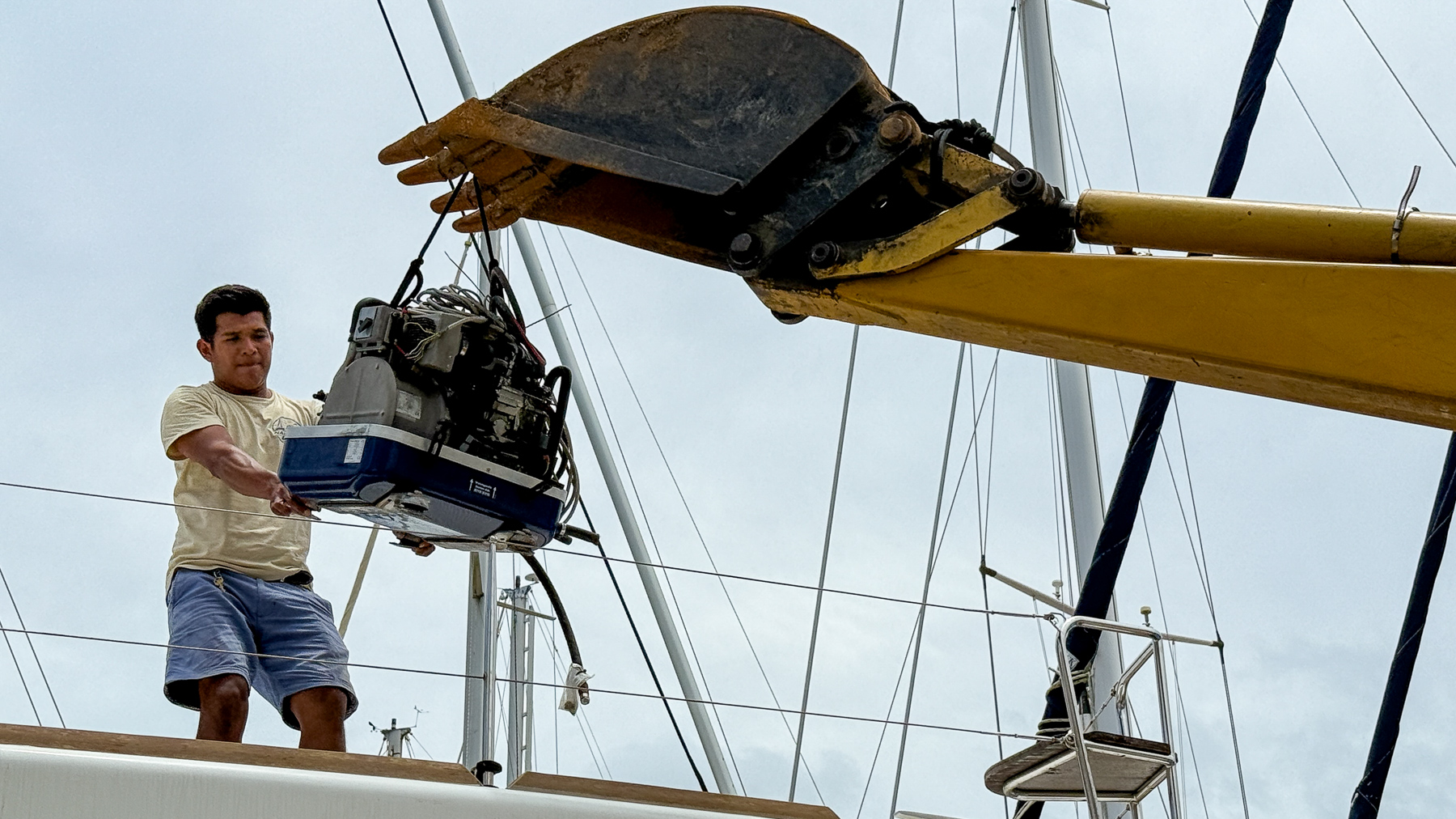
So there are better hurricane holes to fly to Europe from. But we deliberately chose RAM Marina because we know the people here. And that’s probably why we’ve gotten further along with the work on the boat. Nelson and Oscar hauled the heavy generator out of the hull; a RAM employee lifted it off the boat with an excavator and set it on the ground, where it has been—unfortunately still—waiting to be picked up for a thorough cleaning and overhaul. Chris is currently installing the hydraulics for the autopilot, for which Caesar had to have an extra bracket made. Ryan checked our rig—mast, boom, and shrouds. He wants to fix the issues he found on Sunday.
Water from above, but not from the faucet
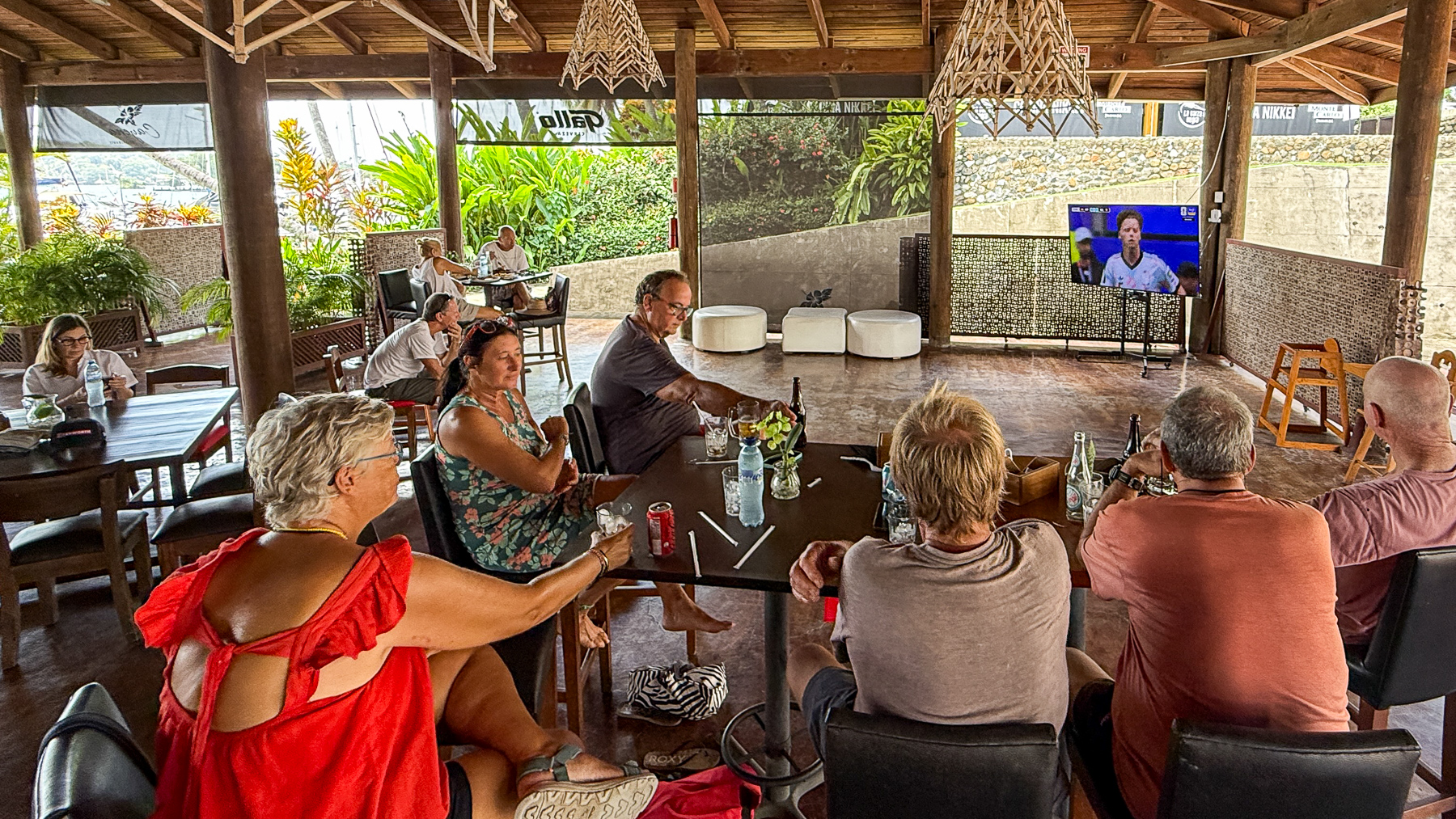
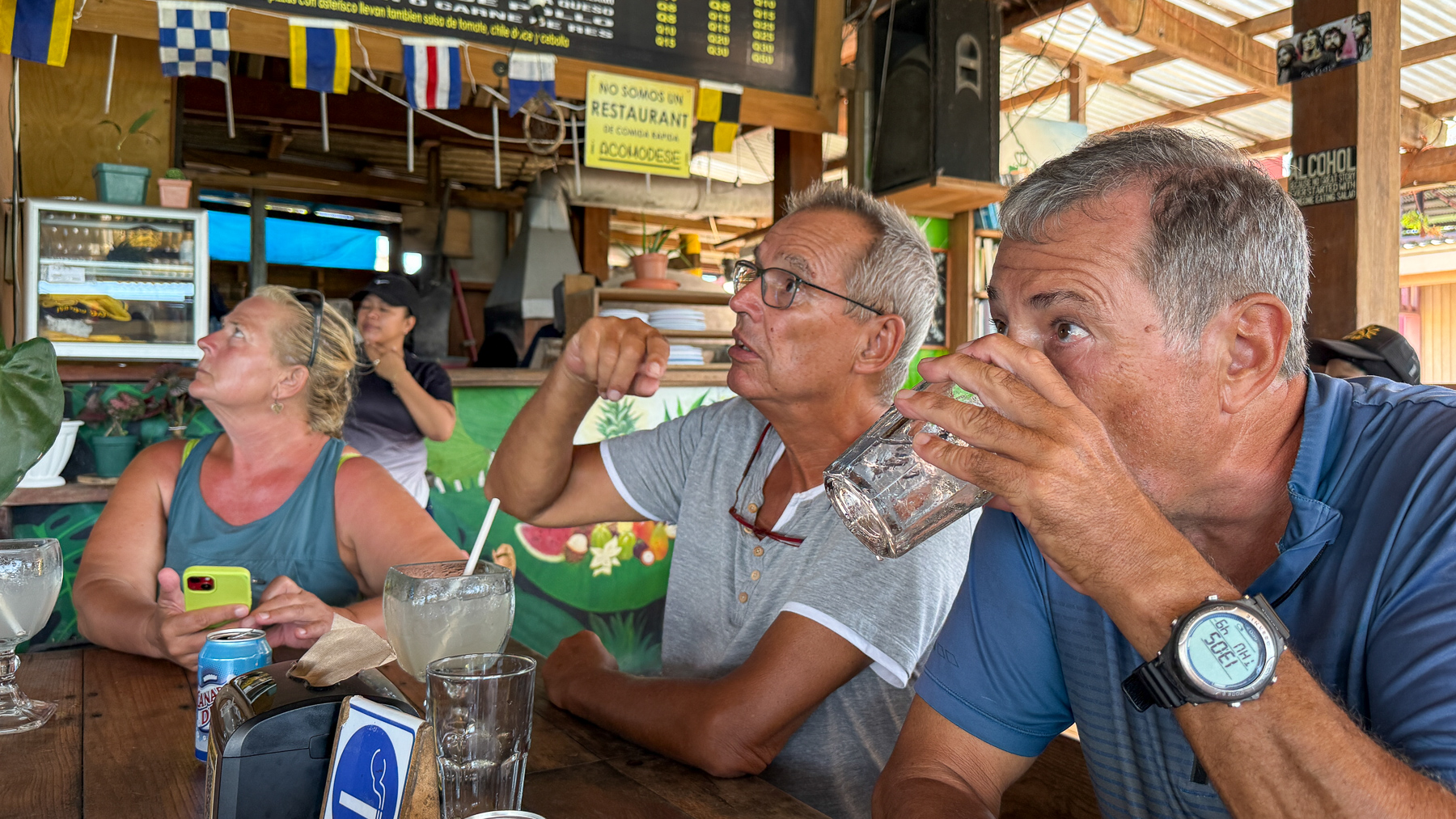
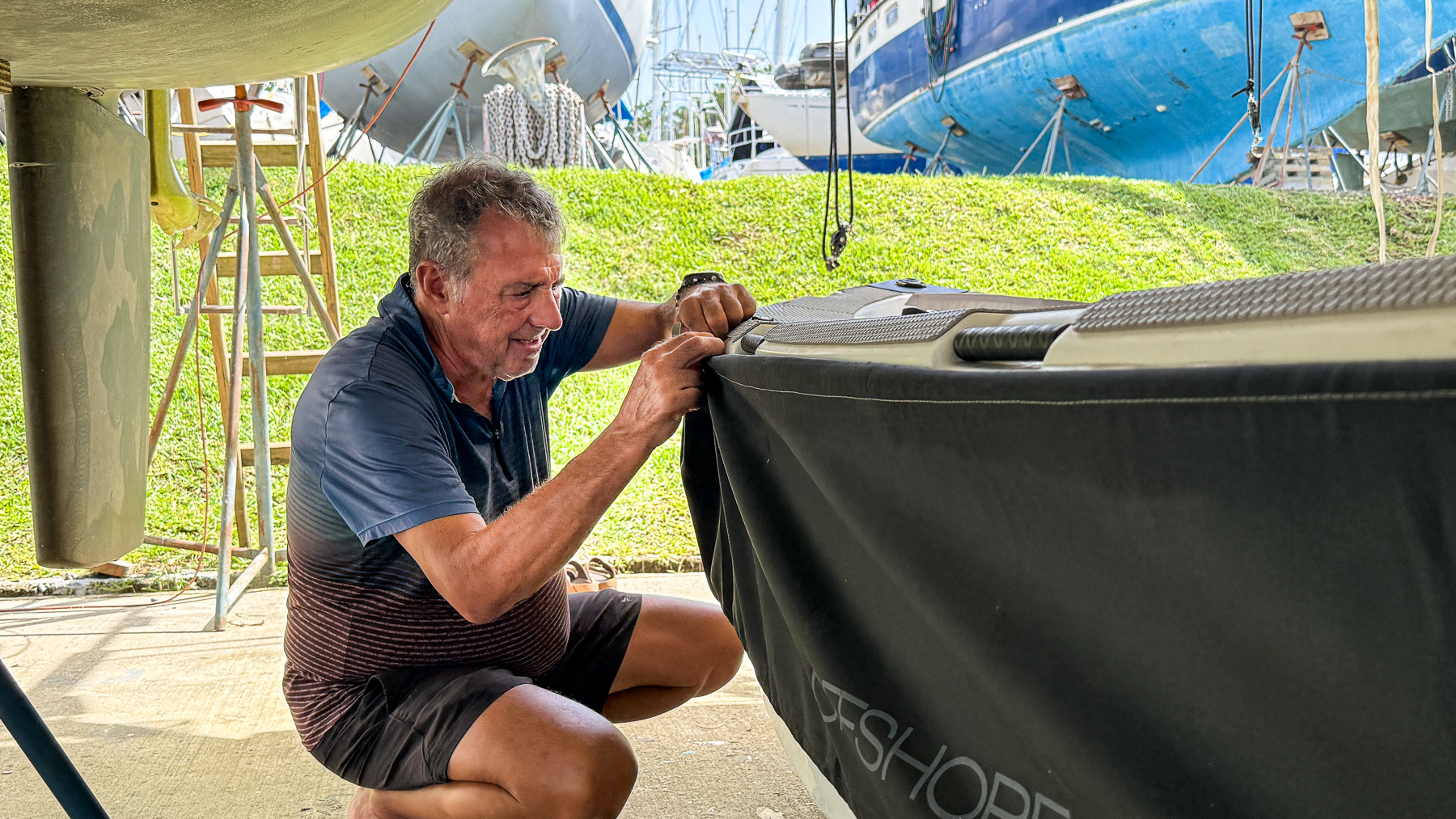
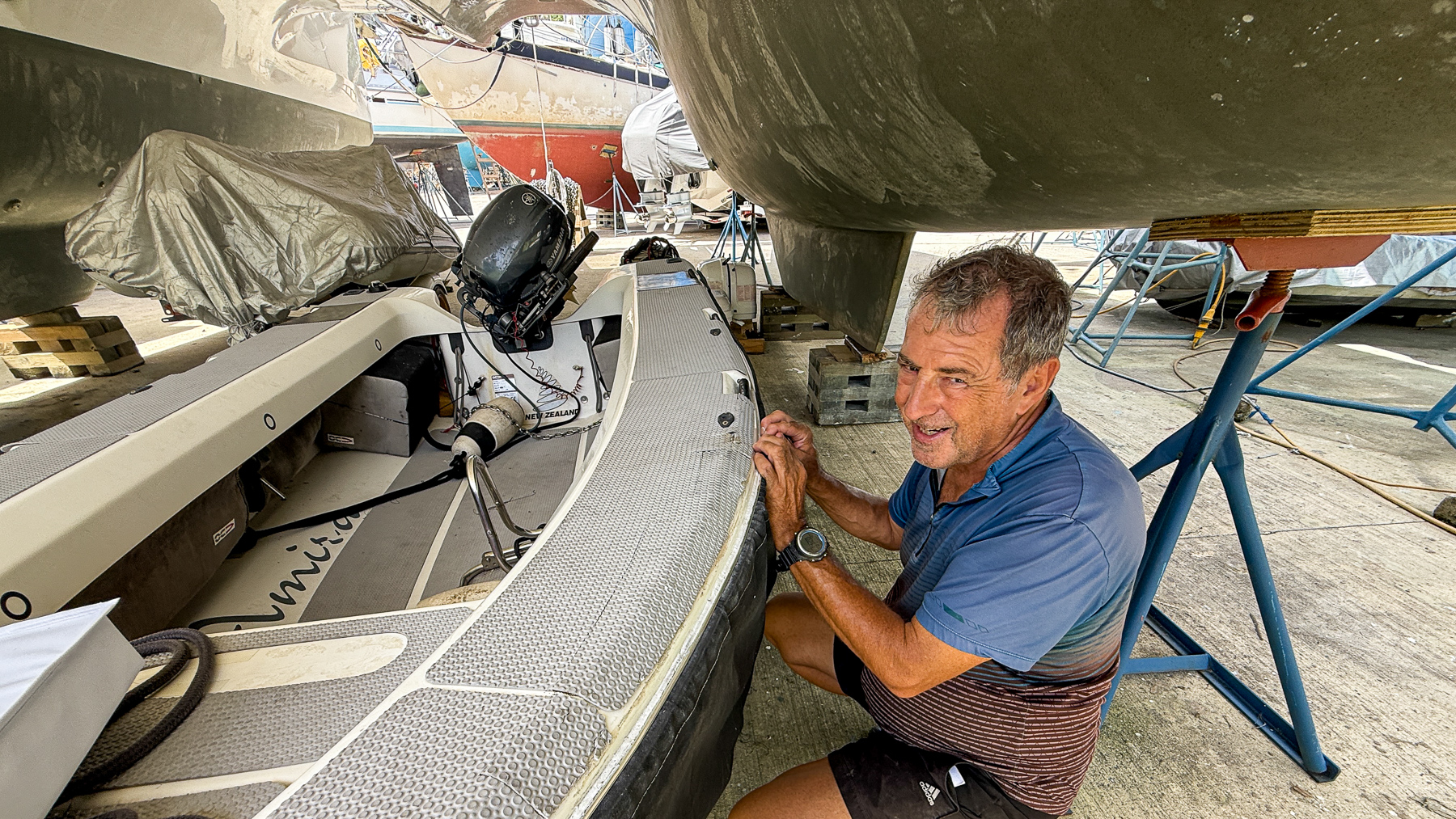
We’ve been busy too—not just watching World Cup matches with other sailors. On the boat we’ve been constantly emptying and reloading cabins for cable runs and similar jobs, cleaning and covering the boat for summer lay-up, and repairing the protective fendering on the dinghy. Peter installed the new pressure-control switch for the water pump without success; in the end he had to replace the entire pump with a new one after all. Now all that’s missing are the support rings for the hoses so everything is watertight and we can run water from the tap again.
Meanwhile, I spent four days working in vain on the Sailing Amira blog to make sure everything would display properly on a tablet in both portrait and landscape modes, as well as on a cell phone. The page previews looked good, but the result on actual devices was a disaster—because the preview just didn’t work. You have to figure that out first, and then repeat the whole process more or less by feel and rough estimation. What’s still missing now is checking the PC translation, and so on and so forth.
Lithium Batteries in Water
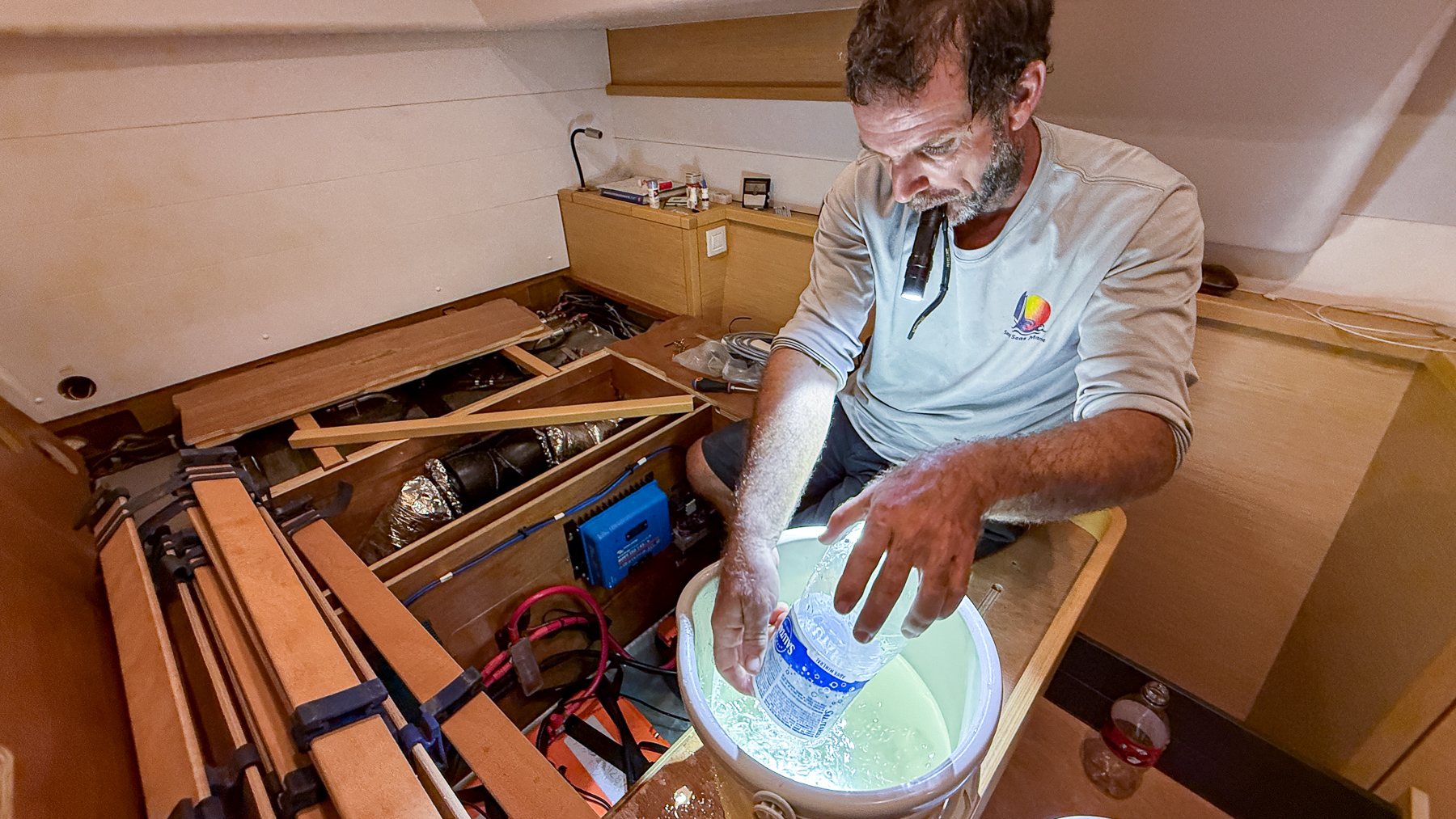
It’s the same as always, and just like with everything else on the boat: One problem gets solved, and a new one pops up. Or another one is discovered by chance, like the rusted-through pipe fitting the other day, or the three lithium batteries sitting in water before that. When we discovered them, we were already worried that the water might flow over the batteries and damage them. The cause: a small pump designed to drain condensation from the air conditioner. Sabine in Bocholt already has a replacement ready for this defective part. We still need to get many other parts for the boat in Germany, as well as medication for the Pacific crossing.